The Energy Mix
Subscribe
Donate
  • Topics
    • Buildings & Infrastructure
    • Climate Equity & Justice
      • Energy Poverty
      • Indigenous Rights & Reconciliation
    • Climate Finance
      • Community Climate Finance
      • Finance & Investment
      • Insurance & Liability
      • Subsidies
    • Climate Impacts & Adaptation
      • Biodiversity & Habitat
      • Drought & Wildfires
      • Forests & Deforestation
      • Health & Safety
      • Heat & Temperature
      • Ice Loss & Sea Level Rise
      • Severe Storms & Flooding
    • Emissions
      • Carbon Levels & Measurement
      • CCS & Negative Emissions
      • Methane
    • Energy
      • Renewables
      • Fossil Fuels
      • Hydrogen
      • Nuclear
      • Batteries & Storage
      • Energy Efficiency
      • Power Grids
    • Food & Agriculture
    • Industry
      • Data Centres & Tech
      • Critical Minerals & Mining
      • Petrochemicals & Plastics
    • Policy & Politics
      • Carbon Pricing
      • COP Conferences
      • Elections
      • Energy Politics
      • International Security & War
      • Legal & Regulatory
    • Research & Innovation
      • International Agencies & Studies
      • Research & Development
    • Society & Culture
      • Climate Action
      • Mis/Disinformation & Greenwashing
      • Jobs & Training
      • Leisure & Recreation
      • Media, Messaging, & Public Opinion
    • Transportation & Mobility
      • Electric Vehicles
      • Shipping & Aviation
      • Transit
      • Walking, Biking & Micromobility
  • Regions
    • Africa
    • Arctic & Antarctica
    • Asia
    • Australia
    • Canada
    • International
    • Mexico & the Caribbean
    • Middle East
    • Oceans
    • Small Island States
    • South & Central America
    • Subnational
    • United States
    • UK & Europe
  • Special Coverage
    • The Weekender
    • IEA2026
    • Canada’s Major Projects Office
    • Hidden Wonder Valley
    • COP30
    • Cities & Communities
    • Heat & Power
    • Community Climate Finance
  • More Resources
    • Climate Glossary
    • What If We Changed the Conversation on Climate Change?
    • Eco-Anxiety
  • About
  • Contact
No Result
View All Result
The Energy Mix
  • Topics
    • Buildings & Infrastructure
    • Climate Equity & Justice
      • Energy Poverty
      • Indigenous Rights & Reconciliation
    • Climate Finance
      • Community Climate Finance
      • Finance & Investment
      • Insurance & Liability
      • Subsidies
    • Climate Impacts & Adaptation
      • Biodiversity & Habitat
      • Drought & Wildfires
      • Forests & Deforestation
      • Health & Safety
      • Heat & Temperature
      • Ice Loss & Sea Level Rise
      • Severe Storms & Flooding
    • Emissions
      • Carbon Levels & Measurement
      • CCS & Negative Emissions
      • Methane
    • Energy
      • Renewables
      • Fossil Fuels
      • Hydrogen
      • Nuclear
      • Batteries & Storage
      • Energy Efficiency
      • Power Grids
    • Food & Agriculture
    • Industry
      • Data Centres & Tech
      • Critical Minerals & Mining
      • Petrochemicals & Plastics
    • Policy & Politics
      • Carbon Pricing
      • COP Conferences
      • Elections
      • Energy Politics
      • International Security & War
      • Legal & Regulatory
    • Research & Innovation
      • International Agencies & Studies
      • Research & Development
    • Society & Culture
      • Climate Action
      • Mis/Disinformation & Greenwashing
      • Jobs & Training
      • Leisure & Recreation
      • Media, Messaging, & Public Opinion
    • Transportation & Mobility
      • Electric Vehicles
      • Shipping & Aviation
      • Transit
      • Walking, Biking & Micromobility
  • Regions
    • Africa
    • Arctic & Antarctica
    • Asia
    • Australia
    • Canada
    • International
    • Mexico & the Caribbean
    • Middle East
    • Oceans
    • Small Island States
    • South & Central America
    • Subnational
    • United States
    • UK & Europe
  • Special Coverage
    • The Weekender
    • IEA2026
    • Canada’s Major Projects Office
    • Hidden Wonder Valley
    • COP30
    • Cities & Communities
    • Heat & Power
    • Community Climate Finance
  • More Resources
    • Climate Glossary
    • What If We Changed the Conversation on Climate Change?
    • Eco-Anxiety
  • About
  • Contact
Subscribe
Donate
The Energy Mix
Subscribe
Opinion & Analysis

The Hydro-Solar-Batteries Triplet: A Machine for Managing Time and Space

May 4, 2026
Reading time: 8 minutes
Full Story: The End of Business-As-Usual
Author: Benoit Marcoux

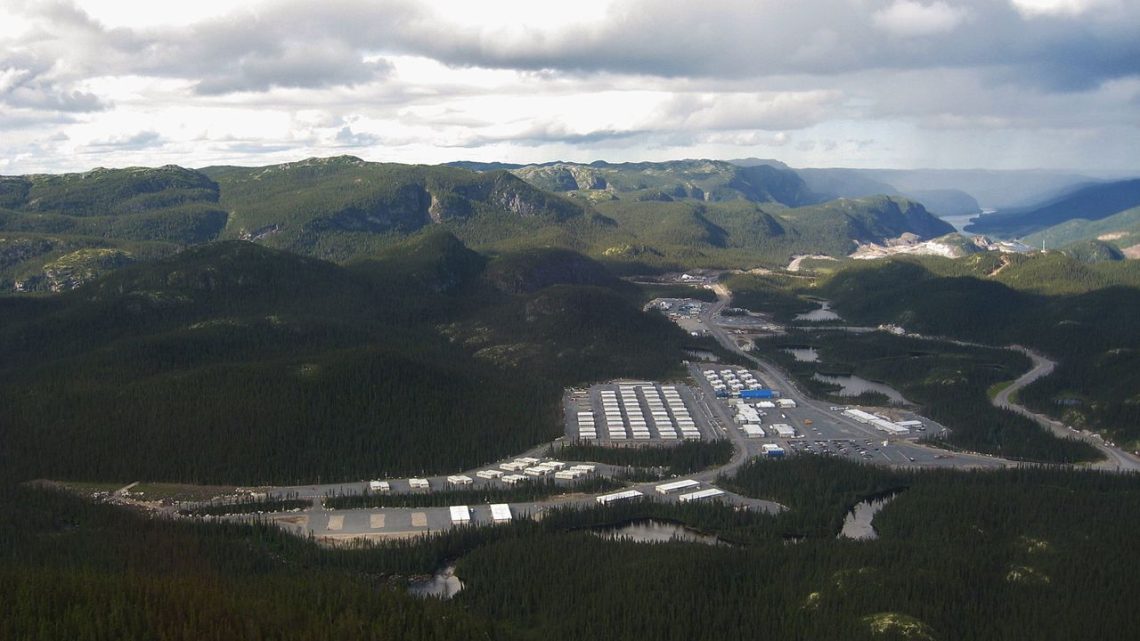
The Romaine-3 Generating Station in Quebec's Côte-Nord region. (Wikipedia)

The Romaine-3 Generating Station in Quebec's Côte-Nord region. (Wikipedia)

Energy debates often remain trapped in a simple logic: if demand rises, more generation capacity must be built, especially to meet peaks.

Energy efficiency and conservation efforts can, of course, slow the pace of new capacity additions. But they do not change the underlying issue: we still need to decide how to organize the system.

The implicit response to rising demand is, therefore, to build new power plants and the associated transmission infrastructure. In Quebec, that typically points to new large hydropower projects.

This is precisely the logic that the hydro-solar-batteries triplet invites us to rethink. Its value lies not only in adding assets, but also in better managing, across time and space, the electricity the system can produce.

This article deliberately stays at the system level. It does not go into the different solar and battery segments, whether residential, commercial, industrial, or utility scale. Those distinctions deserve an article of their own.

The Pivot: Batteries Change the Equation

Today, for peak capacity, new hydropower peaking plants no longer appear fully competitive with batteries. At comparable power capacity, batteries offer lower costs, much shorter deployment timelines, and far greater operational flexibility.

So this is no longer just a technological complement. In some cases, batteries are becoming a credible, and often preferable, alternative to new peaking plants.

For illustration:

  • Tomago (Australia): a 500 megawatt, 2,000 megawatt-hour battery, about A$800 million or C$750 million, or roughly C$1.5 million per megawatt installed, with a delivery timeline of about two years.
  • Churchill Falls Expansion (Labrador): a 1,100 megawatt peaking plant, with an estimated cost of C$4.6 billion including financing, or nearly C$4.2 million per megawatt, excluding the additional transmission line, relying on the existing reservoir, with commissioning planned for 2035.

At comparable power capacity, the gap is significant: roughly a factor of three in cost per megawatt, on top of radically different timelines and execution complexity.

The decisive difference, however, lies in how each asset is used. A peaking plant is dispatched for only a few dozen hours per year. A battery, by contrast, is used continuously to arbitrage across time, stabilize the grid, and manage peaks.

That versatility changes the nature of the investment: we move from a specialized asset used only marginally to a multi-purpose asset that is called upon continuously.

Moving Energy Through Time… And Space

In practical terms, the system can work differently.

Get the latest climate news and analysis, direct to your inbox.

Subscribe Today

View our latest digests

Outside peak periods, electricity is produced in the north from hydropower, or in the south from solar and wind. That energy is then transported and stored in batteries, particularly near load centres.

During peak periods, that energy is discharged locally.

This mechanism reduces stress on the grid, lowers dependence on peak-oriented infrastructure, and makes better use of existing assets.

It also makes it possible to absorb occasional excess generation, for example, when spring freshets, strong wind output, and strong solar output on mild days occur at the same time. In that case, the energy is stored and redistributed later, when it can be consumed.

A Systemic Effect: Once Installed, Batteries Change Everything

A battery installed for the winter peak does not serve only in cold weather.

It becomes a central system asset:

  • It smooths solar output on a daily basis.
  • It enables arbitrage between off-peak and peak hours.
  • It supports grid frequency and stability.
  • It reduces cycling and wear on turbine-generator sets.

Above all, it makes it possible to reserve hydropower for what it does best: seasonal storage and long-duration management.

That potential, however, can only be fully realized if the whole system is operated in an integrated way. Forecasting hydro inflows, solar and wind output, anticipating demand, coordinating generation, and managing battery charging and discharging cycles: the triplet raises the system’s optimization requirements. This raises the value of more advanced tools, and also opens up relevant uses for artificial intelligence.

Solar: Low-Cost Fuel for the System

Solar plays a key role in the triplet proposed for Quebec.

Its strength is twofold: it can be deployed quickly, and it provides low-cost energy. In Australia, installed solar costs have now fallen to levels low enough to change the economics of the power system. Expressed in power terms, they are on the order of C$1.1 to C$1.5 million per MW, while providing additional energy at very low cost.

These costs also reflect a development, installation, and interconnection ecosystem that is now highly mature in Australia. They therefore do not automatically translate to Quebec, where solar is still at an early stage. But they do show what becomes achievable as the sector matures.

It is also worth noting that Hydro Québec has recently taken an important step in this direction, by launching financial support for the purchase of solar panels and setting a target of 125,000 self-generating customers by 2035.

In this architecture, solar produces mostly in summer and, of course, during the day. That energy can be used immediately, shifted within the day thanks to batteries, or indirectly carried forward to winter by reducing hydropower output and allowing more water to be stored in reservoirs.

Solar is, therefore, not just an additional source of generation. It is a low-cost resource whose value can be shifted within the system. It reduces the immediate use of hydropower and increases the value of storing electricity in batteries.

An Illuminating Economic Comparison

This complementarity is also reflected in broad economic orders of magnitude.

We can push the reasoning a bit further with the proposed Gull Island hydro generating station in Labrador. The project targets 2,250 megawatts, about 12 terawatt-hours of dispatchable annual generation, and an estimated cost of C$24.9 billion.

Using, for illustration, a battery cost of about C$1.5 million per megawatt, an equivalent 2,250 megawatt of battery capacity would represent about C$3.4 billion. This comparison with battery costs remains imperfect: it captures well the value of daily modulation, but not the full sustained support capability that hydropower plants can provide over several days. Even so, if we attribute that portion of Gull Island’s cost to its power and dispatch function, more than C$21 billion remains to be explained for the energy function. That is a large amount for 12 terawatt-hours.

Using reasonable working assumptions inspired by costs observed in Australia, an annual volume of solar energy equivalent to 12 TWh could be deployed for about C$11 to C$14 billion, which would correspond to roughly 9,100 megawatts installed, based on an approximately 15% capacity factor that can be expected in Quebec. About half the cost of Gull Island.

This exercise is not a perfect equivalence. 9,100 MW of solar capacity would be a very large build-out. Gull Island also provides dispatchable output and winter value that solar alone cannot provide. But it highlights an important point: once the flexibility function is isolated, even approximately, the “energy” component of a large hydropower project such as Gull Island appears more expensive than a solar alternative producing the same annual volume.

Hydropower: from Flexible Assets to Strategic Reserve

In this context, the role of hydropower evolves. It remains essential, but its use becomes more strategic. Rather than being called on continuously for short-term flexibility, it can be increasingly reserved for:

  • Seasonal management.
  • Prolonged periods of low solar or wind output.
  • System security.

This reduces the mechanical stress associated with frequent cycling and maximizes the value of an asset that already exists.

And Wind?

Wind fits naturally into this logic.

Its output, often higher in winter, is particularly useful in Quebec’s context. But, like solar, it increases the value of storing electricity in batteries and of flexibility.

It does not compete with the triplet. It strengthens it. Perhaps we should speak of a quadruplet.

A Different Economic Logic

From an economic and energy planning perspective, the triplet changes the nature of investment.

It makes it possible to substitute some heavy, slow-to-deploy, and lightly used infrastructure with modular, rapidly installed, multi-purpose assets.

It also improves system management and the pacing of investment. Because solar and batteries can be deployed in stages, it becomes easier to slow down or accelerate depending on actual demand growth, cost trends, grid constraints, or energy-efficiency gains.

It also strengthens Hydro-Québec’s arbitrage capacity in neighbouring electricity markets, whose model already relies in part on exporting during peak periods and importing off-peak, in addition to long-term contracts.

Conclusion: a Machine for Travelling Through Time

At heart, the hydro-solar-batteries triplet turns the electricity system into a time travel machine. It makes it possible to decide when to produce, when to store electricity in batteries, and when to use it.

In a context of uncertainty, growing demand, and deployment constraints, that capability becomes more valuable than the simple addition of capacity.

The issue is, therefore, no longer just producing more. It is better exploiting, across time and space, the electricity we are capable of producing, and extracting more value from it.

The references for the figures cited in this article are available in the first comment.

Benoit Marcoux originally published this post in his newsletter, The end of energy-as-usual. It is republished here with his permission.

This story is part of The Energy Mix’s partnership with Small Change Fund.


in Batteries & Storage, Hydropower, Opinion & Analysis, Power Grids, Renewables

Trending Stories

Facebook
Severe Storms & Flooding

540+ Dead, Hundreds Missing as Towering Flash Flood in Nepal Points to Extreme Heat, Heavy Rainfalls

August 28, 2026
997
Sarah Yurchevich
Data Centres & Tech

Alberta Woman Maps Out the Facts About Power-Hungry Data Centres

August 25, 2026
749
picryl
Canadian Sovereignty

Trump Trade War Could Be a Catalyst to Speed Canada’s Energy Transition, Experts Say

August 25, 2026
711

Comments 2

  1. Robert McCullough says:
    4 months ago

    Excellent article. Quebec’s isolation from the larger energy community in North America has made the implementation of a portfolio of renewable projects a late arrival at Hydro-Quebec. In the top secret never to be disclosed negotiations that are a hallmark of Hydro-Quebec energy planning, the mention of batteries created a bit of a stir. It was clear that no one in the room had ever heard of utility scale batteries. In 2026, the U.S. Energy Information Administration forecasts 24,300 MW of batteries will come on line. You can see if yourself at https://www.eia.gov/todayinenergy/detail.php?id=67205.

    Reply
  2. J forbes says:
    4 months ago

    Thanks, this is a very very important article that needs to be sent to all politicians inbox all across Canada.
    I am forwarding to mine. Everybody else who reads this should do the same.

    Reply

Leave a Reply Cancel reply

Your email address will not be published. Required fields are marked *

I agree to the Terms & Conditions and Privacy Policy.

Get the latest climate news and analysis, direct to your inbox.

Subscribe Today

Related Articles

Rethinking Risk in the Age of Climate Chaos

Rethinking Risk in the Age of Climate Chaos

February 11, 2026
Iran’s Major Protest Centres Are Also Battling Extreme Pollution and Water Shortages

Iran’s Major Protest Centres Are Also Battling Extreme Pollution and Water Shortages

February 4, 2026
Federal Environmental Impact Assessments Are in Even More Jeopardy

Federal Environmental Impact Assessments Are in Even More Jeopardy

January 28, 2026

The End of the World vs. the End of the Week: Carney’s Pushback on Trump’s Bullying Could Point to the Next Energy Transition Moment

by Mitchell Beer
August 23, 2026

…

Follow Us

Opinion & Analysis

The Hydro-Solar-Batteries Triplet: A Machine for Managing Time and Space

May 4, 2026
Reading time: 8 minutes
Full Story: The End of Business-As-Usual
Author: Benoit Marcoux

The Romaine-3 Generating Station in Quebec's Côte-Nord region. (Wikipedia)

The Romaine-3 Generating Station in Quebec's Côte-Nord region. (Wikipedia)

Energy debates often remain trapped in a simple logic: if demand rises, more generation capacity must be built, especially to meet peaks.

Energy efficiency and conservation efforts can, of course, slow the pace of new capacity additions. But they do not change the underlying issue: we still need to decide how to organize the system.

The implicit response to rising demand is, therefore, to build new power plants and the associated transmission infrastructure. In Quebec, that typically points to new large hydropower projects.

This is precisely the logic that the hydro-solar-batteries triplet invites us to rethink. Its value lies not only in adding assets, but also in better managing, across time and space, the electricity the system can produce.

This article deliberately stays at the system level. It does not go into the different solar and battery segments, whether residential, commercial, industrial, or utility scale. Those distinctions deserve an article of their own.

The Pivot: Batteries Change the Equation

Today, for peak capacity, new hydropower peaking plants no longer appear fully competitive with batteries. At comparable power capacity, batteries offer lower costs, much shorter deployment timelines, and far greater operational flexibility.

So this is no longer just a technological complement. In some cases, batteries are becoming a credible, and often preferable, alternative to new peaking plants.

For illustration:

  • Tomago (Australia): a 500 megawatt, 2,000 megawatt-hour battery, about A$800 million or C$750 million, or roughly C$1.5 million per megawatt installed, with a delivery timeline of about two years.
  • Churchill Falls Expansion (Labrador): a 1,100 megawatt peaking plant, with an estimated cost of C$4.6 billion including financing, or nearly C$4.2 million per megawatt, excluding the additional transmission line, relying on the existing reservoir, with commissioning planned for 2035.

At comparable power capacity, the gap is significant: roughly a factor of three in cost per megawatt, on top of radically different timelines and execution complexity.

The decisive difference, however, lies in how each asset is used. A peaking plant is dispatched for only a few dozen hours per year. A battery, by contrast, is used continuously to arbitrage across time, stabilize the grid, and manage peaks.

That versatility changes the nature of the investment: we move from a specialized asset used only marginally to a multi-purpose asset that is called upon continuously.

Moving Energy Through Time… And Space

In practical terms, the system can work differently.

Get the latest climate news and analysis, direct to your inbox.

Subscribe Today

View our latest digests

Outside peak periods, electricity is produced in the north from hydropower, or in the south from solar and wind. That energy is then transported and stored in batteries, particularly near load centres.

During peak periods, that energy is discharged locally.

This mechanism reduces stress on the grid, lowers dependence on peak-oriented infrastructure, and makes better use of existing assets.

It also makes it possible to absorb occasional excess generation, for example, when spring freshets, strong wind output, and strong solar output on mild days occur at the same time. In that case, the energy is stored and redistributed later, when it can be consumed.

A Systemic Effect: Once Installed, Batteries Change Everything

A battery installed for the winter peak does not serve only in cold weather.

It becomes a central system asset:

  • It smooths solar output on a daily basis.
  • It enables arbitrage between off-peak and peak hours.
  • It supports grid frequency and stability.
  • It reduces cycling and wear on turbine-generator sets.

Above all, it makes it possible to reserve hydropower for what it does best: seasonal storage and long-duration management.

That potential, however, can only be fully realized if the whole system is operated in an integrated way. Forecasting hydro inflows, solar and wind output, anticipating demand, coordinating generation, and managing battery charging and discharging cycles: the triplet raises the system’s optimization requirements. This raises the value of more advanced tools, and also opens up relevant uses for artificial intelligence.

Solar: Low-Cost Fuel for the System

Solar plays a key role in the triplet proposed for Quebec.

Its strength is twofold: it can be deployed quickly, and it provides low-cost energy. In Australia, installed solar costs have now fallen to levels low enough to change the economics of the power system. Expressed in power terms, they are on the order of C$1.1 to C$1.5 million per MW, while providing additional energy at very low cost.

These costs also reflect a development, installation, and interconnection ecosystem that is now highly mature in Australia. They therefore do not automatically translate to Quebec, where solar is still at an early stage. But they do show what becomes achievable as the sector matures.

It is also worth noting that Hydro Québec has recently taken an important step in this direction, by launching financial support for the purchase of solar panels and setting a target of 125,000 self-generating customers by 2035.

In this architecture, solar produces mostly in summer and, of course, during the day. That energy can be used immediately, shifted within the day thanks to batteries, or indirectly carried forward to winter by reducing hydropower output and allowing more water to be stored in reservoirs.

Solar is, therefore, not just an additional source of generation. It is a low-cost resource whose value can be shifted within the system. It reduces the immediate use of hydropower and increases the value of storing electricity in batteries.

An Illuminating Economic Comparison

This complementarity is also reflected in broad economic orders of magnitude.

We can push the reasoning a bit further with the proposed Gull Island hydro generating station in Labrador. The project targets 2,250 megawatts, about 12 terawatt-hours of dispatchable annual generation, and an estimated cost of C$24.9 billion.

Using, for illustration, a battery cost of about C$1.5 million per megawatt, an equivalent 2,250 megawatt of battery capacity would represent about C$3.4 billion. This comparison with battery costs remains imperfect: it captures well the value of daily modulation, but not the full sustained support capability that hydropower plants can provide over several days. Even so, if we attribute that portion of Gull Island’s cost to its power and dispatch function, more than C$21 billion remains to be explained for the energy function. That is a large amount for 12 terawatt-hours.

Using reasonable working assumptions inspired by costs observed in Australia, an annual volume of solar energy equivalent to 12 TWh could be deployed for about C$11 to C$14 billion, which would correspond to roughly 9,100 megawatts installed, based on an approximately 15% capacity factor that can be expected in Quebec. About half the cost of Gull Island.

This exercise is not a perfect equivalence. 9,100 MW of solar capacity would be a very large build-out. Gull Island also provides dispatchable output and winter value that solar alone cannot provide. But it highlights an important point: once the flexibility function is isolated, even approximately, the “energy” component of a large hydropower project such as Gull Island appears more expensive than a solar alternative producing the same annual volume.

Hydropower: from Flexible Assets to Strategic Reserve

In this context, the role of hydropower evolves. It remains essential, but its use becomes more strategic. Rather than being called on continuously for short-term flexibility, it can be increasingly reserved for:

  • Seasonal management.
  • Prolonged periods of low solar or wind output.
  • System security.

This reduces the mechanical stress associated with frequent cycling and maximizes the value of an asset that already exists.

And Wind?

Wind fits naturally into this logic.

Its output, often higher in winter, is particularly useful in Quebec’s context. But, like solar, it increases the value of storing electricity in batteries and of flexibility.

It does not compete with the triplet. It strengthens it. Perhaps we should speak of a quadruplet.

A Different Economic Logic

From an economic and energy planning perspective, the triplet changes the nature of investment.

It makes it possible to substitute some heavy, slow-to-deploy, and lightly used infrastructure with modular, rapidly installed, multi-purpose assets.

It also improves system management and the pacing of investment. Because solar and batteries can be deployed in stages, it becomes easier to slow down or accelerate depending on actual demand growth, cost trends, grid constraints, or energy-efficiency gains.

It also strengthens Hydro-Québec’s arbitrage capacity in neighbouring electricity markets, whose model already relies in part on exporting during peak periods and importing off-peak, in addition to long-term contracts.

Conclusion: a Machine for Travelling Through Time

At heart, the hydro-solar-batteries triplet turns the electricity system into a time travel machine. It makes it possible to decide when to produce, when to store electricity in batteries, and when to use it.

In a context of uncertainty, growing demand, and deployment constraints, that capability becomes more valuable than the simple addition of capacity.

The issue is, therefore, no longer just producing more. It is better exploiting, across time and space, the electricity we are capable of producing, and extracting more value from it.

The references for the figures cited in this article are available in the first comment.

Benoit Marcoux originally published this post in his newsletter, The end of energy-as-usual. It is republished here with his permission.

This story is part of The Energy Mix’s partnership with Small Change Fund.


in Batteries & Storage, Hydropower, Opinion & Analysis, Power Grids, Renewables

Comments 2

  1. Robert McCullough says:
    4 months ago

    Excellent article. Quebec’s isolation from the larger energy community in North America has made the implementation of a portfolio of renewable projects a late arrival at Hydro-Quebec. In the top secret never to be disclosed negotiations that are a hallmark of Hydro-Quebec energy planning, the mention of batteries created a bit of a stir. It was clear that no one in the room had ever heard of utility scale batteries. In 2026, the U.S. Energy Information Administration forecasts 24,300 MW of batteries will come on line. You can see if yourself at https://www.eia.gov/todayinenergy/detail.php?id=67205.

    Reply
  2. J forbes says:
    4 months ago

    Thanks, this is a very very important article that needs to be sent to all politicians inbox all across Canada.
    I am forwarding to mine. Everybody else who reads this should do the same.

    Reply

Leave a Reply Cancel reply

Your email address will not be published. Required fields are marked *

I agree to the Terms & Conditions and Privacy Policy.

Related Articles

Rethinking Risk in the Age of Climate Chaos

Rethinking Risk in the Age of Climate Chaos

February 11, 2026
Iran’s Major Protest Centres Are Also Battling Extreme Pollution and Water Shortages

Iran’s Major Protest Centres Are Also Battling Extreme Pollution and Water Shortages

February 4, 2026
Federal Environmental Impact Assessments Are in Even More Jeopardy

Federal Environmental Impact Assessments Are in Even More Jeopardy

January 28, 2026

Trending Stories

Facebook

540+ Dead, Hundreds Missing as Towering Flash Flood in Nepal Points to Extreme Heat, Heavy Rainfalls

August 28, 2026
997
Sarah Yurchevich

Alberta Woman Maps Out the Facts About Power-Hungry Data Centres

August 25, 2026
749
picryl

Trump Trade War Could Be a Catalyst to Speed Canada’s Energy Transition, Experts Say

August 25, 2026
711

The End of the World vs. the End of the Week: Carney’s Pushback on Trump’s Bullying Could Point to the Next Energy Transition Moment

by Mitchell Beer
August 23, 2026

…

Follow Us

Copyright 2026 © Energy Mix Productions Inc. All rights reserved.

  • About
  • Contact
  • Privacy Policy and Copyright
  • Cookie Policy
No Result
View All Result
  • Topics
    • Buildings & Infrastructure
    • Climate Equity & Justice
      • Energy Poverty
      • Indigenous Rights & Reconciliation
    • Climate Finance
      • Community Climate Finance
      • Finance & Investment
      • Insurance & Liability
      • Subsidies
    • Climate Impacts & Adaptation
      • Biodiversity & Habitat
      • Drought & Wildfires
      • Forests & Deforestation
      • Health & Safety
      • Heat & Temperature
      • Ice Loss & Sea Level Rise
      • Severe Storms & Flooding
    • Emissions
      • Carbon Levels & Measurement
      • CCS & Negative Emissions
      • Methane
    • Energy
      • Renewables
      • Fossil Fuels
      • Hydrogen
      • Nuclear
      • Batteries & Storage
      • Energy Efficiency
      • Power Grids
    • Food & Agriculture
    • Industry
      • Data Centres & Tech
      • Critical Minerals & Mining
      • Petrochemicals & Plastics
    • Policy & Politics
      • Carbon Pricing
      • COP Conferences
      • Elections
      • Energy Politics
      • International Security & War
      • Legal & Regulatory
    • Research & Innovation
      • International Agencies & Studies
      • Research & Development
    • Society & Culture
      • Climate Action
      • Mis/Disinformation & Greenwashing
      • Jobs & Training
      • Leisure & Recreation
      • Media, Messaging, & Public Opinion
    • Transportation & Mobility
      • Electric Vehicles
      • Shipping & Aviation
      • Transit
      • Walking, Biking & Micromobility
  • Regions
    • Africa
    • Arctic & Antarctica
    • Asia
    • Australia
    • Canada
    • International
    • Mexico & the Caribbean
    • Middle East
    • Oceans
    • Small Island States
    • South & Central America
    • Subnational
    • United States
    • UK & Europe
  • Special Coverage
    • The Weekender
    • IEA2026
    • Canada’s Major Projects Office
    • Hidden Wonder Valley
    • COP30
    • Cities & Communities
    • Heat & Power
    • Community Climate Finance
  • More Resources
    • Climate Glossary
    • What If We Changed the Conversation on Climate Change?
    • Eco-Anxiety
  • About
  • Contact

Copyright 2025 © Smarter Shift Inc. and Energy Mix Productions Inc. All rights reserved.

Manage Cookie Consent
To provide the best experiences, we use technologies like cookies to store and/or access device information. Consenting to these technologies will allow us to process data such as browsing behaviour or unique IDs on this site. Not consenting or withdrawing consent, may adversely affect certain features and functions.
Functional Always active
The technical storage or access is strictly necessary for the legitimate purpose of enabling the use of a specific service explicitly requested by the subscriber or user, or for the sole purpose of carrying out the transmission of a communication over an electronic communications network.
Preferences
The technical storage or access is necessary for the legitimate purpose of storing preferences that are not requested by the subscriber or user.
Statistics
The technical storage or access that is used exclusively for statistical purposes. The technical storage or access that is used exclusively for anonymous statistical purposes. Without a subpoena, voluntary compliance on the part of your Internet Service Provider, or additional records from a third party, information stored or retrieved for this purpose alone cannot usually be used to identify you.
Marketing
The technical storage or access is required to create user profiles to send advertising, or to track the user on a website or across several websites for similar marketing purposes.
  • Manage options
  • Manage services
  • Manage {vendor_count} vendors
  • Read more about these purposes
View preferences
  • {title}
  • {title}
  • {title}
No Result
View All Result
  • Topics
    • Buildings & Infrastructure
    • Climate Equity & Justice
      • Energy Poverty
      • Indigenous Rights & Reconciliation
    • Climate Finance
      • Community Climate Finance
      • Finance & Investment
      • Insurance & Liability
      • Subsidies
    • Climate Impacts & Adaptation
      • Biodiversity & Habitat
      • Drought & Wildfires
      • Forests & Deforestation
      • Health & Safety
      • Heat & Temperature
      • Ice Loss & Sea Level Rise
      • Severe Storms & Flooding
    • Emissions
      • Carbon Levels & Measurement
      • CCS & Negative Emissions
      • Methane
    • Energy
      • Renewables
      • Fossil Fuels
      • Hydrogen
      • Nuclear
      • Batteries & Storage
      • Energy Efficiency
      • Power Grids
    • Food & Agriculture
    • Industry
      • Data Centres & Tech
      • Critical Minerals & Mining
      • Petrochemicals & Plastics
    • Policy & Politics
      • Carbon Pricing
      • COP Conferences
      • Elections
      • Energy Politics
      • International Security & War
      • Legal & Regulatory
    • Research & Innovation
      • International Agencies & Studies
      • Research & Development
    • Society & Culture
      • Climate Action
      • Mis/Disinformation & Greenwashing
      • Jobs & Training
      • Leisure & Recreation
      • Media, Messaging, & Public Opinion
    • Transportation & Mobility
      • Electric Vehicles
      • Shipping & Aviation
      • Transit
      • Walking, Biking & Micromobility
  • Regions
    • Africa
    • Arctic & Antarctica
    • Asia
    • Australia
    • Canada
    • International
    • Mexico & the Caribbean
    • Middle East
    • Oceans
    • Small Island States
    • South & Central America
    • Subnational
    • United States
    • UK & Europe
  • Special Coverage
    • The Weekender
    • IEA2026
    • Canada’s Major Projects Office
    • Hidden Wonder Valley
    • COP30
    • Cities & Communities
    • Heat & Power
    • Community Climate Finance
  • More Resources
    • Climate Glossary
    • What If We Changed the Conversation on Climate Change?
    • Eco-Anxiety
  • About
  • Contact

Copyright 2025 © Smarter Shift Inc. and Energy Mix Productions Inc. All rights reserved.