The Energy Mix
Subscribe
Donate
  • Topics
    • Buildings & Infrastructure
    • Climate Equity & Justice
      • Energy Poverty
      • Indigenous Rights & Reconciliation
    • Climate Finance
      • Community Climate Finance
      • Finance & Investment
      • Insurance & Liability
      • Subsidies
    • Climate Impacts & Adaptation
      • Biodiversity & Habitat
      • Drought & Wildfires
      • Forests & Deforestation
      • Health & Safety
      • Heat & Temperature
      • Ice Loss & Sea Level Rise
      • Severe Storms & Flooding
    • Emissions
      • Carbon Levels & Measurement
      • CCS & Negative Emissions
      • Methane
    • Energy
      • Renewables
      • Fossil Fuels
      • Hydrogen
      • Nuclear
      • Batteries & Storage
      • Energy Efficiency
      • Power Grids
    • Food & Agriculture
    • Industry
      • Data Centres & Tech
      • Critical Minerals & Mining
      • Petrochemicals & Plastics
    • Policy & Politics
      • Carbon Pricing
      • COP Conferences
      • Elections
      • Energy Politics
      • International Security & War
      • Legal & Regulatory
    • Research & Innovation
      • International Agencies & Studies
      • Research & Development
    • Society & Culture
      • Climate Action
      • Mis/Disinformation & Greenwashing
      • Jobs & Training
      • Leisure & Recreation
      • Media, Messaging, & Public Opinion
    • Transportation & Mobility
      • Electric Vehicles
      • Shipping & Aviation
      • Transit
      • Walking, Biking & Micromobility
  • Regions
    • Africa
    • Arctic & Antarctica
    • Asia
    • Australia
    • Canada
    • International
    • Mexico & the Caribbean
    • Middle East
    • Oceans
    • Small Island States
    • South & Central America
    • Subnational
    • United States
    • UK & Europe
  • Special Coverage
    • The Weekender
    • IEA2026
    • Canada’s Major Projects Office
    • Hidden Wonder Valley
    • COP30
    • Cities & Communities
    • Heat & Power
    • Community Climate Finance
  • More Resources
    • Climate Glossary
    • What If We Changed the Conversation on Climate Change?
    • Eco-Anxiety
  • About
  • Contact
No Result
View All Result
The Energy Mix
  • Topics
    • Buildings & Infrastructure
    • Climate Equity & Justice
      • Energy Poverty
      • Indigenous Rights & Reconciliation
    • Climate Finance
      • Community Climate Finance
      • Finance & Investment
      • Insurance & Liability
      • Subsidies
    • Climate Impacts & Adaptation
      • Biodiversity & Habitat
      • Drought & Wildfires
      • Forests & Deforestation
      • Health & Safety
      • Heat & Temperature
      • Ice Loss & Sea Level Rise
      • Severe Storms & Flooding
    • Emissions
      • Carbon Levels & Measurement
      • CCS & Negative Emissions
      • Methane
    • Energy
      • Renewables
      • Fossil Fuels
      • Hydrogen
      • Nuclear
      • Batteries & Storage
      • Energy Efficiency
      • Power Grids
    • Food & Agriculture
    • Industry
      • Data Centres & Tech
      • Critical Minerals & Mining
      • Petrochemicals & Plastics
    • Policy & Politics
      • Carbon Pricing
      • COP Conferences
      • Elections
      • Energy Politics
      • International Security & War
      • Legal & Regulatory
    • Research & Innovation
      • International Agencies & Studies
      • Research & Development
    • Society & Culture
      • Climate Action
      • Mis/Disinformation & Greenwashing
      • Jobs & Training
      • Leisure & Recreation
      • Media, Messaging, & Public Opinion
    • Transportation & Mobility
      • Electric Vehicles
      • Shipping & Aviation
      • Transit
      • Walking, Biking & Micromobility
  • Regions
    • Africa
    • Arctic & Antarctica
    • Asia
    • Australia
    • Canada
    • International
    • Mexico & the Caribbean
    • Middle East
    • Oceans
    • Small Island States
    • South & Central America
    • Subnational
    • United States
    • UK & Europe
  • Special Coverage
    • The Weekender
    • IEA2026
    • Canada’s Major Projects Office
    • Hidden Wonder Valley
    • COP30
    • Cities & Communities
    • Heat & Power
    • Community Climate Finance
  • More Resources
    • Climate Glossary
    • What If We Changed the Conversation on Climate Change?
    • Eco-Anxiety
  • About
  • Contact
Subscribe
Donate
The Energy Mix
Subscribe

No Chance at 1.5°C Limit without Reducing Food Production Emissions

June 23, 2021
Reading time: 3 minutes

Nick Saltmarsh/Twitter

Nick Saltmarsh/Twitter

A safe limit to global warming won’t be possible without tackling food production emissions along with fossil fuels—but there are plenty of grassroot actions that can do both, says a new analysis. 

“It’s sometimes argued that we should focus on one or the other. This is a false dichotomy,” argue researchers from Our World in Data in a new report. While drastically cutting energy emissions is imperative, the research team says, it’s a serious mistake neglect the harrowingly large climate footprint of business-as-usual modes of global food production.

Food system emissions currently make up anywhere from 25% to 33% of the global annual total, with factors like land use changes (especially deforestation), fertilizers, methane from cattle and rice production, and supply chain emissions all contributing. Energy, by contrast, accounts for 66% to 75%.

Under a business-as-usual food production scenario, the researchers say, humanity would emit “two to three times” the remaining carbon budget to keep average global warming to 1.5°C.

Get the latest climate news and analysis, direct to your inbox.

Subscribe Today

View our latest digests

“Let’s be clear on what this means,” Our World in Data says in a release. “If we stopped burning fossil fuels tomorrow and eliminated all other emissions, food production alone would take us past our 1.5°C target by mid-century.”

To have a 50% chance of keeping global heating below the 2°C threshold while keeping the food production system untouched, “we would have to reduce all non-food emissions to zero within 10 to 12 years.”

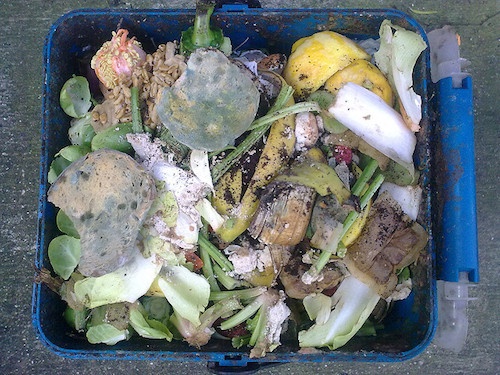
Far easier, then, to tackle food production emissions. And among the lowest hanging fruit in this regard is food waste.

“If food waste were a country, it would be the third-largest emitter, beaten only by China and the U.S.,” says Our World in Data. “At least 6% of global greenhouse emissions come from wasted food,” three times that produced by aviation. Halving global food waste and loss (some of which is due to a lack of refrigeration) would lead to a 27% drop in food-related emissions.

Ensuring that every human being on the planet has adequate healthy food, rather than a current system that overproduces for some regions and leaves others in hunger, would cut emissions by 30%.

Best farm practices designed to reduce emissions intensity offer an even more substantial path to a smaller food footprint (40% reduction), as does a plant-rich diet (48% reduction).

“Eating less meat and dairy—especially beef and lamb‚ is one of the biggest ways that we can reduce our carbon footprint,” the organization writes. But while the embrace of a plant-rich diet needs to be global, it does not need to be vegan, with health imperatives demanding some animal products and, in the case of “many low-income countries,” in greater proportion than people consume today.

Our World in Data found that partial adoption of all the options would reduce food emissions by 63%. Full adoption of all options by 2050 would see net-negative emissions—mainly because actions like reducing meat consumption and improving crop yields would leave more land to flourish in its wild state and sequester more carbon.






in Carbon Levels & Measurement, Climate Impacts & Adaptation, Critical Minerals & Mining, Food & Agriculture, Forests & Deforestation, International Agencies & Studies

Trending Stories

CC BY-SA 3.0/wikimedia commons
Data Centres & Tech

O’Leary Data Centre Megaproject Faces Two New Applications for Judicial Reviews

October 18, 2026
995
picryl
Policy & Politics

Canada Backsliding on Climate in ‘Same Direction’ as U.S., Tracker Finds

October 17, 2026
883
Still from a Sturgeon County video (YouTube)
Data Centres & Tech

Alberta Tribunal To Decide Whether Challenge To Meta Data Centre Can Proceed

October 17, 2026
771

Leave a Reply Cancel reply

Your email address will not be published. Required fields are marked *

I agree to the Terms & Conditions and Privacy Policy.

Get the latest climate news and analysis, direct to your inbox.

Subscribe Today

Ruminations on Climate Change and Evil

by Mitchell Beer
October 18, 2026

…

Follow Us

No Chance at 1.5°C Limit without Reducing Food Production Emissions

June 23, 2021
Reading time: 3 minutes

Nick Saltmarsh/Twitter

Nick Saltmarsh/Twitter

A safe limit to global warming won’t be possible without tackling food production emissions along with fossil fuels—but there are plenty of grassroot actions that can do both, says a new analysis. 

“It’s sometimes argued that we should focus on one or the other. This is a false dichotomy,” argue researchers from Our World in Data in a new report. While drastically cutting energy emissions is imperative, the research team says, it’s a serious mistake neglect the harrowingly large climate footprint of business-as-usual modes of global food production.

Food system emissions currently make up anywhere from 25% to 33% of the global annual total, with factors like land use changes (especially deforestation), fertilizers, methane from cattle and rice production, and supply chain emissions all contributing. Energy, by contrast, accounts for 66% to 75%.

Under a business-as-usual food production scenario, the researchers say, humanity would emit “two to three times” the remaining carbon budget to keep average global warming to 1.5°C.

Get the latest climate news and analysis, direct to your inbox.

Subscribe Today

View our latest digests

“Let’s be clear on what this means,” Our World in Data says in a release. “If we stopped burning fossil fuels tomorrow and eliminated all other emissions, food production alone would take us past our 1.5°C target by mid-century.”

To have a 50% chance of keeping global heating below the 2°C threshold while keeping the food production system untouched, “we would have to reduce all non-food emissions to zero within 10 to 12 years.”

Far easier, then, to tackle food production emissions. And among the lowest hanging fruit in this regard is food waste.

“If food waste were a country, it would be the third-largest emitter, beaten only by China and the U.S.,” says Our World in Data. “At least 6% of global greenhouse emissions come from wasted food,” three times that produced by aviation. Halving global food waste and loss (some of which is due to a lack of refrigeration) would lead to a 27% drop in food-related emissions.

Ensuring that every human being on the planet has adequate healthy food, rather than a current system that overproduces for some regions and leaves others in hunger, would cut emissions by 30%.

Best farm practices designed to reduce emissions intensity offer an even more substantial path to a smaller food footprint (40% reduction), as does a plant-rich diet (48% reduction).

“Eating less meat and dairy—especially beef and lamb‚ is one of the biggest ways that we can reduce our carbon footprint,” the organization writes. But while the embrace of a plant-rich diet needs to be global, it does not need to be vegan, with health imperatives demanding some animal products and, in the case of “many low-income countries,” in greater proportion than people consume today.

Our World in Data found that partial adoption of all the options would reduce food emissions by 63%. Full adoption of all options by 2050 would see net-negative emissions—mainly because actions like reducing meat consumption and improving crop yields would leave more land to flourish in its wild state and sequester more carbon.


in Carbon Levels & Measurement, Climate Impacts & Adaptation, Critical Minerals & Mining, Food & Agriculture, Forests & Deforestation, International Agencies & Studies

Leave a Reply Cancel reply

Your email address will not be published. Required fields are marked *

I agree to the Terms & Conditions and Privacy Policy.

Trending Stories

CC BY-SA 3.0/wikimedia commons

O’Leary Data Centre Megaproject Faces Two New Applications for Judicial Reviews

October 18, 2026
995
picryl

Canada Backsliding on Climate in ‘Same Direction’ as U.S., Tracker Finds

October 17, 2026
883
Still from a Sturgeon County video (YouTube)

Alberta Tribunal To Decide Whether Challenge To Meta Data Centre Can Proceed

October 17, 2026
771

Ruminations on Climate Change and Evil

by Mitchell Beer
October 18, 2026

…

Follow Us

Copyright 2026 © Energy Mix Productions Inc. All rights reserved.

  • About
  • Contact
  • Privacy Policy and Copyright
  • Cookie Policy
No Result
View All Result
  • Topics
    • Buildings & Infrastructure
    • Climate Equity & Justice
      • Energy Poverty
      • Indigenous Rights & Reconciliation
    • Climate Finance
      • Community Climate Finance
      • Finance & Investment
      • Insurance & Liability
      • Subsidies
    • Climate Impacts & Adaptation
      • Biodiversity & Habitat
      • Drought & Wildfires
      • Forests & Deforestation
      • Health & Safety
      • Heat & Temperature
      • Ice Loss & Sea Level Rise
      • Severe Storms & Flooding
    • Emissions
      • Carbon Levels & Measurement
      • CCS & Negative Emissions
      • Methane
    • Energy
      • Renewables
      • Fossil Fuels
      • Hydrogen
      • Nuclear
      • Batteries & Storage
      • Energy Efficiency
      • Power Grids
    • Food & Agriculture
    • Industry
      • Data Centres & Tech
      • Critical Minerals & Mining
      • Petrochemicals & Plastics
    • Policy & Politics
      • Carbon Pricing
      • COP Conferences
      • Elections
      • Energy Politics
      • International Security & War
      • Legal & Regulatory
    • Research & Innovation
      • International Agencies & Studies
      • Research & Development
    • Society & Culture
      • Climate Action
      • Mis/Disinformation & Greenwashing
      • Jobs & Training
      • Leisure & Recreation
      • Media, Messaging, & Public Opinion
    • Transportation & Mobility
      • Electric Vehicles
      • Shipping & Aviation
      • Transit
      • Walking, Biking & Micromobility
  • Regions
    • Africa
    • Arctic & Antarctica
    • Asia
    • Australia
    • Canada
    • International
    • Mexico & the Caribbean
    • Middle East
    • Oceans
    • Small Island States
    • South & Central America
    • Subnational
    • United States
    • UK & Europe
  • Special Coverage
    • The Weekender
    • IEA2026
    • Canada’s Major Projects Office
    • Hidden Wonder Valley
    • COP30
    • Cities & Communities
    • Heat & Power
    • Community Climate Finance
  • More Resources
    • Climate Glossary
    • What If We Changed the Conversation on Climate Change?
    • Eco-Anxiety
  • About
  • Contact

Copyright 2025 © Smarter Shift Inc. and Energy Mix Productions Inc. All rights reserved.

Manage Cookie Consent
To provide the best experiences, we use technologies like cookies to store and/or access device information. Consenting to these technologies will allow us to process data such as browsing behaviour or unique IDs on this site. Not consenting or withdrawing consent, may adversely affect certain features and functions.
Functional Always active
The technical storage or access is strictly necessary for the legitimate purpose of enabling the use of a specific service explicitly requested by the subscriber or user, or for the sole purpose of carrying out the transmission of a communication over an electronic communications network.
Preferences
The technical storage or access is necessary for the legitimate purpose of storing preferences that are not requested by the subscriber or user.
Statistics
The technical storage or access that is used exclusively for statistical purposes. The technical storage or access that is used exclusively for anonymous statistical purposes. Without a subpoena, voluntary compliance on the part of your Internet Service Provider, or additional records from a third party, information stored or retrieved for this purpose alone cannot usually be used to identify you.
Marketing
The technical storage or access is required to create user profiles to send advertising, or to track the user on a website or across several websites for similar marketing purposes.
  • Manage options
  • Manage services
  • Manage {vendor_count} vendors
  • Read more about these purposes
View preferences
  • {title}
  • {title}
  • {title}
No Result
View All Result
  • Topics
    • Buildings & Infrastructure
    • Climate Equity & Justice
      • Energy Poverty
      • Indigenous Rights & Reconciliation
    • Climate Finance
      • Community Climate Finance
      • Finance & Investment
      • Insurance & Liability
      • Subsidies
    • Climate Impacts & Adaptation
      • Biodiversity & Habitat
      • Drought & Wildfires
      • Forests & Deforestation
      • Health & Safety
      • Heat & Temperature
      • Ice Loss & Sea Level Rise
      • Severe Storms & Flooding
    • Emissions
      • Carbon Levels & Measurement
      • CCS & Negative Emissions
      • Methane
    • Energy
      • Renewables
      • Fossil Fuels
      • Hydrogen
      • Nuclear
      • Batteries & Storage
      • Energy Efficiency
      • Power Grids
    • Food & Agriculture
    • Industry
      • Data Centres & Tech
      • Critical Minerals & Mining
      • Petrochemicals & Plastics
    • Policy & Politics
      • Carbon Pricing
      • COP Conferences
      • Elections
      • Energy Politics
      • International Security & War
      • Legal & Regulatory
    • Research & Innovation
      • International Agencies & Studies
      • Research & Development
    • Society & Culture
      • Climate Action
      • Mis/Disinformation & Greenwashing
      • Jobs & Training
      • Leisure & Recreation
      • Media, Messaging, & Public Opinion
    • Transportation & Mobility
      • Electric Vehicles
      • Shipping & Aviation
      • Transit
      • Walking, Biking & Micromobility
  • Regions
    • Africa
    • Arctic & Antarctica
    • Asia
    • Australia
    • Canada
    • International
    • Mexico & the Caribbean
    • Middle East
    • Oceans
    • Small Island States
    • South & Central America
    • Subnational
    • United States
    • UK & Europe
  • Special Coverage
    • The Weekender
    • IEA2026
    • Canada’s Major Projects Office
    • Hidden Wonder Valley
    • COP30
    • Cities & Communities
    • Heat & Power
    • Community Climate Finance
  • More Resources
    • Climate Glossary
    • What If We Changed the Conversation on Climate Change?
    • Eco-Anxiety
  • About
  • Contact

Copyright 2025 © Smarter Shift Inc. and Energy Mix Productions Inc. All rights reserved.