The Energy Mix
Subscribe
Donate
  • Topics
    • Buildings & Infrastructure
    • Climate Equity & Justice
      • Energy Poverty
      • Indigenous Rights & Reconciliation
    • Climate Finance
      • Community Climate Finance
      • Finance & Investment
      • Insurance & Liability
      • Subsidies
    • Climate Impacts & Adaptation
      • Biodiversity & Habitat
      • Drought & Wildfires
      • Forests & Deforestation
      • Health & Safety
      • Heat & Temperature
      • Ice Loss & Sea Level Rise
      • Severe Storms & Flooding
    • Emissions
      • Carbon Levels & Measurement
      • CCS & Negative Emissions
      • Methane
    • Energy
      • Renewables
      • Fossil Fuels
      • Hydrogen
      • Nuclear
      • Batteries & Storage
      • Energy Efficiency
      • Power Grids
    • Food & Agriculture
    • Industry
      • Data Centres & Tech
      • Critical Minerals & Mining
      • Petrochemicals & Plastics
    • Policy & Politics
      • Carbon Pricing
      • COP Conferences
      • Elections
      • Energy Politics
      • International Security & War
      • Legal & Regulatory
    • Research & Innovation
      • International Agencies & Studies
      • Research & Development
    • Society & Culture
      • Climate Action
      • Mis/Disinformation & Greenwashing
      • Jobs & Training
      • Leisure & Recreation
      • Media, Messaging, & Public Opinion
    • Transportation & Mobility
      • Electric Vehicles
      • Shipping & Aviation
      • Transit
      • Walking, Biking & Micromobility
  • Regions
    • Africa
    • Arctic & Antarctica
    • Asia
    • Australia
    • Canada
    • International
    • Mexico & the Caribbean
    • Middle East
    • Oceans
    • Small Island States
    • South & Central America
    • Subnational
    • United States
    • UK & Europe
  • Special Coverage
    • The Weekender
    • IEA2026
    • Canada’s Major Projects Office
    • Hidden Wonder Valley
    • COP30
    • Cities & Communities
    • Heat & Power
    • Community Climate Finance
  • More Resources
    • Climate Glossary
    • What If We Changed the Conversation on Climate Change?
    • Eco-Anxiety
  • About
  • Contact
No Result
View All Result
The Energy Mix
  • Topics
    • Buildings & Infrastructure
    • Climate Equity & Justice
      • Energy Poverty
      • Indigenous Rights & Reconciliation
    • Climate Finance
      • Community Climate Finance
      • Finance & Investment
      • Insurance & Liability
      • Subsidies
    • Climate Impacts & Adaptation
      • Biodiversity & Habitat
      • Drought & Wildfires
      • Forests & Deforestation
      • Health & Safety
      • Heat & Temperature
      • Ice Loss & Sea Level Rise
      • Severe Storms & Flooding
    • Emissions
      • Carbon Levels & Measurement
      • CCS & Negative Emissions
      • Methane
    • Energy
      • Renewables
      • Fossil Fuels
      • Hydrogen
      • Nuclear
      • Batteries & Storage
      • Energy Efficiency
      • Power Grids
    • Food & Agriculture
    • Industry
      • Data Centres & Tech
      • Critical Minerals & Mining
      • Petrochemicals & Plastics
    • Policy & Politics
      • Carbon Pricing
      • COP Conferences
      • Elections
      • Energy Politics
      • International Security & War
      • Legal & Regulatory
    • Research & Innovation
      • International Agencies & Studies
      • Research & Development
    • Society & Culture
      • Climate Action
      • Mis/Disinformation & Greenwashing
      • Jobs & Training
      • Leisure & Recreation
      • Media, Messaging, & Public Opinion
    • Transportation & Mobility
      • Electric Vehicles
      • Shipping & Aviation
      • Transit
      • Walking, Biking & Micromobility
  • Regions
    • Africa
    • Arctic & Antarctica
    • Asia
    • Australia
    • Canada
    • International
    • Mexico & the Caribbean
    • Middle East
    • Oceans
    • Small Island States
    • South & Central America
    • Subnational
    • United States
    • UK & Europe
  • Special Coverage
    • The Weekender
    • IEA2026
    • Canada’s Major Projects Office
    • Hidden Wonder Valley
    • COP30
    • Cities & Communities
    • Heat & Power
    • Community Climate Finance
  • More Resources
    • Climate Glossary
    • What If We Changed the Conversation on Climate Change?
    • Eco-Anxiety
  • About
  • Contact
Subscribe
Donate
The Energy Mix
Subscribe

Scientists Find Climate Change Is Reducing Oxygen in Rivers Worldwide

May 19, 2026
Reading time: 4 minutes
Full Story: The Associated Press
Author: Seth Borenstein

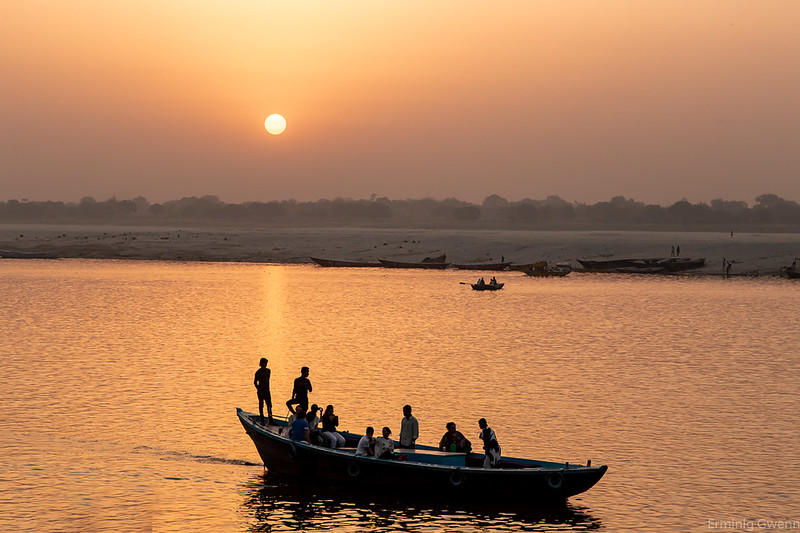
The Ganges River in India. (Erminig Gwenn/flickr)

The Ganges River in India. (Erminig Gwenn/flickr)

Global warming is causing rivers to slowly lose oxygen, threatening fish and other lives in the waterways, a new study shows.

Researchers in China used satellites and artificial intelligence to track and analyze oxygen levels in more than 21,000 rivers across the globe since 1985. They found oxygen levels have dropped an average of 2.1% since 1985, according to a study published May 15 in Science Advances. That doesn’t seem like much but it adds up and if it continues or accelerates, rivers in the Eastern United States, India and across the tropics could lose enough oxygen by the end of the century to suffocate some fish and create dead zones, the study said.

Basic chemistry and physics dictate that warmer water holds less oxygen, scientists said. Warmer water, which happens with human-caused climate change, releases more oxygen into the atmosphere.

If the oxygen loss rate continues at the current pace, the world’s rivers on average will lose an additional 4% of their oxygen by the end of the century, and in some cases close to 5%, the study found. That’s when oxygen loss—called deoxygenation—becomes problematic for fish and people who rely on rivers, according to the study’s lead author Qi Guan, an environmental scientist at the Chinese Academy of Sciences in Nanjing.

Get the latest climate news and analysis, direct to your inbox.

Subscribe Today

View our latest digests

More Dead Zones Appear

Scientists worry that oxygen levels in rivers could fall so low that dead zones appear, as they have in the Gulf of Mexico, Chesapeake Bay and Lake Erie. Those are areas where fish struggle to breathe and die.

“Deoxygenation is a very slow process. If we have a long period, the negative impact will attack the river ecosystems,” Guan said. “The low level of oxygen can cause a series of ecological crises such as biodiversity decline, water quality degradation and maybe some fish will die.”

University of Arizona geoscientist Karl Flessa, who wasn’t part of the study, said in an email that losing oxygen in rivers means “a future of more stinky dead zones (hypoxia), especially during heat waves.”

Some rivers are in such bad shape that “a small change can tip them into the danger zone,” Flessa said. “if your favorite fishing hole gets too warm, oxygen levels will go down and there won’t be any fish to catch.”

India, Eastern U.S. and the Amazon Are Hot Spots

Earlier this century, India’s heavily polluted Ganges River was losing oxygen more than 20 times faster than the global average, the study said. Even with moderate-to-high increases in global carbon dioxide emission rates — not the implausible worst-case scenario — rivers in the Eastern United States, the Arctic, India and much of South America are projected to lose about 10% of their oxygen by the end of the century, the analysis showed.

Guan said he worries about tropical rivers especially, such as the Amazon in Brazil. Since 1980, the number of days with dead zone spots in the Amazon rose by nearly 16 days per decade, a study last year found.

Hydrology professor Marc Bierkens of Utrecht University in the Netherlands, said a study he and colleagues did last year showed oxygen stress in the world’s rivers increased by 13 days every decade and dead zone occurrences increased by nearly three days a decade since 1980. As the world continues to warm, those numbers should jump even higher, said Bierkens, who didn’t participate in the Chinese study.

Guan’s study found several reasons for oxygen loss in the world’s rivers, including nutrient pollution from fertilizer and urban runoff, along with dam construction, flow and wind issues. But nearly 63% of the problem is from warmer water, the study found.

Duke University ecologist and biogeochemist Emily Bernhardt, who wasn’t part of the study, said “as rivers warm it becomes easier and easier for the same pollution problems as before to cause more severe, more long lasting or more widespread hypoxia and anoxia.” Anoxia is the total loss of oxygen.

“Water pollution reduction is more important than ever and will be harder as rivers warm,” she said.

This Associated Press story was published May 15 by The Canadian Press.


in Climate Impacts & Adaptation

Trending Stories

Facebook
Severe Storms & Flooding

540+ Dead, Hundreds Missing as Towering Flash Flood in Nepal Points to Extreme Heat, Heavy Rainfalls

August 28, 2026
997
Sarah Yurchevich
Data Centres & Tech

Alberta Woman Maps Out the Facts About Power-Hungry Data Centres

August 25, 2026
749
picryl
Canadian Sovereignty

Trump Trade War Could Be a Catalyst to Speed Canada’s Energy Transition, Experts Say

August 25, 2026
711

Leave a Reply Cancel reply

Your email address will not be published. Required fields are marked *

I agree to the Terms & Conditions and Privacy Policy.

Get the latest climate news and analysis, direct to your inbox.

Subscribe Today

The End of the World vs. the End of the Week: Carney’s Pushback on Trump’s Bullying Could Point to the Next Energy Transition Moment

by Mitchell Beer
August 23, 2026

…

Follow Us

Scientists Find Climate Change Is Reducing Oxygen in Rivers Worldwide

May 19, 2026
Reading time: 4 minutes
Full Story: The Associated Press
Author: Seth Borenstein

The Ganges River in India. (Erminig Gwenn/flickr)

The Ganges River in India. (Erminig Gwenn/flickr)

Global warming is causing rivers to slowly lose oxygen, threatening fish and other lives in the waterways, a new study shows.

Researchers in China used satellites and artificial intelligence to track and analyze oxygen levels in more than 21,000 rivers across the globe since 1985. They found oxygen levels have dropped an average of 2.1% since 1985, according to a study published May 15 in Science Advances. That doesn’t seem like much but it adds up and if it continues or accelerates, rivers in the Eastern United States, India and across the tropics could lose enough oxygen by the end of the century to suffocate some fish and create dead zones, the study said.

Basic chemistry and physics dictate that warmer water holds less oxygen, scientists said. Warmer water, which happens with human-caused climate change, releases more oxygen into the atmosphere.

If the oxygen loss rate continues at the current pace, the world’s rivers on average will lose an additional 4% of their oxygen by the end of the century, and in some cases close to 5%, the study found. That’s when oxygen loss—called deoxygenation—becomes problematic for fish and people who rely on rivers, according to the study’s lead author Qi Guan, an environmental scientist at the Chinese Academy of Sciences in Nanjing.

Get the latest climate news and analysis, direct to your inbox.

Subscribe Today

View our latest digests

More Dead Zones Appear

Scientists worry that oxygen levels in rivers could fall so low that dead zones appear, as they have in the Gulf of Mexico, Chesapeake Bay and Lake Erie. Those are areas where fish struggle to breathe and die.

“Deoxygenation is a very slow process. If we have a long period, the negative impact will attack the river ecosystems,” Guan said. “The low level of oxygen can cause a series of ecological crises such as biodiversity decline, water quality degradation and maybe some fish will die.”

University of Arizona geoscientist Karl Flessa, who wasn’t part of the study, said in an email that losing oxygen in rivers means “a future of more stinky dead zones (hypoxia), especially during heat waves.”

Some rivers are in such bad shape that “a small change can tip them into the danger zone,” Flessa said. “if your favorite fishing hole gets too warm, oxygen levels will go down and there won’t be any fish to catch.”

India, Eastern U.S. and the Amazon Are Hot Spots

Earlier this century, India’s heavily polluted Ganges River was losing oxygen more than 20 times faster than the global average, the study said. Even with moderate-to-high increases in global carbon dioxide emission rates — not the implausible worst-case scenario — rivers in the Eastern United States, the Arctic, India and much of South America are projected to lose about 10% of their oxygen by the end of the century, the analysis showed.

Guan said he worries about tropical rivers especially, such as the Amazon in Brazil. Since 1980, the number of days with dead zone spots in the Amazon rose by nearly 16 days per decade, a study last year found.

Hydrology professor Marc Bierkens of Utrecht University in the Netherlands, said a study he and colleagues did last year showed oxygen stress in the world’s rivers increased by 13 days every decade and dead zone occurrences increased by nearly three days a decade since 1980. As the world continues to warm, those numbers should jump even higher, said Bierkens, who didn’t participate in the Chinese study.

Guan’s study found several reasons for oxygen loss in the world’s rivers, including nutrient pollution from fertilizer and urban runoff, along with dam construction, flow and wind issues. But nearly 63% of the problem is from warmer water, the study found.

Duke University ecologist and biogeochemist Emily Bernhardt, who wasn’t part of the study, said “as rivers warm it becomes easier and easier for the same pollution problems as before to cause more severe, more long lasting or more widespread hypoxia and anoxia.” Anoxia is the total loss of oxygen.

“Water pollution reduction is more important than ever and will be harder as rivers warm,” she said.

This Associated Press story was published May 15 by The Canadian Press.


in Climate Impacts & Adaptation

Leave a Reply Cancel reply

Your email address will not be published. Required fields are marked *

I agree to the Terms & Conditions and Privacy Policy.

Trending Stories

Facebook

540+ Dead, Hundreds Missing as Towering Flash Flood in Nepal Points to Extreme Heat, Heavy Rainfalls

August 28, 2026
997
Sarah Yurchevich

Alberta Woman Maps Out the Facts About Power-Hungry Data Centres

August 25, 2026
749
picryl

Trump Trade War Could Be a Catalyst to Speed Canada’s Energy Transition, Experts Say

August 25, 2026
711

The End of the World vs. the End of the Week: Carney’s Pushback on Trump’s Bullying Could Point to the Next Energy Transition Moment

by Mitchell Beer
August 23, 2026

…

Follow Us

Copyright 2026 © Energy Mix Productions Inc. All rights reserved.

  • About
  • Contact
  • Privacy Policy and Copyright
  • Cookie Policy
No Result
View All Result
  • Topics
    • Buildings & Infrastructure
    • Climate Equity & Justice
      • Energy Poverty
      • Indigenous Rights & Reconciliation
    • Climate Finance
      • Community Climate Finance
      • Finance & Investment
      • Insurance & Liability
      • Subsidies
    • Climate Impacts & Adaptation
      • Biodiversity & Habitat
      • Drought & Wildfires
      • Forests & Deforestation
      • Health & Safety
      • Heat & Temperature
      • Ice Loss & Sea Level Rise
      • Severe Storms & Flooding
    • Emissions
      • Carbon Levels & Measurement
      • CCS & Negative Emissions
      • Methane
    • Energy
      • Renewables
      • Fossil Fuels
      • Hydrogen
      • Nuclear
      • Batteries & Storage
      • Energy Efficiency
      • Power Grids
    • Food & Agriculture
    • Industry
      • Data Centres & Tech
      • Critical Minerals & Mining
      • Petrochemicals & Plastics
    • Policy & Politics
      • Carbon Pricing
      • COP Conferences
      • Elections
      • Energy Politics
      • International Security & War
      • Legal & Regulatory
    • Research & Innovation
      • International Agencies & Studies
      • Research & Development
    • Society & Culture
      • Climate Action
      • Mis/Disinformation & Greenwashing
      • Jobs & Training
      • Leisure & Recreation
      • Media, Messaging, & Public Opinion
    • Transportation & Mobility
      • Electric Vehicles
      • Shipping & Aviation
      • Transit
      • Walking, Biking & Micromobility
  • Regions
    • Africa
    • Arctic & Antarctica
    • Asia
    • Australia
    • Canada
    • International
    • Mexico & the Caribbean
    • Middle East
    • Oceans
    • Small Island States
    • South & Central America
    • Subnational
    • United States
    • UK & Europe
  • Special Coverage
    • The Weekender
    • IEA2026
    • Canada’s Major Projects Office
    • Hidden Wonder Valley
    • COP30
    • Cities & Communities
    • Heat & Power
    • Community Climate Finance
  • More Resources
    • Climate Glossary
    • What If We Changed the Conversation on Climate Change?
    • Eco-Anxiety
  • About
  • Contact

Copyright 2025 © Smarter Shift Inc. and Energy Mix Productions Inc. All rights reserved.

Manage Cookie Consent
To provide the best experiences, we use technologies like cookies to store and/or access device information. Consenting to these technologies will allow us to process data such as browsing behaviour or unique IDs on this site. Not consenting or withdrawing consent, may adversely affect certain features and functions.
Functional Always active
The technical storage or access is strictly necessary for the legitimate purpose of enabling the use of a specific service explicitly requested by the subscriber or user, or for the sole purpose of carrying out the transmission of a communication over an electronic communications network.
Preferences
The technical storage or access is necessary for the legitimate purpose of storing preferences that are not requested by the subscriber or user.
Statistics
The technical storage or access that is used exclusively for statistical purposes. The technical storage or access that is used exclusively for anonymous statistical purposes. Without a subpoena, voluntary compliance on the part of your Internet Service Provider, or additional records from a third party, information stored or retrieved for this purpose alone cannot usually be used to identify you.
Marketing
The technical storage or access is required to create user profiles to send advertising, or to track the user on a website or across several websites for similar marketing purposes.
  • Manage options
  • Manage services
  • Manage {vendor_count} vendors
  • Read more about these purposes
View preferences
  • {title}
  • {title}
  • {title}
No Result
View All Result
  • Topics
    • Buildings & Infrastructure
    • Climate Equity & Justice
      • Energy Poverty
      • Indigenous Rights & Reconciliation
    • Climate Finance
      • Community Climate Finance
      • Finance & Investment
      • Insurance & Liability
      • Subsidies
    • Climate Impacts & Adaptation
      • Biodiversity & Habitat
      • Drought & Wildfires
      • Forests & Deforestation
      • Health & Safety
      • Heat & Temperature
      • Ice Loss & Sea Level Rise
      • Severe Storms & Flooding
    • Emissions
      • Carbon Levels & Measurement
      • CCS & Negative Emissions
      • Methane
    • Energy
      • Renewables
      • Fossil Fuels
      • Hydrogen
      • Nuclear
      • Batteries & Storage
      • Energy Efficiency
      • Power Grids
    • Food & Agriculture
    • Industry
      • Data Centres & Tech
      • Critical Minerals & Mining
      • Petrochemicals & Plastics
    • Policy & Politics
      • Carbon Pricing
      • COP Conferences
      • Elections
      • Energy Politics
      • International Security & War
      • Legal & Regulatory
    • Research & Innovation
      • International Agencies & Studies
      • Research & Development
    • Society & Culture
      • Climate Action
      • Mis/Disinformation & Greenwashing
      • Jobs & Training
      • Leisure & Recreation
      • Media, Messaging, & Public Opinion
    • Transportation & Mobility
      • Electric Vehicles
      • Shipping & Aviation
      • Transit
      • Walking, Biking & Micromobility
  • Regions
    • Africa
    • Arctic & Antarctica
    • Asia
    • Australia
    • Canada
    • International
    • Mexico & the Caribbean
    • Middle East
    • Oceans
    • Small Island States
    • South & Central America
    • Subnational
    • United States
    • UK & Europe
  • Special Coverage
    • The Weekender
    • IEA2026
    • Canada’s Major Projects Office
    • Hidden Wonder Valley
    • COP30
    • Cities & Communities
    • Heat & Power
    • Community Climate Finance
  • More Resources
    • Climate Glossary
    • What If We Changed the Conversation on Climate Change?
    • Eco-Anxiety
  • About
  • Contact

Copyright 2025 © Smarter Shift Inc. and Energy Mix Productions Inc. All rights reserved.