The Energy Mix
Subscribe
Donate
  • Topics
    • Buildings & Infrastructure
    • Climate Equity & Justice
      • Energy Poverty
      • Indigenous Rights & Reconciliation
    • Climate Finance
      • Community Climate Finance
      • Finance & Investment
      • Insurance & Liability
      • Subsidies
    • Climate Impacts & Adaptation
      • Biodiversity & Habitat
      • Drought & Wildfires
      • Forests & Deforestation
      • Health & Safety
      • Heat & Temperature
      • Ice Loss & Sea Level Rise
      • Severe Storms & Flooding
    • Emissions
      • Carbon Levels & Measurement
      • CCS & Negative Emissions
      • Methane
    • Energy
      • Renewables
      • Fossil Fuels
      • Hydrogen
      • Nuclear
      • Batteries & Storage
      • Energy Efficiency
      • Power Grids
    • Food & Agriculture
    • Industry
      • Data Centres & Tech
      • Critical Minerals & Mining
      • Petrochemicals & Plastics
    • Policy & Politics
      • Carbon Pricing
      • COP Conferences
      • Elections
      • Energy Politics
      • International Security & War
      • Legal & Regulatory
    • Research & Innovation
      • International Agencies & Studies
      • Research & Development
    • Society & Culture
      • Climate Action
      • Mis/Disinformation & Greenwashing
      • Jobs & Training
      • Leisure & Recreation
      • Media, Messaging, & Public Opinion
    • Transportation & Mobility
      • Electric Vehicles
      • Shipping & Aviation
      • Transit
      • Walking, Biking & Micromobility
  • Regions
    • Africa
    • Arctic & Antarctica
    • Asia
    • Australia
    • Canada
    • International
    • Mexico & the Caribbean
    • Middle East
    • Oceans
    • Small Island States
    • South & Central America
    • Subnational
    • United States
    • UK & Europe
  • Special Coverage
    • The Weekender
    • IEA2026
    • Canada’s Major Projects Office
    • Hidden Wonder Valley
    • COP30
    • Cities & Communities
    • Heat & Power
    • Community Climate Finance
  • More Resources
    • Climate Glossary
    • What If We Changed the Conversation on Climate Change?
    • Eco-Anxiety
  • About
  • Contact
No Result
View All Result
The Energy Mix
  • Topics
    • Buildings & Infrastructure
    • Climate Equity & Justice
      • Energy Poverty
      • Indigenous Rights & Reconciliation
    • Climate Finance
      • Community Climate Finance
      • Finance & Investment
      • Insurance & Liability
      • Subsidies
    • Climate Impacts & Adaptation
      • Biodiversity & Habitat
      • Drought & Wildfires
      • Forests & Deforestation
      • Health & Safety
      • Heat & Temperature
      • Ice Loss & Sea Level Rise
      • Severe Storms & Flooding
    • Emissions
      • Carbon Levels & Measurement
      • CCS & Negative Emissions
      • Methane
    • Energy
      • Renewables
      • Fossil Fuels
      • Hydrogen
      • Nuclear
      • Batteries & Storage
      • Energy Efficiency
      • Power Grids
    • Food & Agriculture
    • Industry
      • Data Centres & Tech
      • Critical Minerals & Mining
      • Petrochemicals & Plastics
    • Policy & Politics
      • Carbon Pricing
      • COP Conferences
      • Elections
      • Energy Politics
      • International Security & War
      • Legal & Regulatory
    • Research & Innovation
      • International Agencies & Studies
      • Research & Development
    • Society & Culture
      • Climate Action
      • Mis/Disinformation & Greenwashing
      • Jobs & Training
      • Leisure & Recreation
      • Media, Messaging, & Public Opinion
    • Transportation & Mobility
      • Electric Vehicles
      • Shipping & Aviation
      • Transit
      • Walking, Biking & Micromobility
  • Regions
    • Africa
    • Arctic & Antarctica
    • Asia
    • Australia
    • Canada
    • International
    • Mexico & the Caribbean
    • Middle East
    • Oceans
    • Small Island States
    • South & Central America
    • Subnational
    • United States
    • UK & Europe
  • Special Coverage
    • The Weekender
    • IEA2026
    • Canada’s Major Projects Office
    • Hidden Wonder Valley
    • COP30
    • Cities & Communities
    • Heat & Power
    • Community Climate Finance
  • More Resources
    • Climate Glossary
    • What If We Changed the Conversation on Climate Change?
    • Eco-Anxiety
  • About
  • Contact
Subscribe
Donate
The Energy Mix
Subscribe

Feds Knew EV Rebates Were Running out Months Before Telling Public, Documents Suggest

February 26, 2026
Reading time: 6 minutes
Full Story: The Canadian Press
Author: Nick Murray

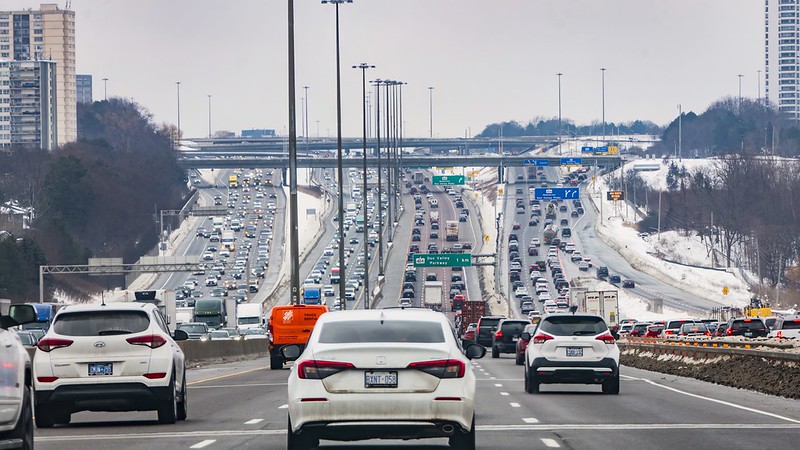
(lezumbalaberenjena/flickr)

(lezumbalaberenjena/flickr)

Transport Canada officials were aware funding for the popular electric vehicle rebate program was at risk of running out several months before the department told the public about it in January 2025, documents about the program suggest.

The documents also show officials were seemingly caught off guard by how quickly the funds did, in the end, dry up.

The sudden pausing of the program in January 2025 left dealerships on the hook for millions of dollars in outstanding claims — though the government would rectify it months later—and left customers with the impression the rebates would return, sending a chill through the EV market as sales plummeted.

Related Stories:

  • Analysis: New Auto Strategy Boosts Sovereignty, Aligns Canada with EV Transition
  • How Subsidized Leasing Can Drive EV Adoption

“It was particularly shocking to those dealers that had not had a chance to file claims,” said Huw Williams, a spokesperson for the Canadian Auto Dealers Association. “Nobody in the industry could have ever anticipated they would slam the door overnight.”

The rebates ran between 2019 and 2025 and generally offered between $2,500 and $5,000 off the purchase price of new plug-in hybrid or fully electric vehicle, with a maximum sale price of about $55,000.

Documents obtained by The Canadian Press under Access to Information law show Transport Canada officials knew as early as November 2024 that core funding for the incentive program for zero-emission vehicles — or iZEV — could run out in sometime between late December 2024 and early January 2025.

But the first public notice about iZEV funding nearing its end was not sent until Jan. 10, 2025. That notice said iZEV would likely pause earlier than its intended sunset date of March 31.

Three days later, the program was halted after $48 million in claims came in over a weekend — $43 million of which were from Tesla alone.

Transport Canada did have a strategy in the works by mid-December to notify the public on Jan. 8 of a planto pause the rebate program, the documents show. Officials had projected such a notification would come when there was $150 million of the funds remaining.

On Jan. 8, however, the final communications plan to notify the public was still awaiting approval from then-transport minister Anita Anand, whose staff were asking how much money was actually left.

Get the latest climate news and analysis, direct to your inbox.

Subscribe Today

View our latest digests

The answer was zero.

“The program has run out of funds,” a policy analyst wrote to the Anand’s staff. “This information is not yet in the public domain, so it should not be shared publicly or shared with others who would share it publicly until communicated.”

The documents show Transport Canada did draw $70 million from the undersubscribed rebate program called Incentives for Medium- and Heavy-Duty Zero-Emission Vehicles — or iMHZEV — to extend the lifespan of the more popular iZEV program.

The emailto Anand’s staff on Jan. 8 noted the surplus funding from iMHZEV was expected to last until Jan. 28.

The popularity of iZEV surged to a record-high number of rebate claims in consecutive months between October and December of 2024 — due in part to changes announced by the Quebec government to scale back its provincial program — and those funds dried up quickly. December alone saw more than $122 million in claims paid out.

The documents show Transport Canada intended to be proactive and give sufficient notice to the public, particularly since the government had been criticized before for abruptly ending other programs without enough public notice — like the Greener Homes Program and the Canada Digital Adoption Program.

“At subsequent Parliamentary committee meetings, departmental officials committed to ensuring an orderly wind-down of the iZEV program to avoid similar situations,” reads a memo to Anand sent in November 2024.

“As such, based on current burn rate projections and no known source of funds to continue with the programming, it is necessary to alert stakeholders now to enable them to plan appropriately and limit negative impacts on industry and consumers.”

The documents don’t explain why it took so long for the department to approve and implement its communications plan.

A draft copy of the communications plan says the department intended to align the announcement of the iZEV pause with other program announcements “to provide a cohesive message about the government’s ongoing environmental initiatives.”

The plan says the department also didn’t want to make the announcement during the annual UN climate conference in November 2024 as it “may not be ideal considering the popularity of the program.”

Transport Canada declined an interview request from The Canadian Press. Written questions on why it took so long for the government to roll out a communications plan also went unanswered.

“Under the previous government, Transport Canada planned and delivered a series of communications activities to support the iZEV Program throughout its entire life cycle, from launch to wind-down,” says a statement from the office of current Transport Minister Steven MacKinnon.

A senior government source, however, said the delay to the communications plan was due in part to the fact that there was political will to inject new funding into the program to keep it going.

The Canadian Press is not naming the source because they were not authorized to speak publicly about the government’s operations.

The source could not say why that funding never came through, but any hope for extending the program died when then-prime minister Justin Trudeau prorogued Parliament on Jan. 6, 2025. Transport Canada sent its notice to the public four days later.

The documents also show there was disagreement among Transport Canada’s senior officials regarding the use of the word “pause” in its public notice.

“Publicly, we have always said ‘the iZEV program would end on March 31,'” wrote director general of environmental policy Paula Vieira in an email chain on Jan. 8 approving media response lines.

“This very line was (part) of media package at the time we implemented 100% tariff on Chinese vehicles and made changes to the (iZEV) program,” she wrote.

Vieira also pointed to the government’s website, which referred to the program ending by March 31, 2025.

Transport Canada did not respond to questions about why the department changed the wording. The documents don’t show why it was changed but state it was approved by the department’s associate deputy ministers of programs and policy.

According to the senior government source, the department was reluctant to declare the program dead because of the willingness to boost its funding.

The Liberals’ election platform months later promised a return of zero-emission vehicle purchase incentives, while cabinet ministers teased their return following the election.

But the decision to hold out the promise of the incentives returning frustrated dealerships whose customers held off on buying a new EV as a result.

Monthly EV sales went from a high of 18 per cent of all vehicle sales in December 2024 to below seven per cent in February 2025.

The government finally brought rebates back earlier this month, offering $5,000 toward the cost of a fully electric vehicle and $2,500 toward plug-in hybrids. Those rebates will decrease every year until they’re phased out after 2030 — or until the money for the program runs out.

Taking questions from reporters on Parliament Hill earlier this week, MacKinnon said his department will “monitor and measure” how the funds are being drained, to ensure the new program isn’t ended so abruptly this time.

“The way the process works is you get a pre-approval before you can apply the rebate at point of sale, which is obviously what we want, and we’ll make sure that the free flow of information between us and dealer networks is assured,” MacKinnon said.

This report by The Canadian Press was first published Feb. 26, 2026.


in Canada, Electric Vehicles, Policy & Politics

Trending Stories

Facebook
Severe Storms & Flooding

540+ Dead, Hundreds Missing as Towering Flash Flood in Nepal Points to Extreme Heat, Heavy Rainfalls

August 28, 2026
997
Sarah Yurchevich
Data Centres & Tech

Alberta Woman Maps Out the Facts About Power-Hungry Data Centres

August 25, 2026
749
picryl
Canadian Sovereignty

Trump Trade War Could Be a Catalyst to Speed Canada’s Energy Transition, Experts Say

August 25, 2026
711

Leave a Reply Cancel reply

Your email address will not be published. Required fields are marked *

I agree to the Terms & Conditions and Privacy Policy.

Get the latest climate news and analysis, direct to your inbox.

Subscribe Today

Related Articles

Mixed Reactions, Unanswered Questions Surround Carney’s New Auto Strategy

Mixed Reactions, Unanswered Questions Surround Carney’s New Auto Strategy

February 10, 2026
Nearly One in Three Cars Germany Produced in 2025 Were Electric

Nearly One in Three Cars Germany Produced in 2025 Were Electric

February 9, 2026
New Auto Sector Strategy to Scrap EV Sales Mandate, Restore Purchase Incentive

New Auto Sector Strategy to Scrap EV Sales Mandate, Restore Purchase Incentive

February 5, 2026

The End of the World vs. the End of the Week: Carney’s Pushback on Trump’s Bullying Could Point to the Next Energy Transition Moment

by Mitchell Beer
August 23, 2026

…

Follow Us

Feds Knew EV Rebates Were Running out Months Before Telling Public, Documents Suggest

February 26, 2026
Reading time: 6 minutes
Full Story: The Canadian Press
Author: Nick Murray

(lezumbalaberenjena/flickr)

(lezumbalaberenjena/flickr)

Transport Canada officials were aware funding for the popular electric vehicle rebate program was at risk of running out several months before the department told the public about it in January 2025, documents about the program suggest.

The documents also show officials were seemingly caught off guard by how quickly the funds did, in the end, dry up.

The sudden pausing of the program in January 2025 left dealerships on the hook for millions of dollars in outstanding claims — though the government would rectify it months later—and left customers with the impression the rebates would return, sending a chill through the EV market as sales plummeted.

Related Stories:

  • Analysis: New Auto Strategy Boosts Sovereignty, Aligns Canada with EV Transition
  • How Subsidized Leasing Can Drive EV Adoption

“It was particularly shocking to those dealers that had not had a chance to file claims,” said Huw Williams, a spokesperson for the Canadian Auto Dealers Association. “Nobody in the industry could have ever anticipated they would slam the door overnight.”

The rebates ran between 2019 and 2025 and generally offered between $2,500 and $5,000 off the purchase price of new plug-in hybrid or fully electric vehicle, with a maximum sale price of about $55,000.

Documents obtained by The Canadian Press under Access to Information law show Transport Canada officials knew as early as November 2024 that core funding for the incentive program for zero-emission vehicles — or iZEV — could run out in sometime between late December 2024 and early January 2025.

But the first public notice about iZEV funding nearing its end was not sent until Jan. 10, 2025. That notice said iZEV would likely pause earlier than its intended sunset date of March 31.

Three days later, the program was halted after $48 million in claims came in over a weekend — $43 million of which were from Tesla alone.

Transport Canada did have a strategy in the works by mid-December to notify the public on Jan. 8 of a planto pause the rebate program, the documents show. Officials had projected such a notification would come when there was $150 million of the funds remaining.

On Jan. 8, however, the final communications plan to notify the public was still awaiting approval from then-transport minister Anita Anand, whose staff were asking how much money was actually left.

Get the latest climate news and analysis, direct to your inbox.

Subscribe Today

View our latest digests

The answer was zero.

“The program has run out of funds,” a policy analyst wrote to the Anand’s staff. “This information is not yet in the public domain, so it should not be shared publicly or shared with others who would share it publicly until communicated.”

The documents show Transport Canada did draw $70 million from the undersubscribed rebate program called Incentives for Medium- and Heavy-Duty Zero-Emission Vehicles — or iMHZEV — to extend the lifespan of the more popular iZEV program.

The emailto Anand’s staff on Jan. 8 noted the surplus funding from iMHZEV was expected to last until Jan. 28.

The popularity of iZEV surged to a record-high number of rebate claims in consecutive months between October and December of 2024 — due in part to changes announced by the Quebec government to scale back its provincial program — and those funds dried up quickly. December alone saw more than $122 million in claims paid out.

The documents show Transport Canada intended to be proactive and give sufficient notice to the public, particularly since the government had been criticized before for abruptly ending other programs without enough public notice — like the Greener Homes Program and the Canada Digital Adoption Program.

“At subsequent Parliamentary committee meetings, departmental officials committed to ensuring an orderly wind-down of the iZEV program to avoid similar situations,” reads a memo to Anand sent in November 2024.

“As such, based on current burn rate projections and no known source of funds to continue with the programming, it is necessary to alert stakeholders now to enable them to plan appropriately and limit negative impacts on industry and consumers.”

The documents don’t explain why it took so long for the department to approve and implement its communications plan.

A draft copy of the communications plan says the department intended to align the announcement of the iZEV pause with other program announcements “to provide a cohesive message about the government’s ongoing environmental initiatives.”

The plan says the department also didn’t want to make the announcement during the annual UN climate conference in November 2024 as it “may not be ideal considering the popularity of the program.”

Transport Canada declined an interview request from The Canadian Press. Written questions on why it took so long for the government to roll out a communications plan also went unanswered.

“Under the previous government, Transport Canada planned and delivered a series of communications activities to support the iZEV Program throughout its entire life cycle, from launch to wind-down,” says a statement from the office of current Transport Minister Steven MacKinnon.

A senior government source, however, said the delay to the communications plan was due in part to the fact that there was political will to inject new funding into the program to keep it going.

The Canadian Press is not naming the source because they were not authorized to speak publicly about the government’s operations.

The source could not say why that funding never came through, but any hope for extending the program died when then-prime minister Justin Trudeau prorogued Parliament on Jan. 6, 2025. Transport Canada sent its notice to the public four days later.

The documents also show there was disagreement among Transport Canada’s senior officials regarding the use of the word “pause” in its public notice.

“Publicly, we have always said ‘the iZEV program would end on March 31,'” wrote director general of environmental policy Paula Vieira in an email chain on Jan. 8 approving media response lines.

“This very line was (part) of media package at the time we implemented 100% tariff on Chinese vehicles and made changes to the (iZEV) program,” she wrote.

Vieira also pointed to the government’s website, which referred to the program ending by March 31, 2025.

Transport Canada did not respond to questions about why the department changed the wording. The documents don’t show why it was changed but state it was approved by the department’s associate deputy ministers of programs and policy.

According to the senior government source, the department was reluctant to declare the program dead because of the willingness to boost its funding.

The Liberals’ election platform months later promised a return of zero-emission vehicle purchase incentives, while cabinet ministers teased their return following the election.

But the decision to hold out the promise of the incentives returning frustrated dealerships whose customers held off on buying a new EV as a result.

Monthly EV sales went from a high of 18 per cent of all vehicle sales in December 2024 to below seven per cent in February 2025.

The government finally brought rebates back earlier this month, offering $5,000 toward the cost of a fully electric vehicle and $2,500 toward plug-in hybrids. Those rebates will decrease every year until they’re phased out after 2030 — or until the money for the program runs out.

Taking questions from reporters on Parliament Hill earlier this week, MacKinnon said his department will “monitor and measure” how the funds are being drained, to ensure the new program isn’t ended so abruptly this time.

“The way the process works is you get a pre-approval before you can apply the rebate at point of sale, which is obviously what we want, and we’ll make sure that the free flow of information between us and dealer networks is assured,” MacKinnon said.

This report by The Canadian Press was first published Feb. 26, 2026.


in Canada, Electric Vehicles, Policy & Politics

Leave a Reply Cancel reply

Your email address will not be published. Required fields are marked *

I agree to the Terms & Conditions and Privacy Policy.

Related Articles

Mixed Reactions, Unanswered Questions Surround Carney’s New Auto Strategy

Mixed Reactions, Unanswered Questions Surround Carney’s New Auto Strategy

February 10, 2026
Nearly One in Three Cars Germany Produced in 2025 Were Electric

Nearly One in Three Cars Germany Produced in 2025 Were Electric

February 9, 2026
New Auto Sector Strategy to Scrap EV Sales Mandate, Restore Purchase Incentive

New Auto Sector Strategy to Scrap EV Sales Mandate, Restore Purchase Incentive

February 5, 2026

Trending Stories

Facebook

540+ Dead, Hundreds Missing as Towering Flash Flood in Nepal Points to Extreme Heat, Heavy Rainfalls

August 28, 2026
997
Sarah Yurchevich

Alberta Woman Maps Out the Facts About Power-Hungry Data Centres

August 25, 2026
749
picryl

Trump Trade War Could Be a Catalyst to Speed Canada’s Energy Transition, Experts Say

August 25, 2026
711

The End of the World vs. the End of the Week: Carney’s Pushback on Trump’s Bullying Could Point to the Next Energy Transition Moment

by Mitchell Beer
August 23, 2026

…

Follow Us

Copyright 2026 © Energy Mix Productions Inc. All rights reserved.

  • About
  • Contact
  • Privacy Policy and Copyright
  • Cookie Policy
No Result
View All Result
  • Topics
    • Buildings & Infrastructure
    • Climate Equity & Justice
      • Energy Poverty
      • Indigenous Rights & Reconciliation
    • Climate Finance
      • Community Climate Finance
      • Finance & Investment
      • Insurance & Liability
      • Subsidies
    • Climate Impacts & Adaptation
      • Biodiversity & Habitat
      • Drought & Wildfires
      • Forests & Deforestation
      • Health & Safety
      • Heat & Temperature
      • Ice Loss & Sea Level Rise
      • Severe Storms & Flooding
    • Emissions
      • Carbon Levels & Measurement
      • CCS & Negative Emissions
      • Methane
    • Energy
      • Renewables
      • Fossil Fuels
      • Hydrogen
      • Nuclear
      • Batteries & Storage
      • Energy Efficiency
      • Power Grids
    • Food & Agriculture
    • Industry
      • Data Centres & Tech
      • Critical Minerals & Mining
      • Petrochemicals & Plastics
    • Policy & Politics
      • Carbon Pricing
      • COP Conferences
      • Elections
      • Energy Politics
      • International Security & War
      • Legal & Regulatory
    • Research & Innovation
      • International Agencies & Studies
      • Research & Development
    • Society & Culture
      • Climate Action
      • Mis/Disinformation & Greenwashing
      • Jobs & Training
      • Leisure & Recreation
      • Media, Messaging, & Public Opinion
    • Transportation & Mobility
      • Electric Vehicles
      • Shipping & Aviation
      • Transit
      • Walking, Biking & Micromobility
  • Regions
    • Africa
    • Arctic & Antarctica
    • Asia
    • Australia
    • Canada
    • International
    • Mexico & the Caribbean
    • Middle East
    • Oceans
    • Small Island States
    • South & Central America
    • Subnational
    • United States
    • UK & Europe
  • Special Coverage
    • The Weekender
    • IEA2026
    • Canada’s Major Projects Office
    • Hidden Wonder Valley
    • COP30
    • Cities & Communities
    • Heat & Power
    • Community Climate Finance
  • More Resources
    • Climate Glossary
    • What If We Changed the Conversation on Climate Change?
    • Eco-Anxiety
  • About
  • Contact

Copyright 2025 © Smarter Shift Inc. and Energy Mix Productions Inc. All rights reserved.

Manage Cookie Consent
To provide the best experiences, we use technologies like cookies to store and/or access device information. Consenting to these technologies will allow us to process data such as browsing behaviour or unique IDs on this site. Not consenting or withdrawing consent, may adversely affect certain features and functions.
Functional Always active
The technical storage or access is strictly necessary for the legitimate purpose of enabling the use of a specific service explicitly requested by the subscriber or user, or for the sole purpose of carrying out the transmission of a communication over an electronic communications network.
Preferences
The technical storage or access is necessary for the legitimate purpose of storing preferences that are not requested by the subscriber or user.
Statistics
The technical storage or access that is used exclusively for statistical purposes. The technical storage or access that is used exclusively for anonymous statistical purposes. Without a subpoena, voluntary compliance on the part of your Internet Service Provider, or additional records from a third party, information stored or retrieved for this purpose alone cannot usually be used to identify you.
Marketing
The technical storage or access is required to create user profiles to send advertising, or to track the user on a website or across several websites for similar marketing purposes.
  • Manage options
  • Manage services
  • Manage {vendor_count} vendors
  • Read more about these purposes
View preferences
  • {title}
  • {title}
  • {title}
No Result
View All Result
  • Topics
    • Buildings & Infrastructure
    • Climate Equity & Justice
      • Energy Poverty
      • Indigenous Rights & Reconciliation
    • Climate Finance
      • Community Climate Finance
      • Finance & Investment
      • Insurance & Liability
      • Subsidies
    • Climate Impacts & Adaptation
      • Biodiversity & Habitat
      • Drought & Wildfires
      • Forests & Deforestation
      • Health & Safety
      • Heat & Temperature
      • Ice Loss & Sea Level Rise
      • Severe Storms & Flooding
    • Emissions
      • Carbon Levels & Measurement
      • CCS & Negative Emissions
      • Methane
    • Energy
      • Renewables
      • Fossil Fuels
      • Hydrogen
      • Nuclear
      • Batteries & Storage
      • Energy Efficiency
      • Power Grids
    • Food & Agriculture
    • Industry
      • Data Centres & Tech
      • Critical Minerals & Mining
      • Petrochemicals & Plastics
    • Policy & Politics
      • Carbon Pricing
      • COP Conferences
      • Elections
      • Energy Politics
      • International Security & War
      • Legal & Regulatory
    • Research & Innovation
      • International Agencies & Studies
      • Research & Development
    • Society & Culture
      • Climate Action
      • Mis/Disinformation & Greenwashing
      • Jobs & Training
      • Leisure & Recreation
      • Media, Messaging, & Public Opinion
    • Transportation & Mobility
      • Electric Vehicles
      • Shipping & Aviation
      • Transit
      • Walking, Biking & Micromobility
  • Regions
    • Africa
    • Arctic & Antarctica
    • Asia
    • Australia
    • Canada
    • International
    • Mexico & the Caribbean
    • Middle East
    • Oceans
    • Small Island States
    • South & Central America
    • Subnational
    • United States
    • UK & Europe
  • Special Coverage
    • The Weekender
    • IEA2026
    • Canada’s Major Projects Office
    • Hidden Wonder Valley
    • COP30
    • Cities & Communities
    • Heat & Power
    • Community Climate Finance
  • More Resources
    • Climate Glossary
    • What If We Changed the Conversation on Climate Change?
    • Eco-Anxiety
  • About
  • Contact

Copyright 2025 © Smarter Shift Inc. and Energy Mix Productions Inc. All rights reserved.