The Energy Mix
Subscribe
Donate
  • Topics
    • Buildings & Infrastructure
    • Climate Equity & Justice
      • Energy Poverty
      • Indigenous Rights & Reconciliation
    • Climate Finance
      • Community Climate Finance
      • Finance & Investment
      • Insurance & Liability
      • Subsidies
    • Climate Impacts & Adaptation
      • Biodiversity & Habitat
      • Drought & Wildfires
      • Forests & Deforestation
      • Health & Safety
      • Heat & Temperature
      • Ice Loss & Sea Level Rise
      • Severe Storms & Flooding
    • Emissions
      • Carbon Levels & Measurement
      • CCS & Negative Emissions
      • Methane
    • Energy
      • Renewables
      • Fossil Fuels
      • Hydrogen
      • Nuclear
      • Batteries & Storage
      • Energy Efficiency
      • Power Grids
    • Food & Agriculture
    • Industry
      • Data Centres & Tech
      • Critical Minerals & Mining
      • Petrochemicals & Plastics
    • Policy & Politics
      • Carbon Pricing
      • COP Conferences
      • Elections
      • Energy Politics
      • International Security & War
      • Legal & Regulatory
    • Research & Innovation
      • International Agencies & Studies
      • Research & Development
    • Society & Culture
      • Climate Action
      • Mis/Disinformation & Greenwashing
      • Jobs & Training
      • Leisure & Recreation
      • Media, Messaging, & Public Opinion
    • Transportation & Mobility
      • Electric Vehicles
      • Shipping & Aviation
      • Transit
      • Walking, Biking & Micromobility
  • Regions
    • Africa
    • Arctic & Antarctica
    • Asia
    • Australia
    • Canada
    • International
    • Mexico & the Caribbean
    • Middle East
    • Oceans
    • Small Island States
    • South & Central America
    • Subnational
    • United States
    • UK & Europe
  • Special Coverage
    • The Weekender
    • IEA2026
    • Canada’s Major Projects Office
    • Hidden Wonder Valley
    • COP30
    • Cities & Communities
    • Heat & Power
    • Community Climate Finance
  • More Resources
    • Climate Glossary
    • What If We Changed the Conversation on Climate Change?
    • Eco-Anxiety
  • About
  • Contact
No Result
View All Result
The Energy Mix
  • Topics
    • Buildings & Infrastructure
    • Climate Equity & Justice
      • Energy Poverty
      • Indigenous Rights & Reconciliation
    • Climate Finance
      • Community Climate Finance
      • Finance & Investment
      • Insurance & Liability
      • Subsidies
    • Climate Impacts & Adaptation
      • Biodiversity & Habitat
      • Drought & Wildfires
      • Forests & Deforestation
      • Health & Safety
      • Heat & Temperature
      • Ice Loss & Sea Level Rise
      • Severe Storms & Flooding
    • Emissions
      • Carbon Levels & Measurement
      • CCS & Negative Emissions
      • Methane
    • Energy
      • Renewables
      • Fossil Fuels
      • Hydrogen
      • Nuclear
      • Batteries & Storage
      • Energy Efficiency
      • Power Grids
    • Food & Agriculture
    • Industry
      • Data Centres & Tech
      • Critical Minerals & Mining
      • Petrochemicals & Plastics
    • Policy & Politics
      • Carbon Pricing
      • COP Conferences
      • Elections
      • Energy Politics
      • International Security & War
      • Legal & Regulatory
    • Research & Innovation
      • International Agencies & Studies
      • Research & Development
    • Society & Culture
      • Climate Action
      • Mis/Disinformation & Greenwashing
      • Jobs & Training
      • Leisure & Recreation
      • Media, Messaging, & Public Opinion
    • Transportation & Mobility
      • Electric Vehicles
      • Shipping & Aviation
      • Transit
      • Walking, Biking & Micromobility
  • Regions
    • Africa
    • Arctic & Antarctica
    • Asia
    • Australia
    • Canada
    • International
    • Mexico & the Caribbean
    • Middle East
    • Oceans
    • Small Island States
    • South & Central America
    • Subnational
    • United States
    • UK & Europe
  • Special Coverage
    • The Weekender
    • IEA2026
    • Canada’s Major Projects Office
    • Hidden Wonder Valley
    • COP30
    • Cities & Communities
    • Heat & Power
    • Community Climate Finance
  • More Resources
    • Climate Glossary
    • What If We Changed the Conversation on Climate Change?
    • Eco-Anxiety
  • About
  • Contact
Subscribe
Donate
The Energy Mix
Subscribe

How Climate Change Endangers Mothers and Children

September 9, 2025
Reading time: 8 minutes

Pregnant women march during a rally for climate action at Sydney Town Hall on December 11, 2019, in Sydney, Australia.
(Jenny Evans/Getty Images via Grist)

Pregnant women march during a rally for climate action at Sydney Town Hall on December 11, 2019, in Sydney, Australia. (Jenny Evans/Getty Images via Grist)

This story is a collaboration between Vox and Grist and builds on Expecting worse: Giving birth on a planet in crisis, a project by Vox, Grist, and The 19th that examines how climate change impacts reproductive health—from menstruation to conception to birth. Explore the full series here.

Climate change poses unique threats to some of the most foundational human experiences: giving birth and growing up. That’s the conclusion of a recent summary report compiled by researchers at the London School of Hygiene and Tropical Medicine, which shows that climate change is exposing tens of millions of women and children to a worsening slate of physical, mental, and social risks—particularly if they live in the poorest reaches of the globe. 

Extreme heat, malnutrition linked to crop failures, and air pollution caused by the burning of fossil fuels are driving higher rates of preterm birth and infant and maternal death, undermining many countries’ efforts to improve public health. Already, 1 billion children experience a level of risk that the report characterizes as extreme.

“We’re still just beginning to understand the dangers,” the authors wrote in their review of the limited existing scientific literature on the subject, “but the problem is clearly enormous.”

Here are the 5 biggest takeaways: 

Extreme heat is particularly dangerous for pregnant women and newborns.

High temperatures are linked to premature births, stillbirths, low birth weight, and congenital defects, the report said, pulling from a study conducted by Drexel University researchers in Philadelphia who found that, for every 1.8 degrees that the city’s daily minimum temperature rose above 75°F, the risk of infant death grew about 22%.

Get the latest climate news and analysis, direct to your inbox.

Subscribe Today

View our latest digests

“Whatever associations we’re seeing in the U.S. are much, much greater in other areas, particularly the areas of the world that are most impacted by heat and then also already impacted by adverse birth outcomes,” said Rupa Basu, chief science advisor for the Center for Climate Health and Equity at the University of California, San Francisco.

“This is the tip of the iceberg,” added Basu, who was not involved in the new report.  

Heat waves also raise the odds of early birth by 16 to 26%, according to the report, and women who conceive during the hottest months of the year are at higher risk of developing preeclampsia, a pregnancy complication that can become dangerous if left untreated. 

In The Gambia, where 70% of the agricultural workforce is female, a survey of pregnant farmers conducted by London School of Hygiene and Tropical Medicine researchers found that women were being exposed to conditions that overwhelmed their capacity to regulate their internal temperatures 30% of the time. Up to 60% of women exhibited at least one symptom of heat stress and heat-related illness, such as vomiting and dizziness. Diagnostic tests showed that a third of pregnant farmers showed signs of acute fetal strain. 

Air pollution is a silent killer.

The burning of fossil fuels—and a related surge in wildfires burning over the earth’s surface—are likely linked to a staggering proportion of low birth weight cases globally: 16%, according to the report. That’s because the combustion of fossil fuels such as coal, oil, and gas produces tiny toxic molecules, and wildfire smoke contains fine particulate matter that is infamous for causing a slew of adverse health effects. At least 7 million children in the U.S. are exposed to wildfire smoke every year, and that number is rising quickly as rising temperatures have driven a doubling of extreme wildfire activity worldwide over the past 20-some years. In 2010, researchers linked 2.7 to 3.4 million preterm births around the world to air pollution exposure.

“Risky, sublethal effects of air pollution are also coming into focus,” the report continues. One study conducted using data on 400,000 births in southern California found that a woman’s exposure to fine particulate matter during pregnancy may increase her odds of spontaneous preterm birth by 15%, especially if that exposure happens during the second trimester. 

Mothers may face mental health burdens as a result of air pollution, too: The odds of postpartum depression rose 25% in women exposed to a range of different types of air pollution in their second trimester. 

Climate change is already causing serious and measurable harm to children.

One billion children worldwide are at “extremely high risk” from the effects of climate change—meaning they live in areas prone to sudden, disruptive environmental shocks and already experience high levels of poverty, food insecurity, and lack of access to medical infrastructure. The African continent, which is home to countries with some of the highest mortality rates for children under 5 years old in the world, saw a 180% increase in flooding between 2002 and 2021. And a study of 37 African countries published last year identified a steep rise in infant mortality due to drowning and waterborne diseases caused by flooding in the past five years. (Exposure to repeated flooding can overwhelm sewage systems and contaminate drinking water supplies with fecal matter and other pollutants that can lead to disease.)

Climate-driven drought in Africa is contributing to another adverse health outcome: malnutrition. Since 1961, climate change has led to a 34% decrease in agricultural productivity across the continent, according to the report. A deadly cycle of drought and flooding has wiped out crop yields, contributing to stubbornly high rates of infant malnutrition in many sub-Saharan African countries. 

These problems will get worse, but how much worse depends on how much global emissions continue to rise.

The report modeled what different emissions scenarios would mean for maternal and child health in two countries: South Africa and Kenya. In a low emissions scenario, in which average warming is limited to 1.5°C—or 2.7°F—globally, childhood mortality in both countries would decline between 2040 and 2059, thanks in large part to projected gains in safeguarding public health that are already in the works. Those gains, however, are predicated on sustained aid from developed countries like the U.S., which have produced the lion’s share of emissions driving the climate crisis. The Trump administration has made seismic changes to America’s international funding infrastructure in recent months, including effectively eliminating the United States Agency for International Development, or USAID, and its related aid programs. 
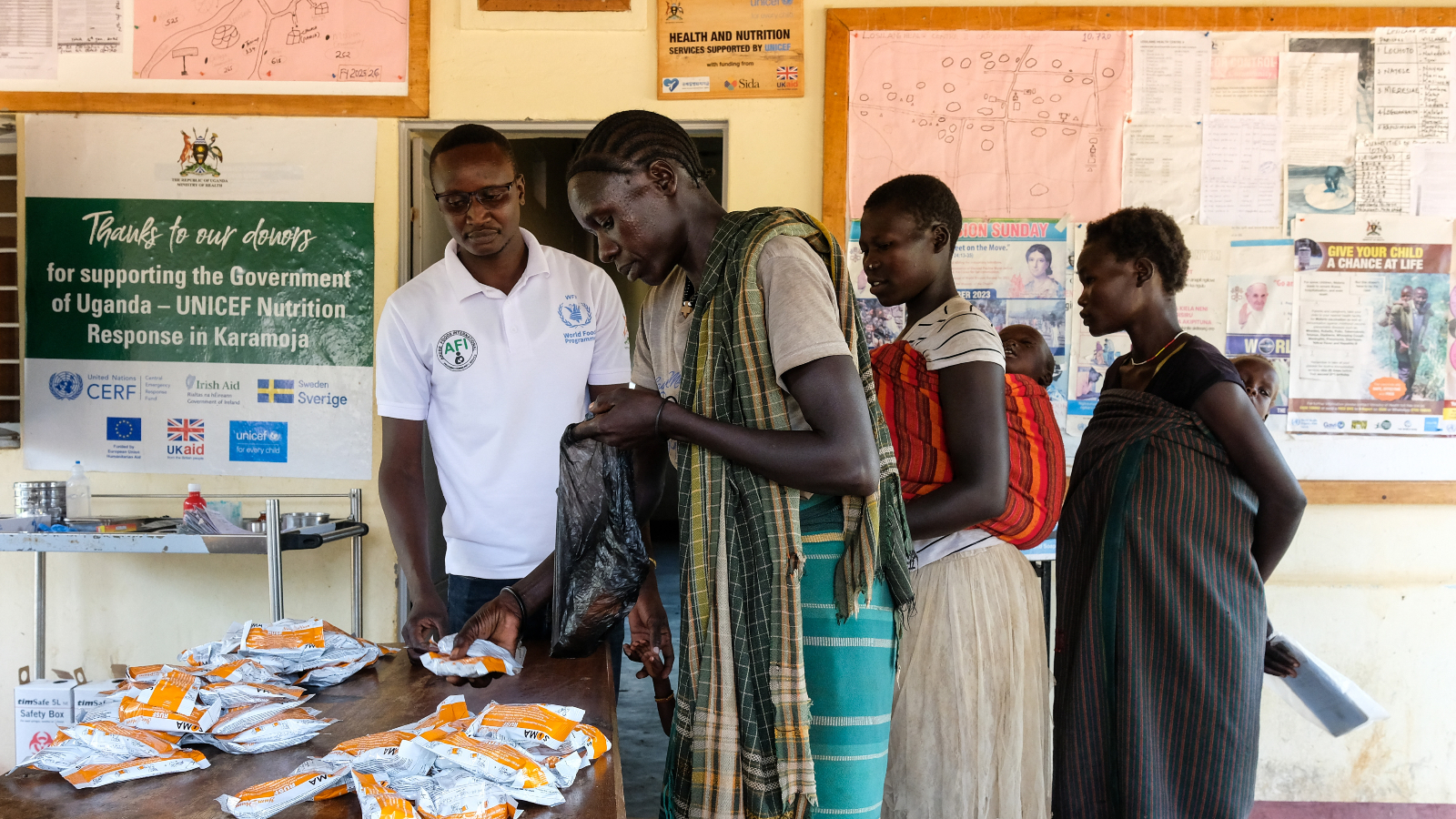
Mothers and their children line up for nutrition assistance in Uganda.

A breast feeding mother collects nutritional food for her baby after a nutrition screening at Losilang Health Center II in Kotido district on July 23, 2025, in Karamoja region, Uganda. (Hajarah Nalwadda/Getty Images via Grist)

A medium emissions scenario, where average global temperatures increase by 2.5 degrees to 3 degrees Celsius, would override that expected progress, leading to a 20% increase in child mortality rates in South Africa and stable rates in Kenya, where there has been much investment in protecting child health. Preterm birth rates in both countries would also rise substantially even with low rates of planetary warming. Worldwide, climate-driven malnutrition could lead to an additional 28 million underweight children over the next 25 years.  

Regardless of which emissions path the world ends up following, a shift toward a more isolationist approach among the world’s richest countries threatens to exacerbate the risks pregnant women and children already face. As the planet continues to warm, those risks will keep multiplying. 

We don’t have to wait for global warming to stop to save lives.

Much can be done to prevent suffering right now. Solutions range from straightforward to complex: City planners can plant more trees in urban areas to keep pregnant people and children, whose internal systems are prone to overheating, cool. Organizations can identify ways to get public health data from the most underresourced parts of the globe. And nations can take steps to incorporate maternal and child health into their climate plans.

Such shifts are achievable, and there are precedents. Since 2013, for example, local air pollution strategies in Chinese megacities have been forcing rates of respiratory illness down dramatically, an echo of what happened in the U.S. after the passage of Clean Air Act amendments in 1970. To combat climate-driven harm today, nations can direct resources to maternal health wards, cooling technologies for buildings, and flood-resistant infrastructure. They can also update building codes to make sure hospitals and other health facilities are keeping their patients safe from extreme weather events. Getting nutritional supplements to pregnant people in countries dealing with high rates of food insecurity can offset some of the dangers of malnutrition; researchers have found that reducing vitamin deficiency in pregnant mothers slashed neonatal mortality by nearly 30%. 

In Philadelphia, city leaders implemented a US$210,000 early warning system for extreme heat in 1995. It saved the city nearly $500 million in diverted costs over its first three years of operation. The new report argues that more cities in the U.S. and around the world should implement similar measures.

The best method of ensuring that mothers and children are shielded from the health consequences of climate change, according to the report’s authors, is for countries to undertake aggressive climate adaptation plans and integrate maternal and child health considerations into those plans. Because, when it comes to climate change, the report’s authors write, “the crisis is already upon us.”





in Cities & Communities, Climate Impacts & Adaptation, Health & Safety, Heat & Temperature, International Agencies & Studies

Trending Stories

(Julie Dabrusin/Facebook)
Carbon Pricing

EXCLUSIVE: Carbon Tax Exemption for Canada Would Break World Trade Rules, EU Law

November 3, 2026
1.7k
Finance Minister François-Philippe Champagne at 2025 Collision Conferencef/flickr
Finance & Investment

Federal Budget Funds Clean Grid and Energy Efficiency, Touts ‘Investment Supercycle’ Built on Major Projects

November 6, 2026
897
Alberta Environment and Protected Areas Minister Grant Hunter, Alberta Newsroom/flickr
Legal & Regulatory

Alberta Accused of Rushing Environmental Law Changes Behind Closed Doors

November 5, 2026
801

Leave a Reply Cancel reply

Your email address will not be published. Required fields are marked *

I agree to the Terms & Conditions and Privacy Policy.

Get the latest climate news and analysis, direct to your inbox.

Subscribe Today

Related Articles

‘Piercing Cold’ Produces Power Outages Across Canada and U.S., Methane Leaks in Texas

‘Piercing Cold’ Produces Power Outages Across Canada and U.S., Methane Leaks in Texas

January 26, 2026
Wildfires, Flooding Hit Communities on 3 Continents

Wildfires, Flooding Hit Communities on 3 Continents

January 21, 2026
Cloud Seeding Brings Floods as Iran’s Drought Deepens

Cloud Seeding Brings Floods as Iran’s Drought Deepens

November 18, 2025

An ‘Extinction-Level Event’ for Trump. A Renewable Energy Surge. A Spiralling Climate Crisis. Is Your Head Spinning Yet?

by Mitchell Beer
November 8, 2026

…

Follow Us

How Climate Change Endangers Mothers and Children

September 9, 2025
Reading time: 8 minutes

Pregnant women march during a rally for climate action at Sydney Town Hall on December 11, 2019, in Sydney, Australia.
(Jenny Evans/Getty Images via Grist)

Pregnant women march during a rally for climate action at Sydney Town Hall on December 11, 2019, in Sydney, Australia. (Jenny Evans/Getty Images via Grist)

This story is a collaboration between Vox and Grist and builds on Expecting worse: Giving birth on a planet in crisis, a project by Vox, Grist, and The 19th that examines how climate change impacts reproductive health—from menstruation to conception to birth. Explore the full series here.

Climate change poses unique threats to some of the most foundational human experiences: giving birth and growing up. That’s the conclusion of a recent summary report compiled by researchers at the London School of Hygiene and Tropical Medicine, which shows that climate change is exposing tens of millions of women and children to a worsening slate of physical, mental, and social risks—particularly if they live in the poorest reaches of the globe. 

Extreme heat, malnutrition linked to crop failures, and air pollution caused by the burning of fossil fuels are driving higher rates of preterm birth and infant and maternal death, undermining many countries’ efforts to improve public health. Already, 1 billion children experience a level of risk that the report characterizes as extreme.

“We’re still just beginning to understand the dangers,” the authors wrote in their review of the limited existing scientific literature on the subject, “but the problem is clearly enormous.”

Here are the 5 biggest takeaways: 

Extreme heat is particularly dangerous for pregnant women and newborns.

High temperatures are linked to premature births, stillbirths, low birth weight, and congenital defects, the report said, pulling from a study conducted by Drexel University researchers in Philadelphia who found that, for every 1.8 degrees that the city’s daily minimum temperature rose above 75°F, the risk of infant death grew about 22%.

Get the latest climate news and analysis, direct to your inbox.

Subscribe Today

View our latest digests

“Whatever associations we’re seeing in the U.S. are much, much greater in other areas, particularly the areas of the world that are most impacted by heat and then also already impacted by adverse birth outcomes,” said Rupa Basu, chief science advisor for the Center for Climate Health and Equity at the University of California, San Francisco.

“This is the tip of the iceberg,” added Basu, who was not involved in the new report.  

Heat waves also raise the odds of early birth by 16 to 26%, according to the report, and women who conceive during the hottest months of the year are at higher risk of developing preeclampsia, a pregnancy complication that can become dangerous if left untreated. 

In The Gambia, where 70% of the agricultural workforce is female, a survey of pregnant farmers conducted by London School of Hygiene and Tropical Medicine researchers found that women were being exposed to conditions that overwhelmed their capacity to regulate their internal temperatures 30% of the time. Up to 60% of women exhibited at least one symptom of heat stress and heat-related illness, such as vomiting and dizziness. Diagnostic tests showed that a third of pregnant farmers showed signs of acute fetal strain. 

Air pollution is a silent killer.

The burning of fossil fuels—and a related surge in wildfires burning over the earth’s surface—are likely linked to a staggering proportion of low birth weight cases globally: 16%, according to the report. That’s because the combustion of fossil fuels such as coal, oil, and gas produces tiny toxic molecules, and wildfire smoke contains fine particulate matter that is infamous for causing a slew of adverse health effects. At least 7 million children in the U.S. are exposed to wildfire smoke every year, and that number is rising quickly as rising temperatures have driven a doubling of extreme wildfire activity worldwide over the past 20-some years. In 2010, researchers linked 2.7 to 3.4 million preterm births around the world to air pollution exposure.

“Risky, sublethal effects of air pollution are also coming into focus,” the report continues. One study conducted using data on 400,000 births in southern California found that a woman’s exposure to fine particulate matter during pregnancy may increase her odds of spontaneous preterm birth by 15%, especially if that exposure happens during the second trimester. 

Mothers may face mental health burdens as a result of air pollution, too: The odds of postpartum depression rose 25% in women exposed to a range of different types of air pollution in their second trimester. 

Climate change is already causing serious and measurable harm to children.

One billion children worldwide are at “extremely high risk” from the effects of climate change—meaning they live in areas prone to sudden, disruptive environmental shocks and already experience high levels of poverty, food insecurity, and lack of access to medical infrastructure. The African continent, which is home to countries with some of the highest mortality rates for children under 5 years old in the world, saw a 180% increase in flooding between 2002 and 2021. And a study of 37 African countries published last year identified a steep rise in infant mortality due to drowning and waterborne diseases caused by flooding in the past five years. (Exposure to repeated flooding can overwhelm sewage systems and contaminate drinking water supplies with fecal matter and other pollutants that can lead to disease.)

Climate-driven drought in Africa is contributing to another adverse health outcome: malnutrition. Since 1961, climate change has led to a 34% decrease in agricultural productivity across the continent, according to the report. A deadly cycle of drought and flooding has wiped out crop yields, contributing to stubbornly high rates of infant malnutrition in many sub-Saharan African countries. 

These problems will get worse, but how much worse depends on how much global emissions continue to rise.

The report modeled what different emissions scenarios would mean for maternal and child health in two countries: South Africa and Kenya. In a low emissions scenario, in which average warming is limited to 1.5°C—or 2.7°F—globally, childhood mortality in both countries would decline between 2040 and 2059, thanks in large part to projected gains in safeguarding public health that are already in the works. Those gains, however, are predicated on sustained aid from developed countries like the U.S., which have produced the lion’s share of emissions driving the climate crisis. The Trump administration has made seismic changes to America’s international funding infrastructure in recent months, including effectively eliminating the United States Agency for International Development, or USAID, and its related aid programs. 

Mothers and their children line up for nutrition assistance in Uganda.

A breast feeding mother collects nutritional food for her baby after a nutrition screening at Losilang Health Center II in Kotido district on July 23, 2025, in Karamoja region, Uganda. (Hajarah Nalwadda/Getty Images via Grist)

A medium emissions scenario, where average global temperatures increase by 2.5 degrees to 3 degrees Celsius, would override that expected progress, leading to a 20% increase in child mortality rates in South Africa and stable rates in Kenya, where there has been much investment in protecting child health. Preterm birth rates in both countries would also rise substantially even with low rates of planetary warming. Worldwide, climate-driven malnutrition could lead to an additional 28 million underweight children over the next 25 years.  

Regardless of which emissions path the world ends up following, a shift toward a more isolationist approach among the world’s richest countries threatens to exacerbate the risks pregnant women and children already face. As the planet continues to warm, those risks will keep multiplying. 

We don’t have to wait for global warming to stop to save lives.

Much can be done to prevent suffering right now. Solutions range from straightforward to complex: City planners can plant more trees in urban areas to keep pregnant people and children, whose internal systems are prone to overheating, cool. Organizations can identify ways to get public health data from the most underresourced parts of the globe. And nations can take steps to incorporate maternal and child health into their climate plans.

Such shifts are achievable, and there are precedents. Since 2013, for example, local air pollution strategies in Chinese megacities have been forcing rates of respiratory illness down dramatically, an echo of what happened in the U.S. after the passage of Clean Air Act amendments in 1970. To combat climate-driven harm today, nations can direct resources to maternal health wards, cooling technologies for buildings, and flood-resistant infrastructure. They can also update building codes to make sure hospitals and other health facilities are keeping their patients safe from extreme weather events. Getting nutritional supplements to pregnant people in countries dealing with high rates of food insecurity can offset some of the dangers of malnutrition; researchers have found that reducing vitamin deficiency in pregnant mothers slashed neonatal mortality by nearly 30%. 

In Philadelphia, city leaders implemented a US$210,000 early warning system for extreme heat in 1995. It saved the city nearly $500 million in diverted costs over its first three years of operation. The new report argues that more cities in the U.S. and around the world should implement similar measures.

The best method of ensuring that mothers and children are shielded from the health consequences of climate change, according to the report’s authors, is for countries to undertake aggressive climate adaptation plans and integrate maternal and child health considerations into those plans. Because, when it comes to climate change, the report’s authors write, “the crisis is already upon us.”


in Cities & Communities, Climate Impacts & Adaptation, Health & Safety, Heat & Temperature, International Agencies & Studies

Leave a Reply Cancel reply

Your email address will not be published. Required fields are marked *

I agree to the Terms & Conditions and Privacy Policy.

Related Articles

‘Piercing Cold’ Produces Power Outages Across Canada and U.S., Methane Leaks in Texas

‘Piercing Cold’ Produces Power Outages Across Canada and U.S., Methane Leaks in Texas

January 26, 2026
Wildfires, Flooding Hit Communities on 3 Continents

Wildfires, Flooding Hit Communities on 3 Continents

January 21, 2026
Cloud Seeding Brings Floods as Iran’s Drought Deepens

Cloud Seeding Brings Floods as Iran’s Drought Deepens

November 18, 2025

Trending Stories

(Julie Dabrusin/Facebook)

EXCLUSIVE: Carbon Tax Exemption for Canada Would Break World Trade Rules, EU Law

November 3, 2026
1.7k
Finance Minister François-Philippe Champagne at 2025 Collision Conferencef/flickr

Federal Budget Funds Clean Grid and Energy Efficiency, Touts ‘Investment Supercycle’ Built on Major Projects

November 6, 2026
897
Alberta Environment and Protected Areas Minister Grant Hunter, Alberta Newsroom/flickr

Alberta Accused of Rushing Environmental Law Changes Behind Closed Doors

November 5, 2026
801

An ‘Extinction-Level Event’ for Trump. A Renewable Energy Surge. A Spiralling Climate Crisis. Is Your Head Spinning Yet?

by Mitchell Beer
November 8, 2026

…

Follow Us

Copyright 2026 © Energy Mix Productions Inc. All rights reserved.

  • About
  • Contact
  • Privacy Policy and Copyright
  • Cookie Policy
No Result
View All Result
  • Topics
    • Buildings & Infrastructure
    • Climate Equity & Justice
      • Energy Poverty
      • Indigenous Rights & Reconciliation
    • Climate Finance
      • Community Climate Finance
      • Finance & Investment
      • Insurance & Liability
      • Subsidies
    • Climate Impacts & Adaptation
      • Biodiversity & Habitat
      • Drought & Wildfires
      • Forests & Deforestation
      • Health & Safety
      • Heat & Temperature
      • Ice Loss & Sea Level Rise
      • Severe Storms & Flooding
    • Emissions
      • Carbon Levels & Measurement
      • CCS & Negative Emissions
      • Methane
    • Energy
      • Renewables
      • Fossil Fuels
      • Hydrogen
      • Nuclear
      • Batteries & Storage
      • Energy Efficiency
      • Power Grids
    • Food & Agriculture
    • Industry
      • Data Centres & Tech
      • Critical Minerals & Mining
      • Petrochemicals & Plastics
    • Policy & Politics
      • Carbon Pricing
      • COP Conferences
      • Elections
      • Energy Politics
      • International Security & War
      • Legal & Regulatory
    • Research & Innovation
      • International Agencies & Studies
      • Research & Development
    • Society & Culture
      • Climate Action
      • Mis/Disinformation & Greenwashing
      • Jobs & Training
      • Leisure & Recreation
      • Media, Messaging, & Public Opinion
    • Transportation & Mobility
      • Electric Vehicles
      • Shipping & Aviation
      • Transit
      • Walking, Biking & Micromobility
  • Regions
    • Africa
    • Arctic & Antarctica
    • Asia
    • Australia
    • Canada
    • International
    • Mexico & the Caribbean
    • Middle East
    • Oceans
    • Small Island States
    • South & Central America
    • Subnational
    • United States
    • UK & Europe
  • Special Coverage
    • The Weekender
    • IEA2026
    • Canada’s Major Projects Office
    • Hidden Wonder Valley
    • COP30
    • Cities & Communities
    • Heat & Power
    • Community Climate Finance
  • More Resources
    • Climate Glossary
    • What If We Changed the Conversation on Climate Change?
    • Eco-Anxiety
  • About
  • Contact

Copyright 2025 © Smarter Shift Inc. and Energy Mix Productions Inc. All rights reserved.

Manage Cookie Consent
To provide the best experiences, we use technologies like cookies to store and/or access device information. Consenting to these technologies will allow us to process data such as browsing behaviour or unique IDs on this site. Not consenting or withdrawing consent, may adversely affect certain features and functions.
Functional Always active
The technical storage or access is strictly necessary for the legitimate purpose of enabling the use of a specific service explicitly requested by the subscriber or user, or for the sole purpose of carrying out the transmission of a communication over an electronic communications network.
Preferences
The technical storage or access is necessary for the legitimate purpose of storing preferences that are not requested by the subscriber or user.
Statistics
The technical storage or access that is used exclusively for statistical purposes. The technical storage or access that is used exclusively for anonymous statistical purposes. Without a subpoena, voluntary compliance on the part of your Internet Service Provider, or additional records from a third party, information stored or retrieved for this purpose alone cannot usually be used to identify you.
Marketing
The technical storage or access is required to create user profiles to send advertising, or to track the user on a website or across several websites for similar marketing purposes.
  • Manage options
  • Manage services
  • Manage {vendor_count} vendors
  • Read more about these purposes
View preferences
  • {title}
  • {title}
  • {title}
No Result
View All Result
  • Topics
    • Buildings & Infrastructure
    • Climate Equity & Justice
      • Energy Poverty
      • Indigenous Rights & Reconciliation
    • Climate Finance
      • Community Climate Finance
      • Finance & Investment
      • Insurance & Liability
      • Subsidies
    • Climate Impacts & Adaptation
      • Biodiversity & Habitat
      • Drought & Wildfires
      • Forests & Deforestation
      • Health & Safety
      • Heat & Temperature
      • Ice Loss & Sea Level Rise
      • Severe Storms & Flooding
    • Emissions
      • Carbon Levels & Measurement
      • CCS & Negative Emissions
      • Methane
    • Energy
      • Renewables
      • Fossil Fuels
      • Hydrogen
      • Nuclear
      • Batteries & Storage
      • Energy Efficiency
      • Power Grids
    • Food & Agriculture
    • Industry
      • Data Centres & Tech
      • Critical Minerals & Mining
      • Petrochemicals & Plastics
    • Policy & Politics
      • Carbon Pricing
      • COP Conferences
      • Elections
      • Energy Politics
      • International Security & War
      • Legal & Regulatory
    • Research & Innovation
      • International Agencies & Studies
      • Research & Development
    • Society & Culture
      • Climate Action
      • Mis/Disinformation & Greenwashing
      • Jobs & Training
      • Leisure & Recreation
      • Media, Messaging, & Public Opinion
    • Transportation & Mobility
      • Electric Vehicles
      • Shipping & Aviation
      • Transit
      • Walking, Biking & Micromobility
  • Regions
    • Africa
    • Arctic & Antarctica
    • Asia
    • Australia
    • Canada
    • International
    • Mexico & the Caribbean
    • Middle East
    • Oceans
    • Small Island States
    • South & Central America
    • Subnational
    • United States
    • UK & Europe
  • Special Coverage
    • The Weekender
    • IEA2026
    • Canada’s Major Projects Office
    • Hidden Wonder Valley
    • COP30
    • Cities & Communities
    • Heat & Power
    • Community Climate Finance
  • More Resources
    • Climate Glossary
    • What If We Changed the Conversation on Climate Change?
    • Eco-Anxiety
  • About
  • Contact

Copyright 2025 © Smarter Shift Inc. and Energy Mix Productions Inc. All rights reserved.