The Energy Mix
Subscribe
Donate
  • Topics
    • Buildings & Infrastructure
    • Climate Equity & Justice
      • Energy Poverty
      • Indigenous Rights & Reconciliation
    • Climate Finance
      • Community Climate Finance
      • Finance & Investment
      • Insurance & Liability
      • Subsidies
    • Climate Impacts & Adaptation
      • Biodiversity & Habitat
      • Drought & Wildfires
      • Forests & Deforestation
      • Health & Safety
      • Heat & Temperature
      • Ice Loss & Sea Level Rise
      • Severe Storms & Flooding
    • Emissions
      • Carbon Levels & Measurement
      • CCS & Negative Emissions
      • Methane
    • Energy
      • Renewables
      • Fossil Fuels
      • Hydrogen
      • Nuclear
      • Batteries & Storage
      • Energy Efficiency
      • Power Grids
    • Food & Agriculture
    • Industry
      • Data Centres & Tech
      • Critical Minerals & Mining
      • Petrochemicals & Plastics
    • Policy & Politics
      • Carbon Pricing
      • COP Conferences
      • Elections
      • Energy Politics
      • International Security & War
      • Legal & Regulatory
    • Research & Innovation
      • International Agencies & Studies
      • Research & Development
    • Society & Culture
      • Climate Action
      • Mis/Disinformation & Greenwashing
      • Jobs & Training
      • Leisure & Recreation
      • Media, Messaging, & Public Opinion
    • Transportation & Mobility
      • Electric Vehicles
      • Shipping & Aviation
      • Transit
      • Walking, Biking & Micromobility
  • Regions
    • Africa
    • Arctic & Antarctica
    • Asia
    • Australia
    • Canada
    • International
    • Mexico & the Caribbean
    • Middle East
    • Oceans
    • Small Island States
    • South & Central America
    • Subnational
    • United States
    • UK & Europe
  • Special Coverage
    • The Weekender
    • IEA2026
    • Canada’s Major Projects Office
    • Hidden Wonder Valley
    • COP30
    • Cities & Communities
    • Heat & Power
    • Community Climate Finance
  • More Resources
    • Climate Glossary
    • What If We Changed the Conversation on Climate Change?
    • Eco-Anxiety
  • About
  • Contact
No Result
View All Result
The Energy Mix
  • Topics
    • Buildings & Infrastructure
    • Climate Equity & Justice
      • Energy Poverty
      • Indigenous Rights & Reconciliation
    • Climate Finance
      • Community Climate Finance
      • Finance & Investment
      • Insurance & Liability
      • Subsidies
    • Climate Impacts & Adaptation
      • Biodiversity & Habitat
      • Drought & Wildfires
      • Forests & Deforestation
      • Health & Safety
      • Heat & Temperature
      • Ice Loss & Sea Level Rise
      • Severe Storms & Flooding
    • Emissions
      • Carbon Levels & Measurement
      • CCS & Negative Emissions
      • Methane
    • Energy
      • Renewables
      • Fossil Fuels
      • Hydrogen
      • Nuclear
      • Batteries & Storage
      • Energy Efficiency
      • Power Grids
    • Food & Agriculture
    • Industry
      • Data Centres & Tech
      • Critical Minerals & Mining
      • Petrochemicals & Plastics
    • Policy & Politics
      • Carbon Pricing
      • COP Conferences
      • Elections
      • Energy Politics
      • International Security & War
      • Legal & Regulatory
    • Research & Innovation
      • International Agencies & Studies
      • Research & Development
    • Society & Culture
      • Climate Action
      • Mis/Disinformation & Greenwashing
      • Jobs & Training
      • Leisure & Recreation
      • Media, Messaging, & Public Opinion
    • Transportation & Mobility
      • Electric Vehicles
      • Shipping & Aviation
      • Transit
      • Walking, Biking & Micromobility
  • Regions
    • Africa
    • Arctic & Antarctica
    • Asia
    • Australia
    • Canada
    • International
    • Mexico & the Caribbean
    • Middle East
    • Oceans
    • Small Island States
    • South & Central America
    • Subnational
    • United States
    • UK & Europe
  • Special Coverage
    • The Weekender
    • IEA2026
    • Canada’s Major Projects Office
    • Hidden Wonder Valley
    • COP30
    • Cities & Communities
    • Heat & Power
    • Community Climate Finance
  • More Resources
    • Climate Glossary
    • What If We Changed the Conversation on Climate Change?
    • Eco-Anxiety
  • About
  • Contact
Subscribe
Donate
The Energy Mix
Subscribe

How Climate Change Could Help Hantavirus Find More Hosts

May 13, 2026
Reading time: 4 minutes
Full Story: Grist
Author: Zoya Teirstein

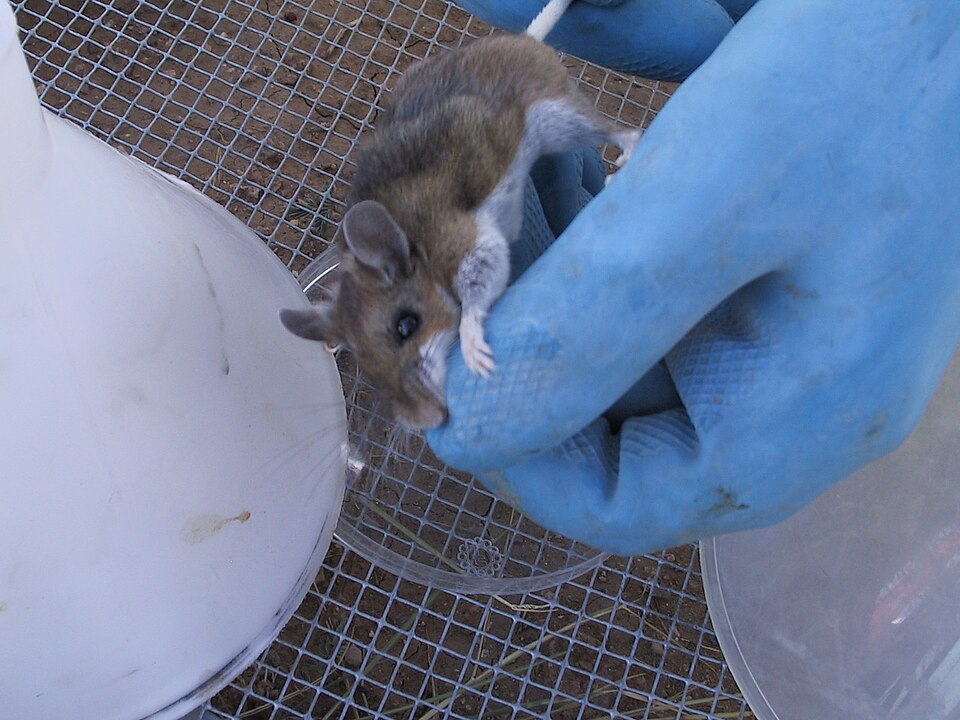
A scientist tests a hantavirus-infected deer mouse. (Wikipedia)

A scientist tests a hantavirus-infected deer mouse. (Wikipedia)

This story was originally published by Grist. Sign up for Grist’s weekly newsletter here.

The cruise ship departed Ushuaia, Argentina, in April with plans to ferry 147 passengers and crew members to some of the most remote places on earth, including Antarctica. But the ship, named the MV Hondius, had its voyage cut short by a rare virus that has killed three and infected several others. 

Hantaviruses are an ancient family of rodent-borne pathogens that likely caused disease in humans long before they first appeared in medical records in the 1950s. The viruses infect people via rodent waste—often through the inhalation of dust containing trace amounts of the excreta. Andes hantavirus, the strain that gripped the MV Hondius on its polar cruise, is one of a few hantaviruses known to cause hantavirus pulmonary syndrome, a rare but often deadly illness.

The Andes strain is also the only known hantavirus that can be transmitted human-to-human—a characteristic turning a rare rodent-borne infection into a multinational emergency, just a few years after the world was caught flat-footed by the COVID-19 pandemic.

Get the latest climate news and analysis, direct to your inbox.

Subscribe Today

View our latest digests

The good news is that the Andes hantavirus, while uniquely deadly, is likely nowhere nearly as transmissible as COVID-19. Nevertheless, the outbreak is illuminating the complexity of responding to infectious disease outbreaks as international cooperation on public health issues has become fractured and contentious—all while global pandemics are only becoming more likely overall. A month before the first patients onboard the MV Hondius became symptomatic, Argentina officially completed the process of withdrawing from the World Health Organization, joining the United States in leaving a global health alliance that exists in large part to coordinate responses to these very kinds of cross-border disease outbreaks. 

The emergency also points to another growing challenge for global public health: Climate change is altering the rainfall, vegetation, and habitat conditions that influence rodent populations—changes that experts say boost the odds that the pathogens these animals carry will spill over into human populations.

While the hantavirus’s one-to-six-week incubation period means the outbreak could have originated in any of the passengers’ home countries, a possible culprit is the ship’s stop for a birding expedition near Ushuaia, which is home to a landfill that attracts rodents looking for food. Argentina’s health authorities have already documented a sharp rise in hantavirus this season: 101 infections have been recorded since June 2025, about twice as many as there were in the same period a year earlier.

The country’s health ministry hasn’t yet determined what’s behind the surge, but research suggests that climate change may play a role. Argentina and neighbouring countries in South America endured years of severe drought between 2021 and 2024, including Argentina’s worst dry spell in more than 60 years in 2023, followed by extreme rainfall last year. Weather extremes exacerbated by global warming change how rodents behave, according to Kirk Douglas, a senior scientist who studies hantaviruses and climate change at the University of the West Indies, Cave Hill, in Barbados.

Prolonged drought sends rats and mice into populated areas in search of food, which can put people at higher risk of contracting the virus. Sudden rainfall following drought causes trees and shrubs to produce a windfall of nuts and seeds, which tend to benefit rodents and boost their numbers—all the while increasing the risk of transmission from animal to human.

That doesn’t mean there’s a one-to-one relationship between global temperature rise and rodent-driven risk, however, and climate change is hardly the only force at play. A complex web of natural and human-made landscape changes can increase or decrease contact between humans and rodents. Increased temperatures and humidity, for example, don’t seem to influence the disease ecology of hantavirus in the same way that drought and precipitation do.

“Hantavirus is sensitive to the changes climate change will bring,” Douglas emphasized. “It’s all dependent on what the prevailing climate impact is.”

That complexity makes hantavirus risk difficult to predict—and easy to overlook. In the U.S., hantavirus has been rare since federal surveillance began in 1993. There were fewer than 1,000 total confirmed cases up to 2023, the latest year that data is available. About 35% of those cases, almost all of which occurred west of the Mississippi River, resulted in death. 

As in South America, the dynamics of hantavirus in the U.S. may be shifting. The places most at risk, federal scientists reported in a study published last year, are dry landscapes where homes are spread out, many kinds of rodents live nearby, and communities may have fewer resources to prevent or respond to disease—conditions that describe broad swaths of the American West.





in Climate Impacts & Adaptation, Health & Safety

Trending Stories

Facebook
Severe Storms & Flooding

540+ Dead, Hundreds Missing as Towering Flash Flood in Nepal Points to Extreme Heat, Heavy Rainfalls

August 28, 2026
997
Sarah Yurchevich
Data Centres & Tech

Alberta Woman Maps Out the Facts About Power-Hungry Data Centres

August 25, 2026
749
picryl
Canadian Sovereignty

Trump Trade War Could Be a Catalyst to Speed Canada’s Energy Transition, Experts Say

August 25, 2026
711

Leave a Reply Cancel reply

Your email address will not be published. Required fields are marked *

I agree to the Terms & Conditions and Privacy Policy.

Get the latest climate news and analysis, direct to your inbox.

Subscribe Today

Related Articles

‘Piercing Cold’ Produces Power Outages Across Canada and U.S., Methane Leaks in Texas

‘Piercing Cold’ Produces Power Outages Across Canada and U.S., Methane Leaks in Texas

January 26, 2026
Wildfires, Flooding Hit Communities on 3 Continents

Wildfires, Flooding Hit Communities on 3 Continents

January 21, 2026
Cloud Seeding Brings Floods as Iran’s Drought Deepens

Cloud Seeding Brings Floods as Iran’s Drought Deepens

November 18, 2025

The End of the World vs. the End of the Week: Carney’s Pushback on Trump’s Bullying Could Point to the Next Energy Transition Moment

by Mitchell Beer
August 23, 2026

…

Follow Us

How Climate Change Could Help Hantavirus Find More Hosts

May 13, 2026
Reading time: 4 minutes
Full Story: Grist
Author: Zoya Teirstein

A scientist tests a hantavirus-infected deer mouse. (Wikipedia)

A scientist tests a hantavirus-infected deer mouse. (Wikipedia)

This story was originally published by Grist. Sign up for Grist’s weekly newsletter here.

The cruise ship departed Ushuaia, Argentina, in April with plans to ferry 147 passengers and crew members to some of the most remote places on earth, including Antarctica. But the ship, named the MV Hondius, had its voyage cut short by a rare virus that has killed three and infected several others. 

Hantaviruses are an ancient family of rodent-borne pathogens that likely caused disease in humans long before they first appeared in medical records in the 1950s. The viruses infect people via rodent waste—often through the inhalation of dust containing trace amounts of the excreta. Andes hantavirus, the strain that gripped the MV Hondius on its polar cruise, is one of a few hantaviruses known to cause hantavirus pulmonary syndrome, a rare but often deadly illness.

The Andes strain is also the only known hantavirus that can be transmitted human-to-human—a characteristic turning a rare rodent-borne infection into a multinational emergency, just a few years after the world was caught flat-footed by the COVID-19 pandemic.

Get the latest climate news and analysis, direct to your inbox.

Subscribe Today

View our latest digests

The good news is that the Andes hantavirus, while uniquely deadly, is likely nowhere nearly as transmissible as COVID-19. Nevertheless, the outbreak is illuminating the complexity of responding to infectious disease outbreaks as international cooperation on public health issues has become fractured and contentious—all while global pandemics are only becoming more likely overall. A month before the first patients onboard the MV Hondius became symptomatic, Argentina officially completed the process of withdrawing from the World Health Organization, joining the United States in leaving a global health alliance that exists in large part to coordinate responses to these very kinds of cross-border disease outbreaks. 

The emergency also points to another growing challenge for global public health: Climate change is altering the rainfall, vegetation, and habitat conditions that influence rodent populations—changes that experts say boost the odds that the pathogens these animals carry will spill over into human populations.

While the hantavirus’s one-to-six-week incubation period means the outbreak could have originated in any of the passengers’ home countries, a possible culprit is the ship’s stop for a birding expedition near Ushuaia, which is home to a landfill that attracts rodents looking for food. Argentina’s health authorities have already documented a sharp rise in hantavirus this season: 101 infections have been recorded since June 2025, about twice as many as there were in the same period a year earlier.

The country’s health ministry hasn’t yet determined what’s behind the surge, but research suggests that climate change may play a role. Argentina and neighbouring countries in South America endured years of severe drought between 2021 and 2024, including Argentina’s worst dry spell in more than 60 years in 2023, followed by extreme rainfall last year. Weather extremes exacerbated by global warming change how rodents behave, according to Kirk Douglas, a senior scientist who studies hantaviruses and climate change at the University of the West Indies, Cave Hill, in Barbados.

Prolonged drought sends rats and mice into populated areas in search of food, which can put people at higher risk of contracting the virus. Sudden rainfall following drought causes trees and shrubs to produce a windfall of nuts and seeds, which tend to benefit rodents and boost their numbers—all the while increasing the risk of transmission from animal to human.

That doesn’t mean there’s a one-to-one relationship between global temperature rise and rodent-driven risk, however, and climate change is hardly the only force at play. A complex web of natural and human-made landscape changes can increase or decrease contact between humans and rodents. Increased temperatures and humidity, for example, don’t seem to influence the disease ecology of hantavirus in the same way that drought and precipitation do.

“Hantavirus is sensitive to the changes climate change will bring,” Douglas emphasized. “It’s all dependent on what the prevailing climate impact is.”

That complexity makes hantavirus risk difficult to predict—and easy to overlook. In the U.S., hantavirus has been rare since federal surveillance began in 1993. There were fewer than 1,000 total confirmed cases up to 2023, the latest year that data is available. About 35% of those cases, almost all of which occurred west of the Mississippi River, resulted in death. 

As in South America, the dynamics of hantavirus in the U.S. may be shifting. The places most at risk, federal scientists reported in a study published last year, are dry landscapes where homes are spread out, many kinds of rodents live nearby, and communities may have fewer resources to prevent or respond to disease—conditions that describe broad swaths of the American West.


in Climate Impacts & Adaptation, Health & Safety

Leave a Reply Cancel reply

Your email address will not be published. Required fields are marked *

I agree to the Terms & Conditions and Privacy Policy.

Related Articles

‘Piercing Cold’ Produces Power Outages Across Canada and U.S., Methane Leaks in Texas

‘Piercing Cold’ Produces Power Outages Across Canada and U.S., Methane Leaks in Texas

January 26, 2026
Wildfires, Flooding Hit Communities on 3 Continents

Wildfires, Flooding Hit Communities on 3 Continents

January 21, 2026
Cloud Seeding Brings Floods as Iran’s Drought Deepens

Cloud Seeding Brings Floods as Iran’s Drought Deepens

November 18, 2025

Trending Stories

Facebook

540+ Dead, Hundreds Missing as Towering Flash Flood in Nepal Points to Extreme Heat, Heavy Rainfalls

August 28, 2026
997
Sarah Yurchevich

Alberta Woman Maps Out the Facts About Power-Hungry Data Centres

August 25, 2026
749
picryl

Trump Trade War Could Be a Catalyst to Speed Canada’s Energy Transition, Experts Say

August 25, 2026
711

The End of the World vs. the End of the Week: Carney’s Pushback on Trump’s Bullying Could Point to the Next Energy Transition Moment

by Mitchell Beer
August 23, 2026

…

Follow Us

Copyright 2026 © Energy Mix Productions Inc. All rights reserved.

  • About
  • Contact
  • Privacy Policy and Copyright
  • Cookie Policy
No Result
View All Result
  • Topics
    • Buildings & Infrastructure
    • Climate Equity & Justice
      • Energy Poverty
      • Indigenous Rights & Reconciliation
    • Climate Finance
      • Community Climate Finance
      • Finance & Investment
      • Insurance & Liability
      • Subsidies
    • Climate Impacts & Adaptation
      • Biodiversity & Habitat
      • Drought & Wildfires
      • Forests & Deforestation
      • Health & Safety
      • Heat & Temperature
      • Ice Loss & Sea Level Rise
      • Severe Storms & Flooding
    • Emissions
      • Carbon Levels & Measurement
      • CCS & Negative Emissions
      • Methane
    • Energy
      • Renewables
      • Fossil Fuels
      • Hydrogen
      • Nuclear
      • Batteries & Storage
      • Energy Efficiency
      • Power Grids
    • Food & Agriculture
    • Industry
      • Data Centres & Tech
      • Critical Minerals & Mining
      • Petrochemicals & Plastics
    • Policy & Politics
      • Carbon Pricing
      • COP Conferences
      • Elections
      • Energy Politics
      • International Security & War
      • Legal & Regulatory
    • Research & Innovation
      • International Agencies & Studies
      • Research & Development
    • Society & Culture
      • Climate Action
      • Mis/Disinformation & Greenwashing
      • Jobs & Training
      • Leisure & Recreation
      • Media, Messaging, & Public Opinion
    • Transportation & Mobility
      • Electric Vehicles
      • Shipping & Aviation
      • Transit
      • Walking, Biking & Micromobility
  • Regions
    • Africa
    • Arctic & Antarctica
    • Asia
    • Australia
    • Canada
    • International
    • Mexico & the Caribbean
    • Middle East
    • Oceans
    • Small Island States
    • South & Central America
    • Subnational
    • United States
    • UK & Europe
  • Special Coverage
    • The Weekender
    • IEA2026
    • Canada’s Major Projects Office
    • Hidden Wonder Valley
    • COP30
    • Cities & Communities
    • Heat & Power
    • Community Climate Finance
  • More Resources
    • Climate Glossary
    • What If We Changed the Conversation on Climate Change?
    • Eco-Anxiety
  • About
  • Contact

Copyright 2025 © Smarter Shift Inc. and Energy Mix Productions Inc. All rights reserved.

Manage Cookie Consent
To provide the best experiences, we use technologies like cookies to store and/or access device information. Consenting to these technologies will allow us to process data such as browsing behaviour or unique IDs on this site. Not consenting or withdrawing consent, may adversely affect certain features and functions.
Functional Always active
The technical storage or access is strictly necessary for the legitimate purpose of enabling the use of a specific service explicitly requested by the subscriber or user, or for the sole purpose of carrying out the transmission of a communication over an electronic communications network.
Preferences
The technical storage or access is necessary for the legitimate purpose of storing preferences that are not requested by the subscriber or user.
Statistics
The technical storage or access that is used exclusively for statistical purposes. The technical storage or access that is used exclusively for anonymous statistical purposes. Without a subpoena, voluntary compliance on the part of your Internet Service Provider, or additional records from a third party, information stored or retrieved for this purpose alone cannot usually be used to identify you.
Marketing
The technical storage or access is required to create user profiles to send advertising, or to track the user on a website or across several websites for similar marketing purposes.
  • Manage options
  • Manage services
  • Manage {vendor_count} vendors
  • Read more about these purposes
View preferences
  • {title}
  • {title}
  • {title}
No Result
View All Result
  • Topics
    • Buildings & Infrastructure
    • Climate Equity & Justice
      • Energy Poverty
      • Indigenous Rights & Reconciliation
    • Climate Finance
      • Community Climate Finance
      • Finance & Investment
      • Insurance & Liability
      • Subsidies
    • Climate Impacts & Adaptation
      • Biodiversity & Habitat
      • Drought & Wildfires
      • Forests & Deforestation
      • Health & Safety
      • Heat & Temperature
      • Ice Loss & Sea Level Rise
      • Severe Storms & Flooding
    • Emissions
      • Carbon Levels & Measurement
      • CCS & Negative Emissions
      • Methane
    • Energy
      • Renewables
      • Fossil Fuels
      • Hydrogen
      • Nuclear
      • Batteries & Storage
      • Energy Efficiency
      • Power Grids
    • Food & Agriculture
    • Industry
      • Data Centres & Tech
      • Critical Minerals & Mining
      • Petrochemicals & Plastics
    • Policy & Politics
      • Carbon Pricing
      • COP Conferences
      • Elections
      • Energy Politics
      • International Security & War
      • Legal & Regulatory
    • Research & Innovation
      • International Agencies & Studies
      • Research & Development
    • Society & Culture
      • Climate Action
      • Mis/Disinformation & Greenwashing
      • Jobs & Training
      • Leisure & Recreation
      • Media, Messaging, & Public Opinion
    • Transportation & Mobility
      • Electric Vehicles
      • Shipping & Aviation
      • Transit
      • Walking, Biking & Micromobility
  • Regions
    • Africa
    • Arctic & Antarctica
    • Asia
    • Australia
    • Canada
    • International
    • Mexico & the Caribbean
    • Middle East
    • Oceans
    • Small Island States
    • South & Central America
    • Subnational
    • United States
    • UK & Europe
  • Special Coverage
    • The Weekender
    • IEA2026
    • Canada’s Major Projects Office
    • Hidden Wonder Valley
    • COP30
    • Cities & Communities
    • Heat & Power
    • Community Climate Finance
  • More Resources
    • Climate Glossary
    • What If We Changed the Conversation on Climate Change?
    • Eco-Anxiety
  • About
  • Contact

Copyright 2025 © Smarter Shift Inc. and Energy Mix Productions Inc. All rights reserved.