The Energy Mix
Subscribe
Donate
  • Topics
    • Buildings & Infrastructure
    • Climate Equity & Justice
      • Energy Poverty
      • Indigenous Rights & Reconciliation
    • Climate Finance
      • Community Climate Finance
      • Finance & Investment
      • Insurance & Liability
      • Subsidies
    • Climate Impacts & Adaptation
      • Biodiversity & Habitat
      • Drought & Wildfires
      • Forests & Deforestation
      • Health & Safety
      • Heat & Temperature
      • Ice Loss & Sea Level Rise
      • Severe Storms & Flooding
    • Emissions
      • Carbon Levels & Measurement
      • CCS & Negative Emissions
      • Methane
    • Energy
      • Renewables
      • Fossil Fuels
      • Hydrogen
      • Nuclear
      • Batteries & Storage
      • Energy Efficiency
      • Power Grids
    • Food & Agriculture
    • Industry
      • Data Centres & Tech
      • Critical Minerals & Mining
      • Petrochemicals & Plastics
    • Policy & Politics
      • Carbon Pricing
      • COP Conferences
      • Elections
      • Energy Politics
      • International Security & War
      • Legal & Regulatory
    • Research & Innovation
      • International Agencies & Studies
      • Research & Development
    • Society & Culture
      • Climate Action
      • Mis/Disinformation & Greenwashing
      • Jobs & Training
      • Leisure & Recreation
      • Media, Messaging, & Public Opinion
    • Transportation & Mobility
      • Electric Vehicles
      • Shipping & Aviation
      • Transit
      • Walking, Biking & Micromobility
  • Regions
    • Africa
    • Arctic & Antarctica
    • Asia
    • Australia
    • Canada
    • International
    • Mexico & the Caribbean
    • Middle East
    • Oceans
    • Small Island States
    • South & Central America
    • Subnational
    • United States
    • UK & Europe
  • Special Coverage
    • The Weekender
    • IEA2026
    • Canada’s Major Projects Office
    • Hidden Wonder Valley
    • COP30
    • Cities & Communities
    • Heat & Power
    • Community Climate Finance
  • More Resources
    • Climate Glossary
    • What If We Changed the Conversation on Climate Change?
    • Eco-Anxiety
  • About
  • Contact
No Result
View All Result
The Energy Mix
  • Topics
    • Buildings & Infrastructure
    • Climate Equity & Justice
      • Energy Poverty
      • Indigenous Rights & Reconciliation
    • Climate Finance
      • Community Climate Finance
      • Finance & Investment
      • Insurance & Liability
      • Subsidies
    • Climate Impacts & Adaptation
      • Biodiversity & Habitat
      • Drought & Wildfires
      • Forests & Deforestation
      • Health & Safety
      • Heat & Temperature
      • Ice Loss & Sea Level Rise
      • Severe Storms & Flooding
    • Emissions
      • Carbon Levels & Measurement
      • CCS & Negative Emissions
      • Methane
    • Energy
      • Renewables
      • Fossil Fuels
      • Hydrogen
      • Nuclear
      • Batteries & Storage
      • Energy Efficiency
      • Power Grids
    • Food & Agriculture
    • Industry
      • Data Centres & Tech
      • Critical Minerals & Mining
      • Petrochemicals & Plastics
    • Policy & Politics
      • Carbon Pricing
      • COP Conferences
      • Elections
      • Energy Politics
      • International Security & War
      • Legal & Regulatory
    • Research & Innovation
      • International Agencies & Studies
      • Research & Development
    • Society & Culture
      • Climate Action
      • Mis/Disinformation & Greenwashing
      • Jobs & Training
      • Leisure & Recreation
      • Media, Messaging, & Public Opinion
    • Transportation & Mobility
      • Electric Vehicles
      • Shipping & Aviation
      • Transit
      • Walking, Biking & Micromobility
  • Regions
    • Africa
    • Arctic & Antarctica
    • Asia
    • Australia
    • Canada
    • International
    • Mexico & the Caribbean
    • Middle East
    • Oceans
    • Small Island States
    • South & Central America
    • Subnational
    • United States
    • UK & Europe
  • Special Coverage
    • The Weekender
    • IEA2026
    • Canada’s Major Projects Office
    • Hidden Wonder Valley
    • COP30
    • Cities & Communities
    • Heat & Power
    • Community Climate Finance
  • More Resources
    • Climate Glossary
    • What If We Changed the Conversation on Climate Change?
    • Eco-Anxiety
  • About
  • Contact
Subscribe
Donate
The Energy Mix
Subscribe

First Nations Angered at Being Elbowed Out as Provinces Fast-Track Projects

May 28, 2025
Reading time: 6 minutes
Full Story: The Energy Mix
Jody MacPherson

Alain ROUILLER/wikimedia commons

Alain ROUILLER/wikimedia commons

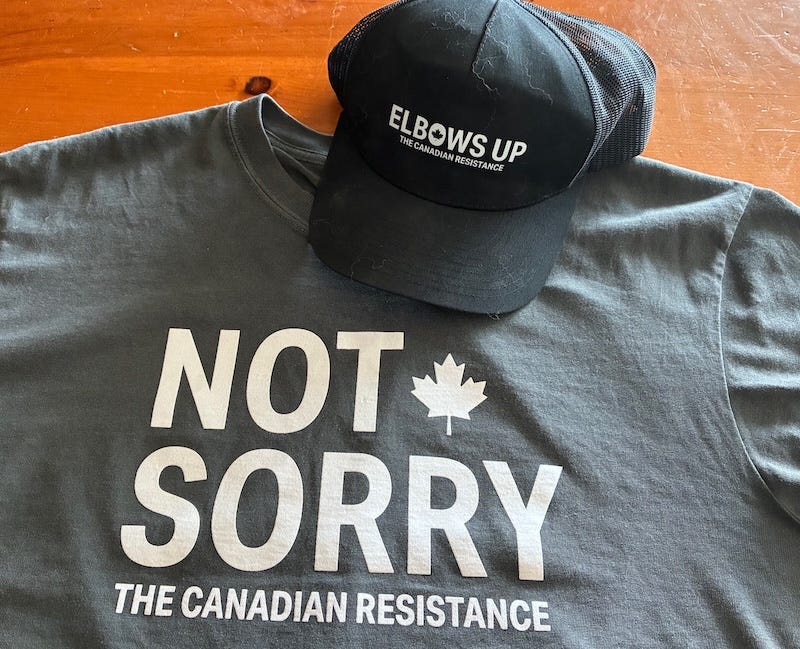
Donald Trump’s 51st State threats may have Canadians advocating for a more #ElbowsUp approach to strengthening the economy, but Indigenous people are concerned they’re being elbowed out of the way by some elected leaders.

New legislation to fast-track infrastructure projects in British Columbia, Ontario, and Nova Scotia has Indigenous organizations questioning the provinces’ commitment to reconciliation. They say the push to accelerate project approvals risks violating treaty rights and undermining Canada’s 2021 law to implement the United Nations Declaration on the Rights of Indigenous Peoples (UNDRIP).

Indigenous people need to be involved early in the process, Ken Coates, program chair for Indigenous governance at Yukon University, told the Aboriginal People’s Television Network (APTN). “The government is already sending out the agenda and deciding what the priorities are going to be.”

Coates added that the federal government’s promise to render decisions on major projects within a two-year timeline was unrealistic, given there are “hundreds and hundreds of Indigenous people—First Nations, Métis, Inuit—and they are very different.”

In this week’s Speech from the Throne—written by the Prime Minister’s Office and read by King Charles III—Mark Carney’s newly-elected government promised faster approvals for major infrastructure as a top priority. The speech also pledged up to $10 billion in loan guarantees for Indigenous communities to gain ownership in large projects. But First Nations leaders warn that unless governments at all levels honour treaties and uphold the UNDRIP principle of free, prior, and informed consent (FPIC), they risk triggering protests, blockades, and litigation.

UNDRIP requires governments to involve Indigenous people in a way that is “free from manipulation or coercion, informed by adequate and timely information, and occur(s) sufficiently prior to a decision so that Indigenous rights and interests can be incorporated or addressed effectively as part of the decision-making process.”

A wave of unprecedented moves to strip environmental protections, skip Indigenous consent requirements, and give governments more power is uniting Indigenous people across Canada, much the way Trump’s threats united Canadians.

Get the latest climate news and analysis, direct to your inbox.

Subscribe Today

View our latest digests

Ontario Amends Mining Bill

In Ontario, Premier Doug Ford’s Progressive Conservative government is yielding to some First Nation demands by amending its controversial mining bill to include duty to consult provisions throughout, reported The Canadian Press.

Bill 5, the Protect Ontario by Unleashing our Economy Act, is being reviewed and almost certain to pass with the majority government. It revises or repeals a number of other laws, including the Ontario Heritage Act, the Mining Act, and the Endangered Species Act, among others. Prior to news of the coming amendment, Chiefs of Ontario First Nations opposed the bill in a statement and said they wanted it immediately withdrawn so that meaningful consultation with First Nations could begin. APTN News reported the bill creates “special economic zones,” exempt from many laws and regulations, a move being viewed by many Indigenous peoples as an attack on First Nations lands, rights, and legal agreements with the Crown.

After testifying at the standing committee reviewing the bill, Indigenous representatives spoke to reporters from a lectern with the message “Our rights are not for sale.” That language echoed Ford’s baseball cap slogan, popularized prior to this year’s provincial election, with its message that “Canada is not for sale.”

“Ontario is trying to legislate us out of the conversation,” Chief Shelly Moore-Frappier of the Temagami First Nation said of the original bill. “They are about to learn what happens when a nation has nothing left to lose and everything to defend.”

The amendment to Bill 5 would create a new category of zones, adding in “special Indigenous economic zones” at the request of First Nations for projects they want fast-tracked.

But Indigenous peoples across Canada fear that special economic zones are being considered by other provinces and at the federal level, Chief Alvin Fiddler, Grand Chief of Nishnawbe Aski Nation, told the news conference. He predicted “conflict on the ground,” adding that First Nations will do “anything and everything that will make this government listen to us,” reported the Toronto Star.

First Nations Raise Alarm in British Columbia

In British Columbia, First Nations leaders said proposed legislation to fast-track resource projects would likely lead to “conflict, protests, and litigation” unless the government engaged with First Nations on potential amendments.

Bill 15, the Infrastructure Projects Act, was tabled May 1 by Premier David Eby’s New Democratic government, which holds a narrow majority in the legislature. The Globe and Mail reported that Eby hoped to pass the bill by the end of the month, promising “none will be built without First Nations’ consent—and financial benefits.”

In a statement, Grand Chief Stewart Phillip, president of the Union of British Columbia Indian Chiefs (UBCIC), said the province did not consult or cooperate with First Nations in developing the bill and didn’t follow its own rules for aligning with UNDRIP.

“While we support the Province taking action to counter Trump’s erratic behaviour, such action must be principled, respect First Nations’ basic human rights, and be done in consultation and cooperation with First Nations,” said Phillip.

BC Assembly of First Nations Regional Chief Terry Teegee called the bill “overreaching” in the statement, adding that “it enables the Province to bypass permitting processes and expedite environmental assessment for any project they deem a priority.”

According to the Globe, Eby “was forced to apologize in person” to the First Nations Leadership Council of the UBCIC. Eby has since said that if First Nations oppose a particular project, his government will look to other proposals.

Lack of Consultation Nova Scotia

The Nova Scotia Assembly of Mi’kmaw Chiefs told the legislature’s natural resources committee this week that Indigenous communities should not be hearing about important developments, including policy or legislative changes proposed for the mining sector, from the evening news, CBC News reported.

Chief Tamara Young of Pictou Landing First Nation said her community has serious concerns about recent decisions, including the adoption of legislation lifting the province’s ban on hydraulic fracturing and rescinding a prohibition on uranium mining.

Bill 6, An Act Respecting Agriculture, Energy and Natural Resources, was tabled February 18 in the Nova Scotia legislature by Premier Tim Houston’s Progressive Conservative supermajority government. It became law on March 25 and the First Nations backlash was immediate.

The Halifax Examiner reported that a letter signed by Chiefs Carol Potter, Cory Julian, and Tamara Young said it was “unacceptable that this government is fast-tracking the extraction of natural resources that will permanently devalue and damage our unceded lands and adversely impact the exercise of our Section 35 rights.”

Section 35 of Canada’s 1982 Constitution Act protects Aboriginal and treaty rights.


in British Columbia, Canada, Cities & Communities, Climate Equity & Justice, Indigenous Rights & Reconciliation, Legal & Regulatory, Nova Scotia, Ontario

Trending Stories

Facebook
Severe Storms & Flooding

540+ Dead, Hundreds Missing as Towering Flash Flood in Nepal Points to Extreme Heat, Heavy Rainfalls

August 28, 2026
996
Sarah Yurchevich
Data Centres & Tech

Alberta Woman Maps Out the Facts About Power-Hungry Data Centres

August 25, 2026
748
picryl
Canadian Sovereignty

Trump Trade War Could Be a Catalyst to Speed Canada’s Energy Transition, Experts Say

August 25, 2026
709

Leave a Reply Cancel reply

Your email address will not be published. Required fields are marked *

I agree to the Terms & Conditions and Privacy Policy.

Get the latest climate news and analysis, direct to your inbox.

Subscribe Today

Related Articles

Pimicikamak Faces Long Road to Repair After Havoc-Wreaking Power Outage

Pimicikamak Faces Long Road to Repair After Havoc-Wreaking Power Outage

February 4, 2026
First Nations Chiefs Call out Ottawa Over Pipeline Deal That Doesn’t Mention Water

First Nations Chiefs Call out Ottawa Over Pipeline Deal That Doesn’t Mention Water

January 26, 2026
SaskPower Signs Power Purchase Deal with 50% Indigenous-Owned Solar Farm

SaskPower Signs Power Purchase Deal with 50% Indigenous-Owned Solar Farm

January 19, 2026

The End of the World vs. the End of the Week: Carney’s Pushback on Trump’s Bullying Could Point to the Next Energy Transition Moment

by Mitchell Beer
August 23, 2026

…

Follow Us

First Nations Angered at Being Elbowed Out as Provinces Fast-Track Projects

May 28, 2025
Reading time: 6 minutes
Full Story: The Energy Mix
Jody MacPherson

Alain ROUILLER/wikimedia commons

Alain ROUILLER/wikimedia commons

Donald Trump’s 51st State threats may have Canadians advocating for a more #ElbowsUp approach to strengthening the economy, but Indigenous people are concerned they’re being elbowed out of the way by some elected leaders.

New legislation to fast-track infrastructure projects in British Columbia, Ontario, and Nova Scotia has Indigenous organizations questioning the provinces’ commitment to reconciliation. They say the push to accelerate project approvals risks violating treaty rights and undermining Canada’s 2021 law to implement the United Nations Declaration on the Rights of Indigenous Peoples (UNDRIP).

Indigenous people need to be involved early in the process, Ken Coates, program chair for Indigenous governance at Yukon University, told the Aboriginal People’s Television Network (APTN). “The government is already sending out the agenda and deciding what the priorities are going to be.”

Coates added that the federal government’s promise to render decisions on major projects within a two-year timeline was unrealistic, given there are “hundreds and hundreds of Indigenous people—First Nations, Métis, Inuit—and they are very different.”

In this week’s Speech from the Throne—written by the Prime Minister’s Office and read by King Charles III—Mark Carney’s newly-elected government promised faster approvals for major infrastructure as a top priority. The speech also pledged up to $10 billion in loan guarantees for Indigenous communities to gain ownership in large projects. But First Nations leaders warn that unless governments at all levels honour treaties and uphold the UNDRIP principle of free, prior, and informed consent (FPIC), they risk triggering protests, blockades, and litigation.

UNDRIP requires governments to involve Indigenous people in a way that is “free from manipulation or coercion, informed by adequate and timely information, and occur(s) sufficiently prior to a decision so that Indigenous rights and interests can be incorporated or addressed effectively as part of the decision-making process.”

A wave of unprecedented moves to strip environmental protections, skip Indigenous consent requirements, and give governments more power is uniting Indigenous people across Canada, much the way Trump’s threats united Canadians.

Get the latest climate news and analysis, direct to your inbox.

Subscribe Today

View our latest digests

Ontario Amends Mining Bill

In Ontario, Premier Doug Ford’s Progressive Conservative government is yielding to some First Nation demands by amending its controversial mining bill to include duty to consult provisions throughout, reported The Canadian Press.

Bill 5, the Protect Ontario by Unleashing our Economy Act, is being reviewed and almost certain to pass with the majority government. It revises or repeals a number of other laws, including the Ontario Heritage Act, the Mining Act, and the Endangered Species Act, among others. Prior to news of the coming amendment, Chiefs of Ontario First Nations opposed the bill in a statement and said they wanted it immediately withdrawn so that meaningful consultation with First Nations could begin. APTN News reported the bill creates “special economic zones,” exempt from many laws and regulations, a move being viewed by many Indigenous peoples as an attack on First Nations lands, rights, and legal agreements with the Crown.

After testifying at the standing committee reviewing the bill, Indigenous representatives spoke to reporters from a lectern with the message “Our rights are not for sale.” That language echoed Ford’s baseball cap slogan, popularized prior to this year’s provincial election, with its message that “Canada is not for sale.”

“Ontario is trying to legislate us out of the conversation,” Chief Shelly Moore-Frappier of the Temagami First Nation said of the original bill. “They are about to learn what happens when a nation has nothing left to lose and everything to defend.”

The amendment to Bill 5 would create a new category of zones, adding in “special Indigenous economic zones” at the request of First Nations for projects they want fast-tracked.

But Indigenous peoples across Canada fear that special economic zones are being considered by other provinces and at the federal level, Chief Alvin Fiddler, Grand Chief of Nishnawbe Aski Nation, told the news conference. He predicted “conflict on the ground,” adding that First Nations will do “anything and everything that will make this government listen to us,” reported the Toronto Star.

First Nations Raise Alarm in British Columbia

In British Columbia, First Nations leaders said proposed legislation to fast-track resource projects would likely lead to “conflict, protests, and litigation” unless the government engaged with First Nations on potential amendments.

Bill 15, the Infrastructure Projects Act, was tabled May 1 by Premier David Eby’s New Democratic government, which holds a narrow majority in the legislature. The Globe and Mail reported that Eby hoped to pass the bill by the end of the month, promising “none will be built without First Nations’ consent—and financial benefits.”

In a statement, Grand Chief Stewart Phillip, president of the Union of British Columbia Indian Chiefs (UBCIC), said the province did not consult or cooperate with First Nations in developing the bill and didn’t follow its own rules for aligning with UNDRIP.

“While we support the Province taking action to counter Trump’s erratic behaviour, such action must be principled, respect First Nations’ basic human rights, and be done in consultation and cooperation with First Nations,” said Phillip.

BC Assembly of First Nations Regional Chief Terry Teegee called the bill “overreaching” in the statement, adding that “it enables the Province to bypass permitting processes and expedite environmental assessment for any project they deem a priority.”

According to the Globe, Eby “was forced to apologize in person” to the First Nations Leadership Council of the UBCIC. Eby has since said that if First Nations oppose a particular project, his government will look to other proposals.

Lack of Consultation Nova Scotia

The Nova Scotia Assembly of Mi’kmaw Chiefs told the legislature’s natural resources committee this week that Indigenous communities should not be hearing about important developments, including policy or legislative changes proposed for the mining sector, from the evening news, CBC News reported.

Chief Tamara Young of Pictou Landing First Nation said her community has serious concerns about recent decisions, including the adoption of legislation lifting the province’s ban on hydraulic fracturing and rescinding a prohibition on uranium mining.

Bill 6, An Act Respecting Agriculture, Energy and Natural Resources, was tabled February 18 in the Nova Scotia legislature by Premier Tim Houston’s Progressive Conservative supermajority government. It became law on March 25 and the First Nations backlash was immediate.

The Halifax Examiner reported that a letter signed by Chiefs Carol Potter, Cory Julian, and Tamara Young said it was “unacceptable that this government is fast-tracking the extraction of natural resources that will permanently devalue and damage our unceded lands and adversely impact the exercise of our Section 35 rights.”

Section 35 of Canada’s 1982 Constitution Act protects Aboriginal and treaty rights.


in British Columbia, Canada, Cities & Communities, Climate Equity & Justice, Indigenous Rights & Reconciliation, Legal & Regulatory, Nova Scotia, Ontario

Leave a Reply Cancel reply

Your email address will not be published. Required fields are marked *

I agree to the Terms & Conditions and Privacy Policy.

Related Articles

Pimicikamak Faces Long Road to Repair After Havoc-Wreaking Power Outage

Pimicikamak Faces Long Road to Repair After Havoc-Wreaking Power Outage

February 4, 2026
First Nations Chiefs Call out Ottawa Over Pipeline Deal That Doesn’t Mention Water

First Nations Chiefs Call out Ottawa Over Pipeline Deal That Doesn’t Mention Water

January 26, 2026
SaskPower Signs Power Purchase Deal with 50% Indigenous-Owned Solar Farm

SaskPower Signs Power Purchase Deal with 50% Indigenous-Owned Solar Farm

January 19, 2026

Trending Stories

Facebook

540+ Dead, Hundreds Missing as Towering Flash Flood in Nepal Points to Extreme Heat, Heavy Rainfalls

August 28, 2026
996
Sarah Yurchevich

Alberta Woman Maps Out the Facts About Power-Hungry Data Centres

August 25, 2026
748
picryl

Trump Trade War Could Be a Catalyst to Speed Canada’s Energy Transition, Experts Say

August 25, 2026
709

The End of the World vs. the End of the Week: Carney’s Pushback on Trump’s Bullying Could Point to the Next Energy Transition Moment

by Mitchell Beer
August 23, 2026

…

Follow Us

Copyright 2026 © Energy Mix Productions Inc. All rights reserved.

  • About
  • Contact
  • Privacy Policy and Copyright
  • Cookie Policy
No Result
View All Result
  • Topics
    • Buildings & Infrastructure
    • Climate Equity & Justice
      • Energy Poverty
      • Indigenous Rights & Reconciliation
    • Climate Finance
      • Community Climate Finance
      • Finance & Investment
      • Insurance & Liability
      • Subsidies
    • Climate Impacts & Adaptation
      • Biodiversity & Habitat
      • Drought & Wildfires
      • Forests & Deforestation
      • Health & Safety
      • Heat & Temperature
      • Ice Loss & Sea Level Rise
      • Severe Storms & Flooding
    • Emissions
      • Carbon Levels & Measurement
      • CCS & Negative Emissions
      • Methane
    • Energy
      • Renewables
      • Fossil Fuels
      • Hydrogen
      • Nuclear
      • Batteries & Storage
      • Energy Efficiency
      • Power Grids
    • Food & Agriculture
    • Industry
      • Data Centres & Tech
      • Critical Minerals & Mining
      • Petrochemicals & Plastics
    • Policy & Politics
      • Carbon Pricing
      • COP Conferences
      • Elections
      • Energy Politics
      • International Security & War
      • Legal & Regulatory
    • Research & Innovation
      • International Agencies & Studies
      • Research & Development
    • Society & Culture
      • Climate Action
      • Mis/Disinformation & Greenwashing
      • Jobs & Training
      • Leisure & Recreation
      • Media, Messaging, & Public Opinion
    • Transportation & Mobility
      • Electric Vehicles
      • Shipping & Aviation
      • Transit
      • Walking, Biking & Micromobility
  • Regions
    • Africa
    • Arctic & Antarctica
    • Asia
    • Australia
    • Canada
    • International
    • Mexico & the Caribbean
    • Middle East
    • Oceans
    • Small Island States
    • South & Central America
    • Subnational
    • United States
    • UK & Europe
  • Special Coverage
    • The Weekender
    • IEA2026
    • Canada’s Major Projects Office
    • Hidden Wonder Valley
    • COP30
    • Cities & Communities
    • Heat & Power
    • Community Climate Finance
  • More Resources
    • Climate Glossary
    • What If We Changed the Conversation on Climate Change?
    • Eco-Anxiety
  • About
  • Contact

Copyright 2025 © Smarter Shift Inc. and Energy Mix Productions Inc. All rights reserved.

Manage Cookie Consent
To provide the best experiences, we use technologies like cookies to store and/or access device information. Consenting to these technologies will allow us to process data such as browsing behaviour or unique IDs on this site. Not consenting or withdrawing consent, may adversely affect certain features and functions.
Functional Always active
The technical storage or access is strictly necessary for the legitimate purpose of enabling the use of a specific service explicitly requested by the subscriber or user, or for the sole purpose of carrying out the transmission of a communication over an electronic communications network.
Preferences
The technical storage or access is necessary for the legitimate purpose of storing preferences that are not requested by the subscriber or user.
Statistics
The technical storage or access that is used exclusively for statistical purposes. The technical storage or access that is used exclusively for anonymous statistical purposes. Without a subpoena, voluntary compliance on the part of your Internet Service Provider, or additional records from a third party, information stored or retrieved for this purpose alone cannot usually be used to identify you.
Marketing
The technical storage or access is required to create user profiles to send advertising, or to track the user on a website or across several websites for similar marketing purposes.
  • Manage options
  • Manage services
  • Manage {vendor_count} vendors
  • Read more about these purposes
View preferences
  • {title}
  • {title}
  • {title}
No Result
View All Result
  • Topics
    • Buildings & Infrastructure
    • Climate Equity & Justice
      • Energy Poverty
      • Indigenous Rights & Reconciliation
    • Climate Finance
      • Community Climate Finance
      • Finance & Investment
      • Insurance & Liability
      • Subsidies
    • Climate Impacts & Adaptation
      • Biodiversity & Habitat
      • Drought & Wildfires
      • Forests & Deforestation
      • Health & Safety
      • Heat & Temperature
      • Ice Loss & Sea Level Rise
      • Severe Storms & Flooding
    • Emissions
      • Carbon Levels & Measurement
      • CCS & Negative Emissions
      • Methane
    • Energy
      • Renewables
      • Fossil Fuels
      • Hydrogen
      • Nuclear
      • Batteries & Storage
      • Energy Efficiency
      • Power Grids
    • Food & Agriculture
    • Industry
      • Data Centres & Tech
      • Critical Minerals & Mining
      • Petrochemicals & Plastics
    • Policy & Politics
      • Carbon Pricing
      • COP Conferences
      • Elections
      • Energy Politics
      • International Security & War
      • Legal & Regulatory
    • Research & Innovation
      • International Agencies & Studies
      • Research & Development
    • Society & Culture
      • Climate Action
      • Mis/Disinformation & Greenwashing
      • Jobs & Training
      • Leisure & Recreation
      • Media, Messaging, & Public Opinion
    • Transportation & Mobility
      • Electric Vehicles
      • Shipping & Aviation
      • Transit
      • Walking, Biking & Micromobility
  • Regions
    • Africa
    • Arctic & Antarctica
    • Asia
    • Australia
    • Canada
    • International
    • Mexico & the Caribbean
    • Middle East
    • Oceans
    • Small Island States
    • South & Central America
    • Subnational
    • United States
    • UK & Europe
  • Special Coverage
    • The Weekender
    • IEA2026
    • Canada’s Major Projects Office
    • Hidden Wonder Valley
    • COP30
    • Cities & Communities
    • Heat & Power
    • Community Climate Finance
  • More Resources
    • Climate Glossary
    • What If We Changed the Conversation on Climate Change?
    • Eco-Anxiety
  • About
  • Contact

Copyright 2025 © Smarter Shift Inc. and Energy Mix Productions Inc. All rights reserved.