The Energy Mix
Subscribe
Donate
  • Topics
    • Buildings & Infrastructure
    • Climate Equity & Justice
      • Energy Poverty
      • Indigenous Rights & Reconciliation
    • Climate Finance
      • Community Climate Finance
      • Finance & Investment
      • Insurance & Liability
      • Subsidies
    • Climate Impacts & Adaptation
      • Biodiversity & Habitat
      • Drought & Wildfires
      • Forests & Deforestation
      • Health & Safety
      • Heat & Temperature
      • Ice Loss & Sea Level Rise
      • Severe Storms & Flooding
    • Emissions
      • Carbon Levels & Measurement
      • CCS & Negative Emissions
      • Methane
    • Energy
      • Renewables
      • Fossil Fuels
      • Hydrogen
      • Nuclear
      • Batteries & Storage
      • Energy Efficiency
      • Power Grids
    • Food & Agriculture
    • Industry
      • Data Centres & Tech
      • Critical Minerals & Mining
      • Petrochemicals & Plastics
    • Policy & Politics
      • Carbon Pricing
      • COP Conferences
      • Elections
      • Energy Politics
      • International Security & War
      • Legal & Regulatory
    • Research & Innovation
      • International Agencies & Studies
      • Research & Development
    • Society & Culture
      • Climate Action
      • Mis/Disinformation & Greenwashing
      • Jobs & Training
      • Leisure & Recreation
      • Media, Messaging, & Public Opinion
    • Transportation & Mobility
      • Electric Vehicles
      • Shipping & Aviation
      • Transit
      • Walking, Biking & Micromobility
  • Regions
    • Africa
    • Arctic & Antarctica
    • Asia
    • Australia
    • Canada
    • International
    • Mexico & the Caribbean
    • Middle East
    • Oceans
    • Small Island States
    • South & Central America
    • Subnational
    • United States
    • UK & Europe
  • Special Coverage
    • The Weekender
    • IEA2026
    • Canada’s Major Projects Office
    • Hidden Wonder Valley
    • COP30
    • Cities & Communities
    • Heat & Power
    • Community Climate Finance
  • More Resources
    • Climate Glossary
    • What If We Changed the Conversation on Climate Change?
    • Eco-Anxiety
  • About
  • Contact
No Result
View All Result
The Energy Mix
  • Topics
    • Buildings & Infrastructure
    • Climate Equity & Justice
      • Energy Poverty
      • Indigenous Rights & Reconciliation
    • Climate Finance
      • Community Climate Finance
      • Finance & Investment
      • Insurance & Liability
      • Subsidies
    • Climate Impacts & Adaptation
      • Biodiversity & Habitat
      • Drought & Wildfires
      • Forests & Deforestation
      • Health & Safety
      • Heat & Temperature
      • Ice Loss & Sea Level Rise
      • Severe Storms & Flooding
    • Emissions
      • Carbon Levels & Measurement
      • CCS & Negative Emissions
      • Methane
    • Energy
      • Renewables
      • Fossil Fuels
      • Hydrogen
      • Nuclear
      • Batteries & Storage
      • Energy Efficiency
      • Power Grids
    • Food & Agriculture
    • Industry
      • Data Centres & Tech
      • Critical Minerals & Mining
      • Petrochemicals & Plastics
    • Policy & Politics
      • Carbon Pricing
      • COP Conferences
      • Elections
      • Energy Politics
      • International Security & War
      • Legal & Regulatory
    • Research & Innovation
      • International Agencies & Studies
      • Research & Development
    • Society & Culture
      • Climate Action
      • Mis/Disinformation & Greenwashing
      • Jobs & Training
      • Leisure & Recreation
      • Media, Messaging, & Public Opinion
    • Transportation & Mobility
      • Electric Vehicles
      • Shipping & Aviation
      • Transit
      • Walking, Biking & Micromobility
  • Regions
    • Africa
    • Arctic & Antarctica
    • Asia
    • Australia
    • Canada
    • International
    • Mexico & the Caribbean
    • Middle East
    • Oceans
    • Small Island States
    • South & Central America
    • Subnational
    • United States
    • UK & Europe
  • Special Coverage
    • The Weekender
    • IEA2026
    • Canada’s Major Projects Office
    • Hidden Wonder Valley
    • COP30
    • Cities & Communities
    • Heat & Power
    • Community Climate Finance
  • More Resources
    • Climate Glossary
    • What If We Changed the Conversation on Climate Change?
    • Eco-Anxiety
  • About
  • Contact
Subscribe
Donate
The Energy Mix
Subscribe

Drought Costs U.S. Hydropower Billions While Increasing Emissions, Study Finds

August 12, 2024
Reading time: 2 minutes
Author: Christopher Bonasia
Full Story: The Energy Mix

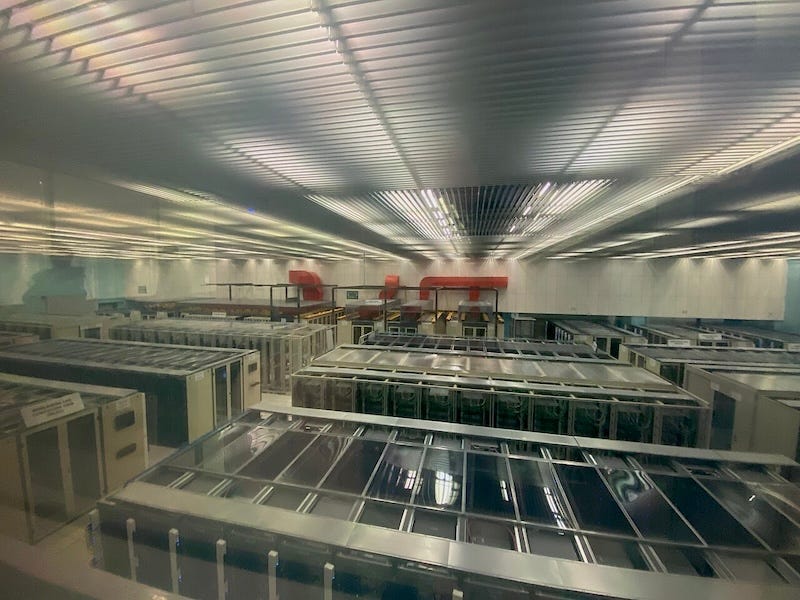
Dantripphoto/Wikimedia Commons

Dantripphoto/Wikimedia Commons

Low water levels in the United States caused significant economic losses for hydropower and increased emissions as natural gas plants fired up to fill the power supply gap, concludes a new study highlighting hydropower’s vulnerability to drought.

“Through our analysis, we estimated that the U.S. potentially incurred a loss of approximately US$28 billion in the hydroelectricity sector due to drought between 2003 and 2020, 50% of which has incurred in the Western U.S.,” write researchers from the Center for Complex Hydrosystems Research at the University of Alabama.

The hydroelectricity decline led to an overall drop of about 300 megawatt-hours generated, particularly affecting the states of California, Washington, and Oregon, where economic losses exceeded $8.7 billion, $4.2 billion, and $1.6 billion, respectively.

Get the latest climate news and analysis, direct to your inbox.

Subscribe Today

View our latest digests

The hydropower losses also led to additional emissions, say the analysts, as fossil fuels—particularly gas—were used to fill the gap. Carbon dioxide increased by 10.2%, sulfur dioxide by 0.15%, and nitrogen oxide by 24.48%.

“While the short-term increase in emissions due to drought may not seem alarming on its own, it is crucial to consider the cumulative impact of future droughts on the environment,” the researchers caution.

The study analyzed streamflow data from hydroelectric stations across the contiguous U.S. to evaluate drought conditions through the 18-year period. Then the researchers measured the resulting drought patterns against hydroelectric generation to determine how the two correlated.

The study established a correlation between drought and hydroelectricity generation in the U.S., with 95% confidence for all states except Arizona, Colorado, Illinois, Nebraska, and Nevada. Further analysis with other datasets brought in facility-level data for approximately 1,400 power plants in the region, along with monthly retail electricity prices and emission intensities.

Several factors affected drought vulnerability in various states, like over-year water storage in upstream reservoirs and soil moisture. Certain trends made economic impacts particularly severe in some states, like in Oregon, Washington, and California, where droughts were particularly severe and frequent. Rhode Island, Kansas, New Jersey, and Illinois had comparatively lower economic impacts because they produced less hydropower and had fewer droughts.

The study is geared toward energy policy-makers, planners, and academics, with an aim to “inform policies and practices related to drought management and energy production” as drought is expected to become more frequent and intense due to climate change, write the authors.

They recommend that state governments form regional or interstate energy networks to leverage “each other’s strengths in renewable energy sources and energy storage capacities,” and urged states to “prioritize policies and incentives that promote energy efficiency and conservation.”



in Carbon Pricing, Drought & Wildfires, Fracking & LNG, Heat & Power, Hydropower, Oil & Gas, Subnational, United States

Trending Stories

Canadian Nuclear Laboratories/flickr
Nuclear

RIP SMRs: Is It the End of the Line for Small Modular Nuclear Reactors?

September 23, 2026
8.2k
An LNG Canada flarestack. (supplied image)
Fracking & LNG

New LNG Canada Deal ‘Like Betting on a Concrete Canoe’

October 1, 2026
1k
Orin Zebest/flickr
Subsidies

$5.3B Subsidy Won’t Counter ‘Oil-Fuelled Inflation’, Critics Say, as Ottawa Extends Gas Tax Suspension

September 8, 2026
1.3k

Leave a Reply Cancel reply

Your email address will not be published. Required fields are marked *

I agree to the Terms & Conditions and Privacy Policy.

Get the latest climate news and analysis, direct to your inbox.

Subscribe Today

Related Articles

Third Straight Dry Year Means Projected Financial Loss for Manitoba Hydro

Third Straight Dry Year Means Projected Financial Loss for Manitoba Hydro

December 20, 2025

Gas Power Plants for AI Data Centres Are a Risky Bet with Your Retirement Savings

by Patrick DeRochie
September 27, 2026

…

Follow Us

Drought Costs U.S. Hydropower Billions While Increasing Emissions, Study Finds

August 12, 2024
Reading time: 2 minutes
Author: Christopher Bonasia
Full Story: The Energy Mix

Dantripphoto/Wikimedia Commons

Dantripphoto/Wikimedia Commons

Low water levels in the United States caused significant economic losses for hydropower and increased emissions as natural gas plants fired up to fill the power supply gap, concludes a new study highlighting hydropower’s vulnerability to drought.

“Through our analysis, we estimated that the U.S. potentially incurred a loss of approximately US$28 billion in the hydroelectricity sector due to drought between 2003 and 2020, 50% of which has incurred in the Western U.S.,” write researchers from the Center for Complex Hydrosystems Research at the University of Alabama.

The hydroelectricity decline led to an overall drop of about 300 megawatt-hours generated, particularly affecting the states of California, Washington, and Oregon, where economic losses exceeded $8.7 billion, $4.2 billion, and $1.6 billion, respectively.

Get the latest climate news and analysis, direct to your inbox.

Subscribe Today

View our latest digests

The hydropower losses also led to additional emissions, say the analysts, as fossil fuels—particularly gas—were used to fill the gap. Carbon dioxide increased by 10.2%, sulfur dioxide by 0.15%, and nitrogen oxide by 24.48%.

“While the short-term increase in emissions due to drought may not seem alarming on its own, it is crucial to consider the cumulative impact of future droughts on the environment,” the researchers caution.

The study analyzed streamflow data from hydroelectric stations across the contiguous U.S. to evaluate drought conditions through the 18-year period. Then the researchers measured the resulting drought patterns against hydroelectric generation to determine how the two correlated.

The study established a correlation between drought and hydroelectricity generation in the U.S., with 95% confidence for all states except Arizona, Colorado, Illinois, Nebraska, and Nevada. Further analysis with other datasets brought in facility-level data for approximately 1,400 power plants in the region, along with monthly retail electricity prices and emission intensities.

Several factors affected drought vulnerability in various states, like over-year water storage in upstream reservoirs and soil moisture. Certain trends made economic impacts particularly severe in some states, like in Oregon, Washington, and California, where droughts were particularly severe and frequent. Rhode Island, Kansas, New Jersey, and Illinois had comparatively lower economic impacts because they produced less hydropower and had fewer droughts.

The study is geared toward energy policy-makers, planners, and academics, with an aim to “inform policies and practices related to drought management and energy production” as drought is expected to become more frequent and intense due to climate change, write the authors.

They recommend that state governments form regional or interstate energy networks to leverage “each other’s strengths in renewable energy sources and energy storage capacities,” and urged states to “prioritize policies and incentives that promote energy efficiency and conservation.”


in Carbon Pricing, Drought & Wildfires, Fracking & LNG, Heat & Power, Hydropower, Oil & Gas, Subnational, United States

Leave a Reply Cancel reply

Your email address will not be published. Required fields are marked *

I agree to the Terms & Conditions and Privacy Policy.

Related Articles

Third Straight Dry Year Means Projected Financial Loss for Manitoba Hydro

Third Straight Dry Year Means Projected Financial Loss for Manitoba Hydro

December 20, 2025

Trending Stories

Canadian Nuclear Laboratories/flickr

RIP SMRs: Is It the End of the Line for Small Modular Nuclear Reactors?

September 23, 2026
8.2k
An LNG Canada flarestack. (supplied image)

New LNG Canada Deal ‘Like Betting on a Concrete Canoe’

October 1, 2026
1k
Orin Zebest/flickr

$5.3B Subsidy Won’t Counter ‘Oil-Fuelled Inflation’, Critics Say, as Ottawa Extends Gas Tax Suspension

September 8, 2026
1.3k

Gas Power Plants for AI Data Centres Are a Risky Bet with Your Retirement Savings

by Patrick DeRochie
September 27, 2026

…

Follow Us

Copyright 2026 © Energy Mix Productions Inc. All rights reserved.

  • About
  • Contact
  • Privacy Policy and Copyright
  • Cookie Policy
No Result
View All Result
  • Topics
    • Buildings & Infrastructure
    • Climate Equity & Justice
      • Energy Poverty
      • Indigenous Rights & Reconciliation
    • Climate Finance
      • Community Climate Finance
      • Finance & Investment
      • Insurance & Liability
      • Subsidies
    • Climate Impacts & Adaptation
      • Biodiversity & Habitat
      • Drought & Wildfires
      • Forests & Deforestation
      • Health & Safety
      • Heat & Temperature
      • Ice Loss & Sea Level Rise
      • Severe Storms & Flooding
    • Emissions
      • Carbon Levels & Measurement
      • CCS & Negative Emissions
      • Methane
    • Energy
      • Renewables
      • Fossil Fuels
      • Hydrogen
      • Nuclear
      • Batteries & Storage
      • Energy Efficiency
      • Power Grids
    • Food & Agriculture
    • Industry
      • Data Centres & Tech
      • Critical Minerals & Mining
      • Petrochemicals & Plastics
    • Policy & Politics
      • Carbon Pricing
      • COP Conferences
      • Elections
      • Energy Politics
      • International Security & War
      • Legal & Regulatory
    • Research & Innovation
      • International Agencies & Studies
      • Research & Development
    • Society & Culture
      • Climate Action
      • Mis/Disinformation & Greenwashing
      • Jobs & Training
      • Leisure & Recreation
      • Media, Messaging, & Public Opinion
    • Transportation & Mobility
      • Electric Vehicles
      • Shipping & Aviation
      • Transit
      • Walking, Biking & Micromobility
  • Regions
    • Africa
    • Arctic & Antarctica
    • Asia
    • Australia
    • Canada
    • International
    • Mexico & the Caribbean
    • Middle East
    • Oceans
    • Small Island States
    • South & Central America
    • Subnational
    • United States
    • UK & Europe
  • Special Coverage
    • The Weekender
    • IEA2026
    • Canada’s Major Projects Office
    • Hidden Wonder Valley
    • COP30
    • Cities & Communities
    • Heat & Power
    • Community Climate Finance
  • More Resources
    • Climate Glossary
    • What If We Changed the Conversation on Climate Change?
    • Eco-Anxiety
  • About
  • Contact

Copyright 2025 © Smarter Shift Inc. and Energy Mix Productions Inc. All rights reserved.

Manage Cookie Consent
To provide the best experiences, we use technologies like cookies to store and/or access device information. Consenting to these technologies will allow us to process data such as browsing behaviour or unique IDs on this site. Not consenting or withdrawing consent, may adversely affect certain features and functions.
Functional Always active
The technical storage or access is strictly necessary for the legitimate purpose of enabling the use of a specific service explicitly requested by the subscriber or user, or for the sole purpose of carrying out the transmission of a communication over an electronic communications network.
Preferences
The technical storage or access is necessary for the legitimate purpose of storing preferences that are not requested by the subscriber or user.
Statistics
The technical storage or access that is used exclusively for statistical purposes. The technical storage or access that is used exclusively for anonymous statistical purposes. Without a subpoena, voluntary compliance on the part of your Internet Service Provider, or additional records from a third party, information stored or retrieved for this purpose alone cannot usually be used to identify you.
Marketing
The technical storage or access is required to create user profiles to send advertising, or to track the user on a website or across several websites for similar marketing purposes.
  • Manage options
  • Manage services
  • Manage {vendor_count} vendors
  • Read more about these purposes
View preferences
  • {title}
  • {title}
  • {title}
No Result
View All Result
  • Topics
    • Buildings & Infrastructure
    • Climate Equity & Justice
      • Energy Poverty
      • Indigenous Rights & Reconciliation
    • Climate Finance
      • Community Climate Finance
      • Finance & Investment
      • Insurance & Liability
      • Subsidies
    • Climate Impacts & Adaptation
      • Biodiversity & Habitat
      • Drought & Wildfires
      • Forests & Deforestation
      • Health & Safety
      • Heat & Temperature
      • Ice Loss & Sea Level Rise
      • Severe Storms & Flooding
    • Emissions
      • Carbon Levels & Measurement
      • CCS & Negative Emissions
      • Methane
    • Energy
      • Renewables
      • Fossil Fuels
      • Hydrogen
      • Nuclear
      • Batteries & Storage
      • Energy Efficiency
      • Power Grids
    • Food & Agriculture
    • Industry
      • Data Centres & Tech
      • Critical Minerals & Mining
      • Petrochemicals & Plastics
    • Policy & Politics
      • Carbon Pricing
      • COP Conferences
      • Elections
      • Energy Politics
      • International Security & War
      • Legal & Regulatory
    • Research & Innovation
      • International Agencies & Studies
      • Research & Development
    • Society & Culture
      • Climate Action
      • Mis/Disinformation & Greenwashing
      • Jobs & Training
      • Leisure & Recreation
      • Media, Messaging, & Public Opinion
    • Transportation & Mobility
      • Electric Vehicles
      • Shipping & Aviation
      • Transit
      • Walking, Biking & Micromobility
  • Regions
    • Africa
    • Arctic & Antarctica
    • Asia
    • Australia
    • Canada
    • International
    • Mexico & the Caribbean
    • Middle East
    • Oceans
    • Small Island States
    • South & Central America
    • Subnational
    • United States
    • UK & Europe
  • Special Coverage
    • The Weekender
    • IEA2026
    • Canada’s Major Projects Office
    • Hidden Wonder Valley
    • COP30
    • Cities & Communities
    • Heat & Power
    • Community Climate Finance
  • More Resources
    • Climate Glossary
    • What If We Changed the Conversation on Climate Change?
    • Eco-Anxiety
  • About
  • Contact

Copyright 2025 © Smarter Shift Inc. and Energy Mix Productions Inc. All rights reserved.