The Energy Mix
Subscribe
Donate
  • Topics
    • Buildings & Infrastructure
    • Climate Equity & Justice
      • Energy Poverty
      • Indigenous Rights & Reconciliation
    • Climate Finance
      • Community Climate Finance
      • Finance & Investment
      • Insurance & Liability
      • Subsidies
    • Climate Impacts & Adaptation
      • Biodiversity & Habitat
      • Drought & Wildfires
      • Forests & Deforestation
      • Health & Safety
      • Heat & Temperature
      • Ice Loss & Sea Level Rise
      • Severe Storms & Flooding
    • Emissions
      • Carbon Levels & Measurement
      • CCS & Negative Emissions
      • Methane
    • Energy
      • Renewables
      • Fossil Fuels
      • Hydrogen
      • Nuclear
      • Batteries & Storage
      • Energy Efficiency
      • Power Grids
    • Food & Agriculture
    • Industry
      • Data Centres & Tech
      • Critical Minerals & Mining
      • Petrochemicals & Plastics
    • Policy & Politics
      • Carbon Pricing
      • COP Conferences
      • Elections
      • Energy Politics
      • International Security & War
      • Legal & Regulatory
    • Research & Innovation
      • International Agencies & Studies
      • Research & Development
    • Society & Culture
      • Climate Action
      • Mis/Disinformation & Greenwashing
      • Jobs & Training
      • Leisure & Recreation
      • Media, Messaging, & Public Opinion
    • Transportation & Mobility
      • Electric Vehicles
      • Shipping & Aviation
      • Transit
      • Walking, Biking & Micromobility
  • Regions
    • Africa
    • Arctic & Antarctica
    • Asia
    • Australia
    • Canada
    • International
    • Mexico & the Caribbean
    • Middle East
    • Oceans
    • Small Island States
    • South & Central America
    • Subnational
    • United States
    • UK & Europe
  • Special Coverage
    • The Weekender
    • IEA2026
    • Canada’s Major Projects Office
    • Hidden Wonder Valley
    • COP30
    • Cities & Communities
    • Heat & Power
    • Community Climate Finance
  • More Resources
    • Climate Glossary
    • What If We Changed the Conversation on Climate Change?
    • Eco-Anxiety
  • About
  • Contact
No Result
View All Result
The Energy Mix
  • Topics
    • Buildings & Infrastructure
    • Climate Equity & Justice
      • Energy Poverty
      • Indigenous Rights & Reconciliation
    • Climate Finance
      • Community Climate Finance
      • Finance & Investment
      • Insurance & Liability
      • Subsidies
    • Climate Impacts & Adaptation
      • Biodiversity & Habitat
      • Drought & Wildfires
      • Forests & Deforestation
      • Health & Safety
      • Heat & Temperature
      • Ice Loss & Sea Level Rise
      • Severe Storms & Flooding
    • Emissions
      • Carbon Levels & Measurement
      • CCS & Negative Emissions
      • Methane
    • Energy
      • Renewables
      • Fossil Fuels
      • Hydrogen
      • Nuclear
      • Batteries & Storage
      • Energy Efficiency
      • Power Grids
    • Food & Agriculture
    • Industry
      • Data Centres & Tech
      • Critical Minerals & Mining
      • Petrochemicals & Plastics
    • Policy & Politics
      • Carbon Pricing
      • COP Conferences
      • Elections
      • Energy Politics
      • International Security & War
      • Legal & Regulatory
    • Research & Innovation
      • International Agencies & Studies
      • Research & Development
    • Society & Culture
      • Climate Action
      • Mis/Disinformation & Greenwashing
      • Jobs & Training
      • Leisure & Recreation
      • Media, Messaging, & Public Opinion
    • Transportation & Mobility
      • Electric Vehicles
      • Shipping & Aviation
      • Transit
      • Walking, Biking & Micromobility
  • Regions
    • Africa
    • Arctic & Antarctica
    • Asia
    • Australia
    • Canada
    • International
    • Mexico & the Caribbean
    • Middle East
    • Oceans
    • Small Island States
    • South & Central America
    • Subnational
    • United States
    • UK & Europe
  • Special Coverage
    • The Weekender
    • IEA2026
    • Canada’s Major Projects Office
    • Hidden Wonder Valley
    • COP30
    • Cities & Communities
    • Heat & Power
    • Community Climate Finance
  • More Resources
    • Climate Glossary
    • What If We Changed the Conversation on Climate Change?
    • Eco-Anxiety
  • About
  • Contact
Subscribe
Donate
The Energy Mix
Subscribe

Floods Can Leave Communities Facing Higher Overdose Deaths for Years

August 13, 2026
Reading time: 4 minutes
Full Story: Grist
Author: Katie Myers

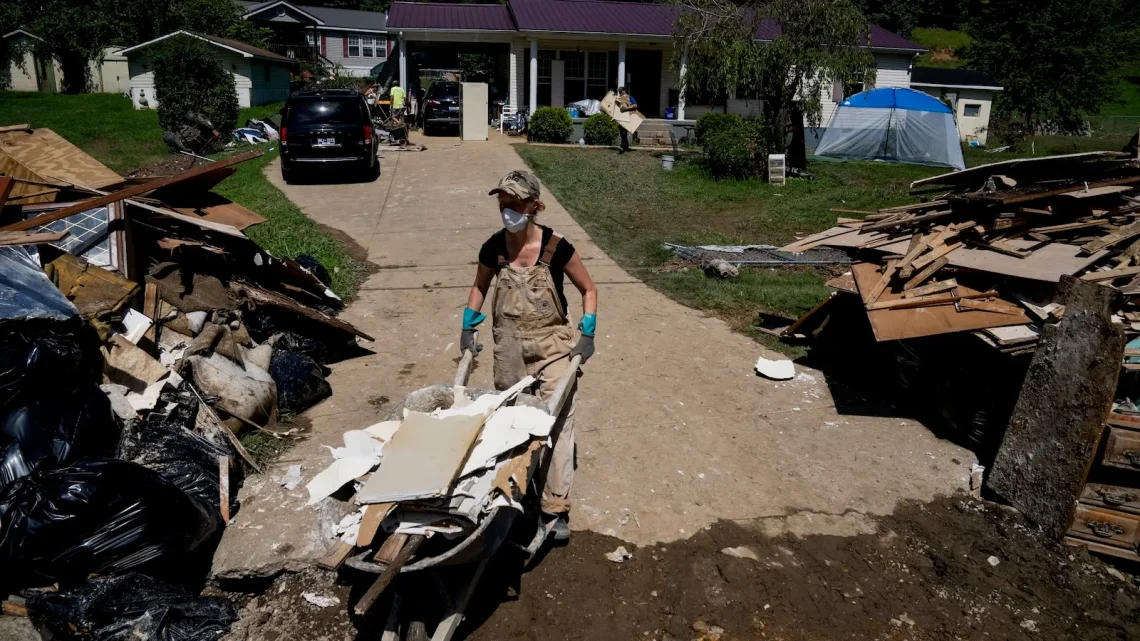
(Michael Swensen/ Getty Images via Grist)

(Michael Swensen/ Getty Images via Grist)

This coverage is made possible through a partnership between Grist and BPR, a public radio station serving western North Carolina. 

Hush Sinn delivers needles, naloxone, and other medical supplies to people in the mostly rural mountain communities of Madison County, North Carolina. Sinn does this through Holler Harm Reduction, a grassroots organization that strives to minimize the risk of overdose and infection in a region where many residents are still recovering from the devastation of Hurricane Helene.

Sinn, who uses the pronoun they, believes the nonprofit, often known simply as “Holler,” has prevented a lot of tragedy. But nearly two years after the storm they and other harm reductionists have noticed a troubling pattern.

“While overdose rates are still trending down, we get these weird spikes,” Sinn said. “And the spikes we get, we kind of consistently are able to relate back to Helene.” Financial stress, ongoing trauma, and unstable housing have disrupted some people’s recovery and thrust others into dangerous, even deadly, patterns of substance use.

Sinn’s observations reflect a broader pattern across the region. A Pennsylvania State University study published last month found that severe flooding was associated with higher overdose death rates in economically distressed Appalachian counties—increases that can persist for at least a decade after the water recedes.

Get the latest climate news and analysis, direct to your inbox.

Subscribe Today

View our latest digests

Kristina Brant, the study’s lead author, began the research after watching health-care providers struggle to maintain addiction treatment and harm reduction services during catastrophic floods in eastern Kentucky in 2021 and 2022.

“After such a huge disaster, especially in a small community where so many people wear so many hats, the same person that provides one public health service is also going to be asked to jump in on flood recovery, right?” she said. Brant began to understand services could be interrupted for a long, long time, and wondered what that might mean for both those in long-term recovery and those actively using opioids.

Brant’s team analyzed federal records of opioid overdose deaths and severe floods in rural Appalachia, comparing 118 counties that experienced major flooding between 2000 and 2017 with 101 that did not.

The researchers found that overdose deaths began rising in the years after an inundation and remained elevated for at least a decade. Over that period, annual overdose deaths in flooded counties increased by about 28%, while overdose mortality rates rose by 26% compared with the year before the flood. These changes were most pronounced in economically distressed and lower-income counties.

The findings prompted Brant’s team to ask why the effects endured for so long. Interviews with health-care providers, harm reduction workers, and others involved in the response to Kentucky’s 2022 disaster identified several factors, including disrupted treatment and harm reduction services, prolonged housing and economic instability, and the lasting effects of trauma. 

“It’s important to have a number of important ingredients in your life, like access to a safe home, like access to a well-paid, meaningful job, like access to social support,” Brant said. “And for many people, the flood upended those things.” 

One clinic Brant spoke with closed after the flood because the costs of reopening were simply too great. Flood-related disruptions can also interrupt treatments like methadone, forcing some people to return to illicit opioids to stave off the unpleasant and often dangerous effects of withdrawal. After weeks or months in treatment or recovery, that return to use can be especially dangerous because people may not realize how much their tolerance has changed. 

Losing a job, stable housing, or reliable access to food can take a heavy toll on people’s mental health and increase the risk of an overdose, said Cassie York. She works in behavioral health at Mountain Community Health Partnership in Yancey County, North Carolina. The flooding that followed Helene killed at least 10 people in the county and caused landslides that destroyed 1,400 homes. Another 2,300 were heavily damaged.

“I think the main issue here, and probably not just here, is a lack of resources in general,” York said. “Housing, which has always been a shortage here, is even more so since the hurricane.” 

Addressing the instability that so many people are still dealing with two years after Helene is what harm reduction is all about, Sinn said. “We’re also seeing so many people still living in trailers,” they added. “These things that were supposed to be temporary are now permanent, you know?”

Brant believes people like Sinn and York who work directly with affected communities should be involved in disaster planning and recovery from the start. That’s something health-care providers have also begun to publicly support. 

“When it comes to things like flood preparedness conversations or flood recovery conversations, it’s not the case that often a substance use service provider might have a seat at that table,” she said. “Anything that could make care easier to access generally, every day, for rural people, would also help to limit disruptions after disaster.”


in Cities & Communities, Health & Safety, Severe Storms & Flooding, United States

Trending Stories

Facebook
Severe Storms & Flooding

540+ Dead, Hundreds Missing as Towering Flash Flood in Nepal Points to Extreme Heat, Heavy Rainfalls

August 28, 2026
985
Sarah Yurchevich
Data Centres & Tech

Alberta Woman Maps Out the Facts About Power-Hungry Data Centres

August 25, 2026
728
picryl
Canadian Sovereignty

Trump Trade War Could Be a Catalyst to Speed Canada’s Energy Transition, Experts Say

August 25, 2026
695

Leave a Reply Cancel reply

Your email address will not be published. Required fields are marked *

I agree to the Terms & Conditions and Privacy Policy.

Get the latest climate news and analysis, direct to your inbox.

Subscribe Today

Related Articles

Explainer: Why Is B.C. Facing Down Another Flood Disaster?

Explainer: Why Is B.C. Facing Down Another Flood Disaster?

December 16, 2025
Ocean Warmed by Climate Change Fed Intense Rainfall, Deadly Floods in Asia, WWA Study Finds

Ocean Warmed by Climate Change Fed Intense Rainfall, Deadly Floods in Asia, WWA Study Finds

December 11, 2025
Families in Thailand Perch on Rooftops to Escape Flooding that Kills At least 33

Families in Thailand Perch on Rooftops to Escape Flooding that Kills At least 33

November 26, 2025

The End of the World vs. the End of the Week: Carney’s Pushback on Trump’s Bullying Could Point to the Next Energy Transition Moment

by Mitchell Beer
August 23, 2026

…

Follow Us

Floods Can Leave Communities Facing Higher Overdose Deaths for Years

August 13, 2026
Reading time: 4 minutes
Full Story: Grist
Author: Katie Myers

(Michael Swensen/ Getty Images via Grist)

(Michael Swensen/ Getty Images via Grist)

This coverage is made possible through a partnership between Grist and BPR, a public radio station serving western North Carolina. 

Hush Sinn delivers needles, naloxone, and other medical supplies to people in the mostly rural mountain communities of Madison County, North Carolina. Sinn does this through Holler Harm Reduction, a grassroots organization that strives to minimize the risk of overdose and infection in a region where many residents are still recovering from the devastation of Hurricane Helene.

Sinn, who uses the pronoun they, believes the nonprofit, often known simply as “Holler,” has prevented a lot of tragedy. But nearly two years after the storm they and other harm reductionists have noticed a troubling pattern.

“While overdose rates are still trending down, we get these weird spikes,” Sinn said. “And the spikes we get, we kind of consistently are able to relate back to Helene.” Financial stress, ongoing trauma, and unstable housing have disrupted some people’s recovery and thrust others into dangerous, even deadly, patterns of substance use.

Sinn’s observations reflect a broader pattern across the region. A Pennsylvania State University study published last month found that severe flooding was associated with higher overdose death rates in economically distressed Appalachian counties—increases that can persist for at least a decade after the water recedes.

Get the latest climate news and analysis, direct to your inbox.

Subscribe Today

View our latest digests

Kristina Brant, the study’s lead author, began the research after watching health-care providers struggle to maintain addiction treatment and harm reduction services during catastrophic floods in eastern Kentucky in 2021 and 2022.

“After such a huge disaster, especially in a small community where so many people wear so many hats, the same person that provides one public health service is also going to be asked to jump in on flood recovery, right?” she said. Brant began to understand services could be interrupted for a long, long time, and wondered what that might mean for both those in long-term recovery and those actively using opioids.

Brant’s team analyzed federal records of opioid overdose deaths and severe floods in rural Appalachia, comparing 118 counties that experienced major flooding between 2000 and 2017 with 101 that did not.

The researchers found that overdose deaths began rising in the years after an inundation and remained elevated for at least a decade. Over that period, annual overdose deaths in flooded counties increased by about 28%, while overdose mortality rates rose by 26% compared with the year before the flood. These changes were most pronounced in economically distressed and lower-income counties.

The findings prompted Brant’s team to ask why the effects endured for so long. Interviews with health-care providers, harm reduction workers, and others involved in the response to Kentucky’s 2022 disaster identified several factors, including disrupted treatment and harm reduction services, prolonged housing and economic instability, and the lasting effects of trauma. 

“It’s important to have a number of important ingredients in your life, like access to a safe home, like access to a well-paid, meaningful job, like access to social support,” Brant said. “And for many people, the flood upended those things.” 

One clinic Brant spoke with closed after the flood because the costs of reopening were simply too great. Flood-related disruptions can also interrupt treatments like methadone, forcing some people to return to illicit opioids to stave off the unpleasant and often dangerous effects of withdrawal. After weeks or months in treatment or recovery, that return to use can be especially dangerous because people may not realize how much their tolerance has changed. 

Losing a job, stable housing, or reliable access to food can take a heavy toll on people’s mental health and increase the risk of an overdose, said Cassie York. She works in behavioral health at Mountain Community Health Partnership in Yancey County, North Carolina. The flooding that followed Helene killed at least 10 people in the county and caused landslides that destroyed 1,400 homes. Another 2,300 were heavily damaged.

“I think the main issue here, and probably not just here, is a lack of resources in general,” York said. “Housing, which has always been a shortage here, is even more so since the hurricane.” 

Addressing the instability that so many people are still dealing with two years after Helene is what harm reduction is all about, Sinn said. “We’re also seeing so many people still living in trailers,” they added. “These things that were supposed to be temporary are now permanent, you know?”

Brant believes people like Sinn and York who work directly with affected communities should be involved in disaster planning and recovery from the start. That’s something health-care providers have also begun to publicly support. 

“When it comes to things like flood preparedness conversations or flood recovery conversations, it’s not the case that often a substance use service provider might have a seat at that table,” she said. “Anything that could make care easier to access generally, every day, for rural people, would also help to limit disruptions after disaster.”


in Cities & Communities, Health & Safety, Severe Storms & Flooding, United States

Leave a Reply Cancel reply

Your email address will not be published. Required fields are marked *

I agree to the Terms & Conditions and Privacy Policy.

Related Articles

Explainer: Why Is B.C. Facing Down Another Flood Disaster?

Explainer: Why Is B.C. Facing Down Another Flood Disaster?

December 16, 2025
Ocean Warmed by Climate Change Fed Intense Rainfall, Deadly Floods in Asia, WWA Study Finds

Ocean Warmed by Climate Change Fed Intense Rainfall, Deadly Floods in Asia, WWA Study Finds

December 11, 2025
Families in Thailand Perch on Rooftops to Escape Flooding that Kills At least 33

Families in Thailand Perch on Rooftops to Escape Flooding that Kills At least 33

November 26, 2025

Trending Stories

Facebook

540+ Dead, Hundreds Missing as Towering Flash Flood in Nepal Points to Extreme Heat, Heavy Rainfalls

August 28, 2026
985
Sarah Yurchevich

Alberta Woman Maps Out the Facts About Power-Hungry Data Centres

August 25, 2026
728
picryl

Trump Trade War Could Be a Catalyst to Speed Canada’s Energy Transition, Experts Say

August 25, 2026
695

The End of the World vs. the End of the Week: Carney’s Pushback on Trump’s Bullying Could Point to the Next Energy Transition Moment

by Mitchell Beer
August 23, 2026

…

Follow Us

Copyright 2026 © Energy Mix Productions Inc. All rights reserved.

  • About
  • Contact
  • Privacy Policy and Copyright
  • Cookie Policy
No Result
View All Result
  • Topics
    • Buildings & Infrastructure
    • Climate Equity & Justice
      • Energy Poverty
      • Indigenous Rights & Reconciliation
    • Climate Finance
      • Community Climate Finance
      • Finance & Investment
      • Insurance & Liability
      • Subsidies
    • Climate Impacts & Adaptation
      • Biodiversity & Habitat
      • Drought & Wildfires
      • Forests & Deforestation
      • Health & Safety
      • Heat & Temperature
      • Ice Loss & Sea Level Rise
      • Severe Storms & Flooding
    • Emissions
      • Carbon Levels & Measurement
      • CCS & Negative Emissions
      • Methane
    • Energy
      • Renewables
      • Fossil Fuels
      • Hydrogen
      • Nuclear
      • Batteries & Storage
      • Energy Efficiency
      • Power Grids
    • Food & Agriculture
    • Industry
      • Data Centres & Tech
      • Critical Minerals & Mining
      • Petrochemicals & Plastics
    • Policy & Politics
      • Carbon Pricing
      • COP Conferences
      • Elections
      • Energy Politics
      • International Security & War
      • Legal & Regulatory
    • Research & Innovation
      • International Agencies & Studies
      • Research & Development
    • Society & Culture
      • Climate Action
      • Mis/Disinformation & Greenwashing
      • Jobs & Training
      • Leisure & Recreation
      • Media, Messaging, & Public Opinion
    • Transportation & Mobility
      • Electric Vehicles
      • Shipping & Aviation
      • Transit
      • Walking, Biking & Micromobility
  • Regions
    • Africa
    • Arctic & Antarctica
    • Asia
    • Australia
    • Canada
    • International
    • Mexico & the Caribbean
    • Middle East
    • Oceans
    • Small Island States
    • South & Central America
    • Subnational
    • United States
    • UK & Europe
  • Special Coverage
    • The Weekender
    • IEA2026
    • Canada’s Major Projects Office
    • Hidden Wonder Valley
    • COP30
    • Cities & Communities
    • Heat & Power
    • Community Climate Finance
  • More Resources
    • Climate Glossary
    • What If We Changed the Conversation on Climate Change?
    • Eco-Anxiety
  • About
  • Contact

Copyright 2025 © Smarter Shift Inc. and Energy Mix Productions Inc. All rights reserved.

Manage Cookie Consent
To provide the best experiences, we use technologies like cookies to store and/or access device information. Consenting to these technologies will allow us to process data such as browsing behaviour or unique IDs on this site. Not consenting or withdrawing consent, may adversely affect certain features and functions.
Functional Always active
The technical storage or access is strictly necessary for the legitimate purpose of enabling the use of a specific service explicitly requested by the subscriber or user, or for the sole purpose of carrying out the transmission of a communication over an electronic communications network.
Preferences
The technical storage or access is necessary for the legitimate purpose of storing preferences that are not requested by the subscriber or user.
Statistics
The technical storage or access that is used exclusively for statistical purposes. The technical storage or access that is used exclusively for anonymous statistical purposes. Without a subpoena, voluntary compliance on the part of your Internet Service Provider, or additional records from a third party, information stored or retrieved for this purpose alone cannot usually be used to identify you.
Marketing
The technical storage or access is required to create user profiles to send advertising, or to track the user on a website or across several websites for similar marketing purposes.
  • Manage options
  • Manage services
  • Manage {vendor_count} vendors
  • Read more about these purposes
View preferences
  • {title}
  • {title}
  • {title}
No Result
View All Result
  • Topics
    • Buildings & Infrastructure
    • Climate Equity & Justice
      • Energy Poverty
      • Indigenous Rights & Reconciliation
    • Climate Finance
      • Community Climate Finance
      • Finance & Investment
      • Insurance & Liability
      • Subsidies
    • Climate Impacts & Adaptation
      • Biodiversity & Habitat
      • Drought & Wildfires
      • Forests & Deforestation
      • Health & Safety
      • Heat & Temperature
      • Ice Loss & Sea Level Rise
      • Severe Storms & Flooding
    • Emissions
      • Carbon Levels & Measurement
      • CCS & Negative Emissions
      • Methane
    • Energy
      • Renewables
      • Fossil Fuels
      • Hydrogen
      • Nuclear
      • Batteries & Storage
      • Energy Efficiency
      • Power Grids
    • Food & Agriculture
    • Industry
      • Data Centres & Tech
      • Critical Minerals & Mining
      • Petrochemicals & Plastics
    • Policy & Politics
      • Carbon Pricing
      • COP Conferences
      • Elections
      • Energy Politics
      • International Security & War
      • Legal & Regulatory
    • Research & Innovation
      • International Agencies & Studies
      • Research & Development
    • Society & Culture
      • Climate Action
      • Mis/Disinformation & Greenwashing
      • Jobs & Training
      • Leisure & Recreation
      • Media, Messaging, & Public Opinion
    • Transportation & Mobility
      • Electric Vehicles
      • Shipping & Aviation
      • Transit
      • Walking, Biking & Micromobility
  • Regions
    • Africa
    • Arctic & Antarctica
    • Asia
    • Australia
    • Canada
    • International
    • Mexico & the Caribbean
    • Middle East
    • Oceans
    • Small Island States
    • South & Central America
    • Subnational
    • United States
    • UK & Europe
  • Special Coverage
    • The Weekender
    • IEA2026
    • Canada’s Major Projects Office
    • Hidden Wonder Valley
    • COP30
    • Cities & Communities
    • Heat & Power
    • Community Climate Finance
  • More Resources
    • Climate Glossary
    • What If We Changed the Conversation on Climate Change?
    • Eco-Anxiety
  • About
  • Contact

Copyright 2025 © Smarter Shift Inc. and Energy Mix Productions Inc. All rights reserved.